NAIROBI, Kenya Jul 23 – The State Department for Devolution has disbursed Ksh5.7 billion in Level 2 conditional grants to 46 counties to fund local development projects.
The funding is part of the Second Kenya Devolution Support Programme (KDSP II), a performance-based reform programme funded by the Government of Kenya with support from the World Bank.
The programme brings together 18 national implementing agencies to help counties roll out critical reforms. To drive these changes, counties receive financial grants for meeting reform targets in financial management, human resource and performance management, accountability, and public participation.
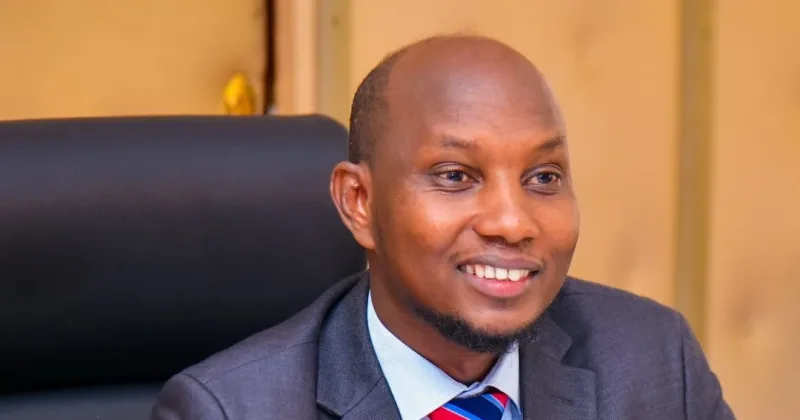
“This disbursement marks a crucial step in strengthening devolution, ensuring our counties have the foundational financial capacity and institutional strength to deliver lasting, impactful development directly to our communities,” the Devolution Principal Secretary Michael Lenasalon said.
Unlike the equitable share funding, KDSP II grants are strictly tied to performance. To qualify for the Level 2 grants, counties underwent assessments against specific reform targets. These included reducing pending bills, cleaning up county human resource records to improve consistency, transforming staff performance management systems, increasing own-source revenue, and strengthening citizen oversight and feedback in project implementation.
The Principal Secretary explained that earlier this year, counties accessed the smaller Level 1 capacity-building grants after demonstrating the establishment of basic governance frameworks. Under this grant, all 47 counties received a total of Ksh1.67 billion —equivalent to Ksh35.2 million each —to finance capacity-building and institutional strengthening activities.
To unlock the much larger Level 2 development grants, however, counties had to demonstrate tangible results by meeting the prescribed reform targets.
“The funds meant for Level 1 are strictly to support governance issues, while Level 2 funds are intended to finance development projects that improve service delivery to citizens,” the PS explained.
The Level 2 allocations vary from county to county. Kitui, Kwale, Migori, and Turkana each received the highest allocation of Ksh184 million, while Kajiado, Uasin Gishu, and Kakamega each received Ksh55 million.
Explaining the allocation, the Principal Secretary said counties received more or less funding depending on how well they met their reform targets.
“The disbursed amounts were determined by individual county performance alongside the Commission on Revenue Allocation’s (CRA) Fourth Basis county-sharing formula,” the PS said.
“Counties differ in terms of size and population. The time and resources required to screen projects in vast counties far exceed what is needed in geographically smaller ones. Similarly, conducting a human resource audit in a county with a workforce of 100 employees requires a completely different level of effort than undertaking the same exercise in a county with 1,000 employees.”
Speaking on the next steps, the Principal Secretary said counties must transfer the allocated funds from their County Revenue Fund (CRF) to the Special Purpose Account (SPA) within 14 days of receiving the money.
“The National Treasury transmits KDSP II conditional grant funds directly into the CRF,” the PS explained.
“Counties are then required to transfer those funds into a dedicated Special Purpose Account, which is exclusively used to finance the implementation of KDSP II programme activities.”
The Principal Secretary further urged county governments to immediately revise their service delivery investment work plans, budgets, and cash flow plans to align with the newly disbursed allocations.
Explaining the methodology used to evaluate county performance, KDSP II Programme Coordinator Dr Samuel Nyaga said verification protocols were developed to guide the Independent Verification Agents during the assessment process.
“The protocols determined the exact methodology the agents followed during the assessment,” Nyaga said.
“This approach ensured that all results are accurate, credible, and fully meet the programme’s quality standards.”
He added that counties dissatisfied with the initial findings of the Independent Verification Agent were given an opportunity to appeal before the final scores were tabulated.
“To guarantee fairness and transparency in the assessment process, any county that felt aggrieved by the initial findings of the Independent Verification Agent was provided a window to formally appeal before the final scores were tabulated,” Nyaga said, noting that counties were allowed to provide clarification where they believed key information had been overlooked.
Nyaga further clarified that the Ksh5.7 billion forms part of the disbursement counties are expected to receive under the Third Annual Performance Assessment.
“The amount we are disbursing is not final. Counties will receive additional funding once the programme finalises the review of Disbursement-Linked Indicators (DLIs) 5 and 6, which focus on reforms in human resource and performance management, these results are currently under review,” he stated.
Going forward, county governments are expected to revise their service delivery investment plans and project concept notes.
The KDSP II programme has a total approved funding of approximately €140.7 million.