NAIROBI, Kenya, Jul 25 — President William Ruto has mounted his strongest defence yet of the government’s Social Health Authority (SHA), declaring that the new healthcare system is performing “ten times more” than the defunct National Health Insurance Fund (NHIF), even as it continues to face criticism over system failures, delayed reimbursements and inherited debt.
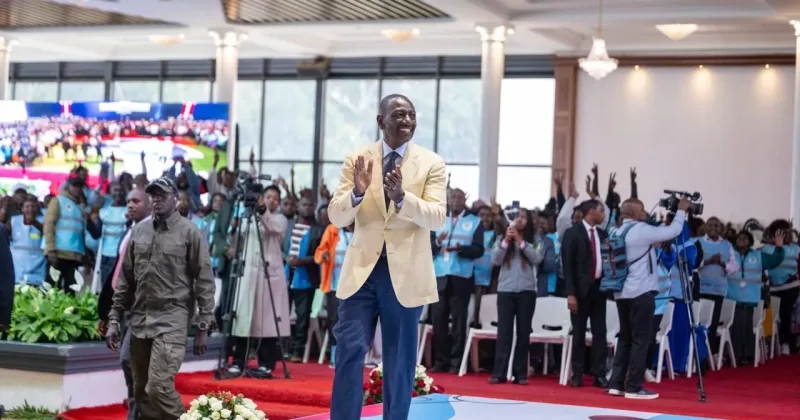
Speaking during an engagement with Community Health Promoters (CHPs), Ruto argued that SHA has fundamentally transformed healthcare financing by increasing funding to public hospitals, expanding health insurance registration and accelerating payments to health facilities across the country.
“We have changed our health system. Today SHA is performing ten times more than NHIF was performing,” Ruto said.
The President dismissed calls by some political leaders to restore NHIF, saying such proposals would reverse gains made under the Universal Health Coverage (UHC) programme.
To support his case, Ruto contrasted SHA’s financial performance with that of NHIF, saying the new authority is disbursing significantly more money to health facilities.
According to the President, NHIF paid about Sh5.6 billion every three months, while SHA is now paying approximately Sh12 billion every month.
He also pointed to the rapid growth in membership, noting that SHA has registered 32 million Kenyans, compared to roughly eight million who were enrolled under NHIF.
“We must speak the truth. We must set politics aside. Our nation is changing, and health is changing,” he said.
Ruto further highlighted increased allocations to public hospitals, citing Riruta Hospital in Nairobi, which he said previously received about Sh200,000 monthly but now receives more than Sh6 million under the new funding model.
He said similar improvements were being witnessed in hospitals across the country because healthcare funds now flow directly to facilities.
Beyond financing, Ruto said the government has strengthened community healthcare by formally recognising Community Health Promoters, providing them with training, stipends, medical kits and digital tools.
He pledged continued government support, saying additional resources would be allocated to improve their welfare and facilitate their work in delivering primary healthcare services.
The President maintained that the healthcare reforms form part of his administration’s broader agenda, alongside affordable housing, agriculture and education reforms.
Ruto used the platform to criticize political opponents who have pledged to abolish SHA if elected.
Without naming individuals, he argued that those advocating a return to NHIF lacked credible policy alternatives and warned that dismantling ongoing reforms would undermine the country’s progress.
He also linked opposition to SHA with criticism of other flagship government programmes, including affordable housing, markets and student accommodation, accusing rivals of seeking to reverse development initiatives.
The President’s remarks come days after Kakamega Senator Boni Khalwale renewed calls for the government to reconsider SHA and restore NHIF.
Khalwale argued that Ruto should apply the same reasoning used in reversing the controversial university funding model to healthcare reforms.
The senator noted that he had opposed both the differentiated university funding model and SHA while serving as Government Chief Whip, saying concerns raised by Kenyans should not be ignored.
His comments followed Ruto’s announcement that the government would abandon the means-tested university funding system after acknowledging that it had failed to achieve its intended objectives.
Despite the government’s optimistic assessment, SHA continues to face sustained criticism from patients, healthcare providers and opposition leaders over persistent system glitches, delayed claim processing and historical NHIF debts owed to hospitals.
Many healthcare facilities have reported operational challenges since the transition to SHA on October 1, 2024, with concerns over reimbursement timelines and system reliability remaining key issues.
The government, however, insists the reforms are beginning to deliver measurable improvements.
Treasury Cabinet Secretary John Mbadi recently told Parliament that more than 31.2 million Kenyans had registered under SHA.
He also said the government had established 228 Primary Care Networks, recruited more than 107,000 Community Health Promoters, and allocated Sh4 billion towards clearing verified NHIF debts owed to healthcare providers.