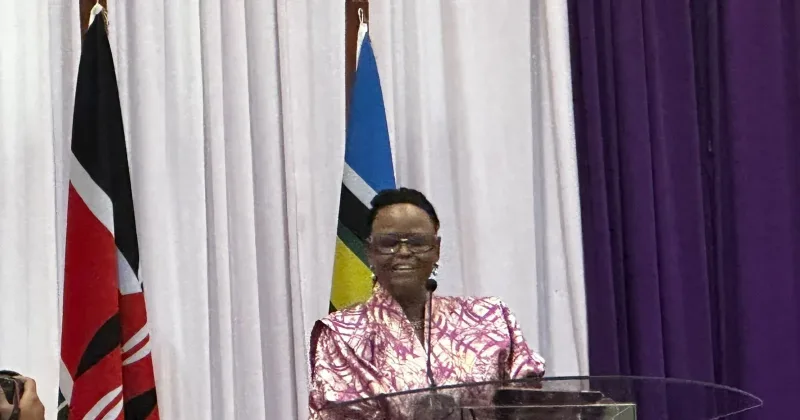
NAIROBI, Kenya, Aug 1 — Chief Justice Martha Koome has called on Kenya to document and preserve the achievements of pioneering women leaders, saying their legacy offers an important blueprint for expanding economic growth, strengthening institutions and creating opportunities for future generations.
Koome said the country must do more to celebrate and record the contributions of women whose leadership has helped transform Kenya’s corporate, legal, education, healthcare and public sectors.
She spoke during the launch of her book, Distinguished Women Leaders, which chronicles the journeys of prominent Kenyan women whose careers have helped shape the country’s social, economic and institutional development.
The Chief Justice said preserving the stories of women leaders was critical to ensuring their achievements remain part of Kenya’s national history while inspiring a new generation to pursue leadership positions.
Koome said many of the women profiled in the publication rose to influential positions despite facing discrimination, intense public scrutiny and workplace cultures that were often not designed to accommodate female leadership.
Some, she noted, were frequently the only women in senior decision-making spaces while simultaneously balancing demanding professional careers with family responsibilities.
Despite these challenges, Koome said their leadership helped open doors for other women and contributed to the transformation of key sectors of the Kenyan economy and public life.
“As Kenya’s first woman Chief Justice, I know I did not arrive here alone. I stand on the shoulders of the extraordinary women who made this journey possible.”
She said the book was intended to honour the women who paved the way while ensuring their experiences could serve as a source of inspiration for future generations.
“This publication honours their achievements and creates a lasting tribute to the contribution of Kenyan women to our nation’s progress.”
Koome said documenting the achievements of women leaders was not merely about celebrating the past but also about strengthening Kenya’s future leadership pipeline.
She argued that greater gender diversity in leadership and decision-making can contribute to stronger institutions and improved organisational performance.
The Chief Justice said the experiences of pioneering women demonstrated the importance of ensuring women have opportunities to participate meaningfully in economic and public decision-making.
She urged institutions to create environments where women can advance into senior leadership without having to overcome unnecessary structural barriers.
Distinguished Women Leaders profiles Kenyan women whose leadership has influenced a wide range of sectors, including business, governance, education, healthcare, environmental conservation and justice.
Among those honoured in the publication are environmentalist and Nobel Peace Prize laureate Wangari Maathai, former legislator Phoebe Asiyo, business leader Zippora Kittony and Ida Odinga, among others.
Their stories highlight the different ways women have contributed to Kenya’s development while navigating challenges associated with gender, leadership and institutional change.
Koome said documenting such experiences was essential because many women who have contributed significantly to the country’s progress remain underrepresented in Kenya’s national historical record.
The Chief Justice said the publication should not be viewed as an exhaustive account of Kenyan women’s achievements but rather as a starting point for documenting many more stories.
She said there were numerous women whose contributions to communities, institutions, businesses and national development remained largely undocumented.
Preserving those accounts, she argued, would provide young women and girls with role models while demonstrating that leadership opportunities are attainable despite structural and social barriers.
Koome said stronger documentation would also help Kenya recognise the breadth of women’s contributions beyond the few prominent figures whose stories are already widely known
The Chief Justice acknowledged that constitutional reforms have expanded opportunities for women to participate in leadership and governance.
However, she said legal and constitutional reforms alone were not sufficient to achieve full gender inclusion.
Koome called for sustained mentorship, institutional support and deliberate leadership development to ensure more women rise into decision-making positions in both the public and private sectors.
She said women aspiring to leadership need support systems that can help them navigate professional barriers and develop the skills required to compete for senior positions.
Koome said the experiences of pioneering women could provide valuable lessons for building a stronger pipeline of female leaders.
She emphasised the importance of role models in encouraging women to pursue careers in leadership, business, law, governance and other areas traditionally dominated by men.
The Chief Justice said the achievements captured in the book demonstrate that women have long played a central role in Kenya’s development, even when their contributions have not received sufficient recognition.
She urged the country to ensure that future generations inherit not only the institutions built by pioneering women but also the stories of how those institutions and opportunities were created.
The publication therefore seeks to connect Kenya’s history of women’s leadership with the country’s future economic and institutional ambitions.
By documenting the journeys of women who broke barriers and opened opportunities for others, Koome said Kenya could strengthen its commitment to inclusive leadership and ensure that women’s contributions remain an integral part of the country’s development story.