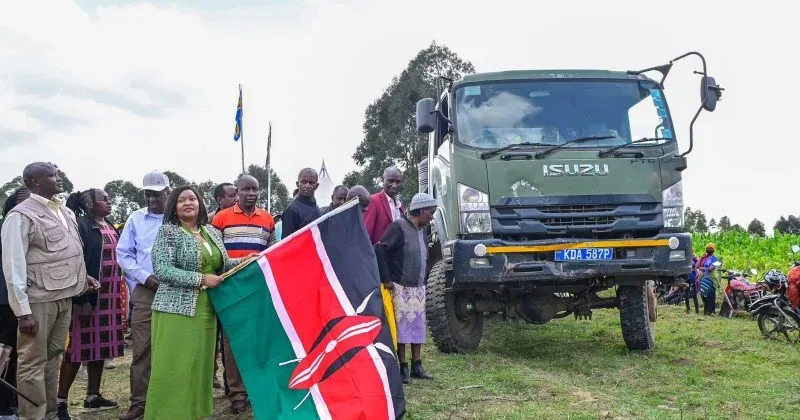
NAIROBI, Kenya, July 9 – The government has begun relocating 56 hippos from Mukindu public dam in Nyandarua County in a move expected to ease mounting losses for farmers and reduce the growing economic cost of human-wildlife conflict.
The exercise, being undertaken by the Kenya Wildlife Service (KWS) and the Wildlife Research and Training Institute (WRTI), follows the migration of the animals to the three-acre dam after Lake Ol’ Bolossat dried up in 2023.
For nearly two years, residents have reported widespread crop destruction, disrupted farming and safety concerns as the hippos strayed into farms and homesteads in search of food and water.
Tourism and Wildlife Cabinet Secretary Rebecca Miano said the operation is intended to deliver a lasting solution for affected communities.
“This marks the beginning of a lasting solution for the residents of Mukindu. We are committed to ensuring that the community can live and farm without the constant threat posed by the displaced hippos,” she said.
“We want to reassure farmers that the government is fully committed to ensuring their safety while restoring peace and stability in the area.”
Miano said relocating hippos is among the most complex wildlife conservation operations, requiring specialised equipment, experienced veterinarians and trained capture teams to ensure the safety of both the animals and nearby communities.
She added that the ministry is working with the Community Wildlife Compensation Committee to fast-track genuine claims for crop damage and other losses suffered by residents.
According the government, prolonged drought and shrinking water sources are increasingly pushing wild animals into human settlements, highlighting the need to balance conservation efforts with protecting livelihoods and supporting rural economies.