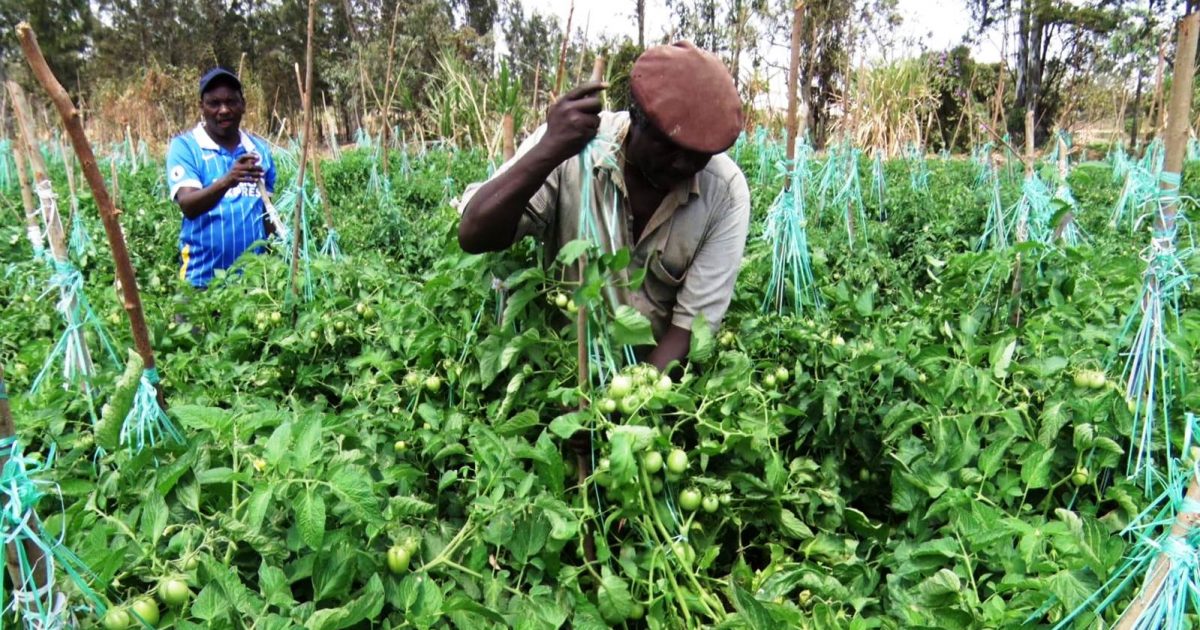
NAIROBI, Kenya, July 7 – Low fertiliser use and limited adoption of certified seeds are among the biggest factors suppressing agricultural productivity in Kenya, Murang’a Governor Irungu Kang’ata has said, calling for increased financing to help farmers access modern farm inputs.
Speaking on the sidelines of the FINAS 2026 Summit in Nairobi, Kang’ata said Kenya’s agriculture sector will struggle to achieve food security and improve farmer incomes unless investment shifts towards raising productivity through greater use of fertilisers, improved seeds and mechanisation.
His remarks come as governments, financiers and agribusiness players seek solutions to bridge Africa’s agricultural financing gap amid rising concerns over food insecurity and climate-related production shocks.
“Africa is the lowest user of fertiliser in the world. That explains why we are food-deficit as a country, so we need to pump in more resources to agriculture.”
“Secondly, the issue of certified seeds. People are still using traditional seeds, which means our yields continue to remain low.”
Kang’ata said increasing productivity, rather than merely expanding acreage under cultivation, should become Kenya’s primary agricultural policy objective.
He argued that farmers need greater access to quality inputs through affordable financing, saying higher yields are critical to reducing poverty and enabling the country to meet growing industrial demand for agricultural raw materials.
According to the governor, Murang’a has invested in distributing certified seeds, soil conditioners, fertilisers and pesticides to coffee farmers while supporting dairy and mango producers through targeted subsidy programmes.
The county allocates about Sh220 million annually to dairy farming and nearly Sh200 million to mango production, with additional funding supporting coffee and lime farming.
Kang’ata said Kenya must also accelerate agricultural mechanization, noting that many smallholder farmers still rely on basic hand tools that limit productivity.
He further called for stronger linkages between farmers and processors to ensure production responds to market demand rather than subsistence needs.
The governor acknowledged ongoing debate over synthetic fertilizers but maintained that farmers should have access to any inputs approved by regulators if they improve productivity.
He said discussions at the FINAS Summit highlighted the need for increased public and private financing to support farmers, arguing that access to quality inputs should be treated as an investment capable of transforming rural incomes and strengthening Kenya’s food security.
Agriculture remains one of Kenya’s largest economic sectors, contributing roughly a fifth of the country’s gross domestic product directly while employing the majority of rural households.