NAIROBI, Kenya, July 7 – Steel manufacturers have blamed high energy costs, cheap imports and the influx of substandard products for slowing growth in Kenya’s steel industry, warning that the challenges are leaving much of the country’s production capacity idle.
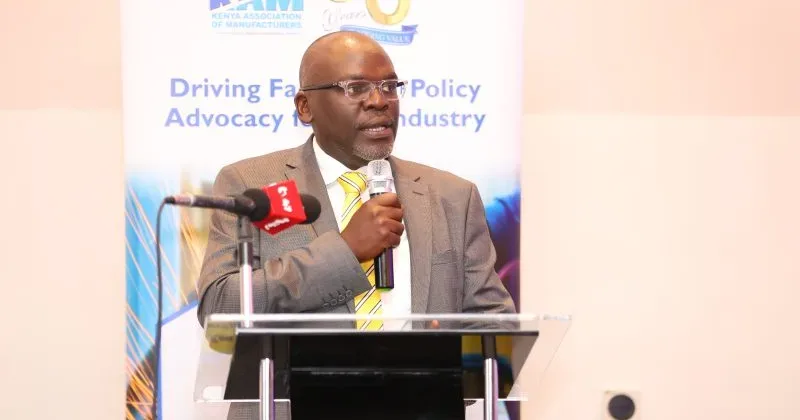
Speaking at the East African Steel Summit in Nairobi, Kenya Association of Manufacturers (KAM) Chief Executive Tobias Alando said the sector is operating at just 36 percent of its installed capacity of 4.2 million tonnes despite rising domestic demand for steel.
Alando said the industry contributes about 13 percent of Kenya’s manufacturing output and generates approximately Sh34 billion in taxes annually, but continues to face rising production costs, expensive raw materials, unpredictable tax policies and declining exports.
He noted that Kenya imported about 1.66 million tonnes of iron and steel products in 2025 while exporting only about 197,000 tonnes, highlighting the country’s continued reliance on imported steel despite having significant local production capacity.
According to Alando, increasing domestic production would reduce import dependence, strengthen local value addition and support industries such as construction, transport and energy that rely heavily on steel.
He said demand for steel is expected to rise as the government rolls out affordable housing, roads, railways, ports, industrial parks and energy projects, while regional and international trade agreements such as the African Continental Free Trade Area (AfCFTA), COMESA and the Kenya-European Union Economic Partnership Agreement offer opportunities to expand exports.
However, he cautioned that manufacturers will only benefit if the country addresses the high cost of electricity, limited access to affordable financing, regulatory uncertainty and competition from low-cost imports.
KAM Metal and Allied Sector Chairman Bobby Johnson said the steel industry remains central to East Africa’s infrastructure and industrialisation agenda, adding that manufacturers are prepared to meet growing demand if operating conditions improve.
He also called for stricter enforcement of quality standards and greater cooperation among East African Community member states to curb the circulation of substandard steel products, saying harmonised standards would protect consumers while promoting fair competition for compliant manufacturers.
The two-day East African Steel Summit has brought together more than 400 manufacturers, traders, policymakers, financiers and technology providers to discuss investment, trade, innovation and sustainability in the regional steel industry.