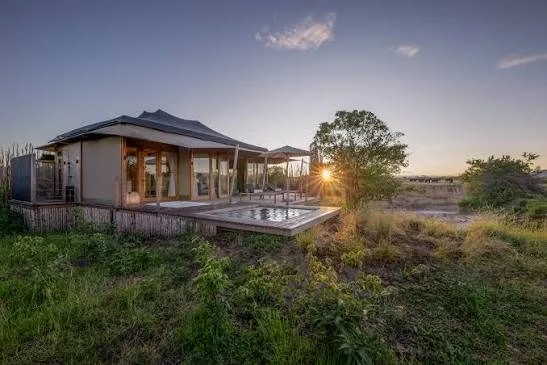
NAROK, Kenya, Jul 3 — The Environment and Land Court has, for the second time this year, thrown out a legal challenge against the multi-billion-shilling JW Marriott Maasai Mara Safari Camp, ruling that opponents of the luxury development bypassed the law by moving directly to court.
Instead, the court said the petitioners should have first sought redress before the National Environment Tribunal (NET).
In a ruling delivered on Thursday, Justice Lucy Gacheru struck out a petition filed by the East Africa Tour Guides Drivers Association challenging the construction and operation of the luxury safari camp along the Sand River in the Maasai Mara.
The judge held that the association had prematurely invoked the court’s jurisdiction by failing to exhaust the dispute resolution mechanisms provided under the Environmental Management and Coordination Act (EMCA), leaving the court without jurisdiction to hear the matter.
Justice Gacheru further observed that the interim orders sought by the association could not, in any event, have been granted because the project had already been completed, was operational and had received approvals from the relevant environmental, planning and wildlife authorities.
“The Court must also consider where the public interest lies. On the material presently before the Court, the project has been completed and is operational,” Justice Gacheru noted.
“It is also apparent that substantial financial investment has already been undertaken and that the statutory agencies charged with environmental regulation, physical planning and wildlife conservation exercised their respective mandates before issuing the impugned approvals. Public interest therefore militates against the suspension of an operational development through interlocutory orders before the legality of those approvals has been conclusively determined,” the judge ruled.
The association had sought orders barring Lazizi Mara Limited, Ritz-Carlton Hotel Company LLC and Marriott International Inc, together with their employees and agents, from advertising, marketing, receiving bookings for or operating commercial tourism activities at the camp pending determination of the petition.
It also sought orders restraining the respondents from interfering with, intimidating or harassing the association, its members or anyone accessing the Sand River wildlife corridor.
In addition, the association wanted the court to compel the relevant government agencies to suspend or revoke all licences, permits and approvals issued to the project and require immediate measures to prevent further environmental degradation and alleged blockage of the Sand River wildlife corridor.
The petition alleged that the luxury safari camp was unlawfully constructed and operational within a critical wildlife corridor in the Maasai Mara National Reserve, obstructing wildlife migration, violating the Maasai Mara National Reserve Management Plan and causing environmental degradation.
However, the hotel operators opposed the case, arguing that it duplicated an earlier petition filed by conservationist Dr. Joel Meitamei Ole Dapash, which the same court struck out in February on similar jurisdictional grounds.
They further argued that Marriott International Inc and Ritz-Carlton Hotel Company LLC had been improperly joined in the proceedings because no specific relief had been sought against them.
The developers maintained that claims the camp obstructed the annual wildebeest migration were scientifically and factually unfounded, arguing that no gazetted or scientifically recognised wildlife migration corridor passes through the project site.
According to the respondents, the Kenya Wildlife Service confirmed the camp is not situated within any recognised migration corridor and does not impede wildlife movement.
They further told the court that the development was designed with open spaces, ecological buffers and low-impact structures to coexist with wildlife, while post-construction environmental audits confirmed compliance with environmental safeguards and found no pollution, habitat fragmentation, ecological disturbance or regulatory breaches.
The ruling marks the second unsuccessful attempt to stop the project through the courts.
In February, Justice Gacheru struck out a similar petition filed by conservationist Dr. Joel Meitamei Ole Dapash after finding that he had also failed to first pursue the dispute before the National Environment Tribunal.
In that decision, the judge held that the court’s jurisdiction had been “prematurely invoked” in contravention of the doctrine of exhaustion and consequently declined to hear the petition.