BY JOSEPH KAMOTHO
The silence broken by the Kenyan leadership over the territorial claims by Uganda brings to an end frosty relations between East African neighbours and overtakes the long awaited report of experts on the ownership of the rocky island in the world’s second largest fresh water Lake Victoria.
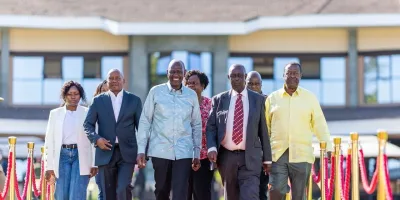
President Mwai Kibaki announced that Migingo island – pronounced Mijinjo by the invading forces – is part of Kenyan territory contrary to earlier claims by expansionist Ugandan President Yoweri Museveni. The surprise announcement during Mr Kibaki’s first tour of Nyanza province since his controversial re-election was seen as a public relations exercise to calm tempers of residents of the area where Migingo falls.
In one of the worst aggressions by a neighbour and a partner in an economic bloc, (the East African Community), Ugandan security forces invaded the island, hoisted a flag, chased away protesting fishermen and posted administrators there. At the height of a crisis, President Museveni retracted but said that ‘Kenya owns the island but the water around it belongs to Uganda’.
Unlike his no-nonsense predecessors, President Kibaki ruled out the use of force to remove external aggressors and an occupation army from the Kenyan soil. Silence greeted the cries for military intervention. Instead, the Kenyan leadership offered to negotiate with the aggressors. As part of conflict resolution, the two counties named experts to conduct a survey of the area. Now that Mr Kibaki has intervened, the report may not see the light of day after a whooping Sh140 million has been spent on the exercise.
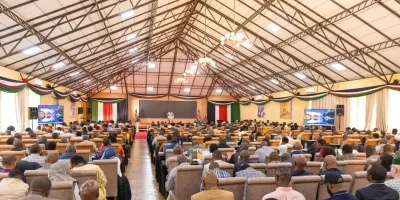
The president had no choice but to take a position on the territorial claims ahead of a high level East African Community Investment Conference in Kenya that was to be attended by no lesser titles than presidents of the member States including Uganda. The territorial claims could have clouded or derailed the conference chaired by Rwandan President Paul Kagame. Mr Museveni was conspicuously absent at the three day meeting where he could be discussed.
The Rwandan leader offered to mediate in the dispute characterized by name calling, insults and acrimonious exchanges reminiscent to similar verbal wars between Kenya and Tanzania that culminated in the collapse of the then world’s oldest economic bloc, the East African Community in 1977.
In principle and in the spirit of good neighbourliness, territorial boundaries drawn by colonizers are not transferable or negotiable as the present day Kenyan leadership would like the rest of Kenyans to believe. Once sworn in, a leader defends the population of his country against external aggression and threats without due consideration to political support during elections. Nyanza voters did not vote for Kibaki in the last general elections.
The territorial claims were the second by a Ugandan leader. Dictator Idi Amin claimed that his country’s border stretches to Naivasha, 60 kilometers west of the Kenyan capital, Nairobi. True to the oath of office, the late President Jomo Kenyatta hastily reacted to Amin’s claims. Kenyans declared a war that was never fought but fought a ten year war with Somalia over the latter’s claims of former Northern Frontier district renamed Northeastern province.
.
Although most African countries abide by the Organisation of African Unity (OAU) Charter on boundaries, few have ignored the principle and fought some of the bitter wars with neighbours and others disintegrated. Eritrea is a case in point. It was carved out of Ethiopia after a long drawn out war. Sudan is awaiting a referendum outcome on the self determination of Southern Sudan. Nigeria fought a border war with Cameroun and overran the secessionist Ibos rooting for their territory called Biafra.
It is time the Kenyan leadership reacted decisively and promptly against external threats and aggression from war torn neighbours. Next door Somalia is on fire and the war there could spill into the Kenyan territory that has become the safe sanctuary for the Somalis fleeing the war and the pirates said to be hiding. The country is not prepared to repulse Muslim fundamentalists who may choose to pursue their enemies into Kenya which could be turned into a battlefield ground of foreigners.
(Joseph Kamotho is a former cabinet minister and secretary general of two major political organizations including the then governing party. Kenya African National Union ( KANU) email> kamothojj @gmail.com)