By Paolo Abenavoli
JUNE 27 – In the development world, there’s a growing consensus that for impact to be sustainable, it must be community-led, deeply rooted in local realities, and centered on dignity, not dependency.
In Kenya, underserved communities face the most significant challenges when it comes to accessing crucial services and resources that can improve their lives, such as food, shelter, education, healthcare, and more.Focusing more closely on these underserved communities, vulnerable children and their families often bear the burden of these challenges. With limited access to these essential services, they are greatly impacted by poverty, systemic inequality, and social exclusion. This group not only faces greater risks but are also too often excluded from the very interventions by different stakeholders designed to support them.
According to an article by UNICEF on the The 2019 Violence Against Children Survey (VACS) by the Ministry of Labour and Social Protection, 46 percent of 18 to 24-year-old young women had faced at least one type of violence, physical, emotional or sexual during their childhood, as well as 52 percent of young men in the same age group. In 2010, 76 percent of young women and 80 percent of young men reported facing violence as children, showing progress over the last ten years, although the numbers remain alarmingly high.
Additionally, 41% of Kenyan children live in monetary poverty, with 52% in multidimensional poverty, lacking essentials like education, health, sanitation, and housing according to a report by UNICEF.
These figures highlight a troubling rise in violence against children and emphasize the urgent need for collaborative action among all stakeholders to improve the lives and living conditions of affected children.
To effectively support these communities, all stakeholders must collaborate in developing strategies that empower these underserved communities to lead sustainable and dignified lives.
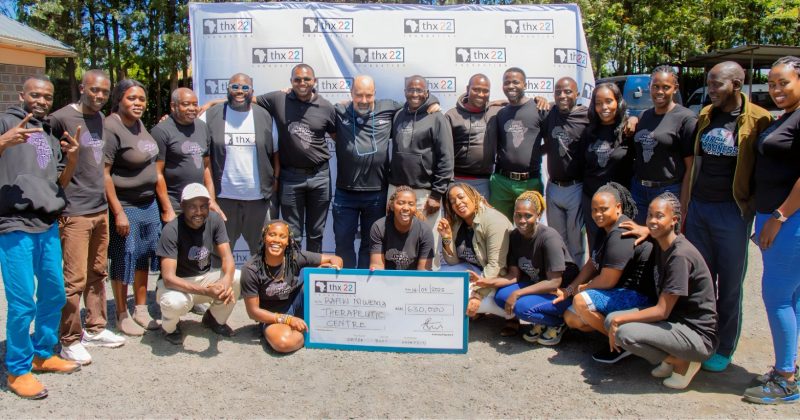
The THX22 Foundation has shown solidarity in this cause through a funding partnership with Rafiki Mwema Therapeutic Centre in Nakuru, Kenya, to implement a Kshs 630,000 project to support the Rafiki Jasiri School, a therapeutic learning space created for children who have experienced extreme trauma and are unable to integrate into mainstream schooling.
The project benefits the children through a two-part initiative that provides school fees, giving each child a sense of identity and equality as they continue their educational and recovery journey.
As the THX22 Foundation continues to expand its footprint in education, health, and talent nurturing across Africa, we remain guided by a core belief that real change occurs at the grassroots level, and it is our responsibility to ensure that such change is not only funded but also sustained and scaled.
The writer is Head of Projects at THX22 Foundation