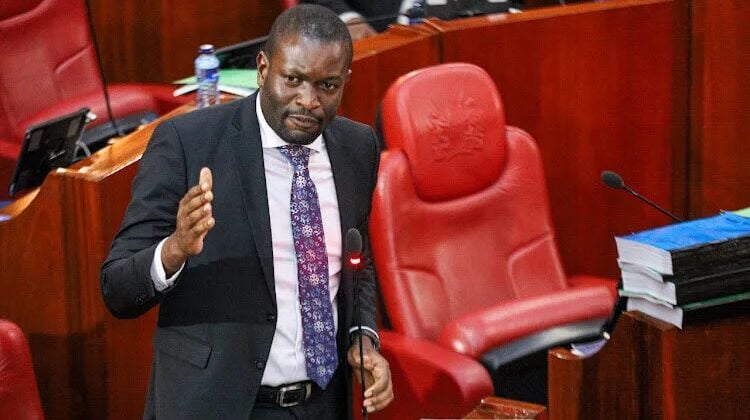
NAIROBI, Kenya, Oct 7 – Nairobi Senator Edwin Sifuna has accused parliamentary “gatekeepers” of frustrating scrutiny of the proposed Lamu refinery, just days after he filed a formal request for documents on the project with the Senate set to proceed on recess on October 9.
Sifuna said the President’s call for critics to use “formal channels” was misleading, arguing that his request for information had already been formally lodged with the Senate but risked being blocked before reaching the House floor.
“The reason Ruto speaks confidently in rallies telling us to use ‘formal channels’ to get documents held by the state is he knows his gatekeepers in Parliament will never approve this business to make it to the floor,” Sifuna said.
“This one on the Lamu Refinery has suffered the same fate. We must uproot this entire system in 2027 to rescue our country.”
The senator’s remarks came after he formally asked the Senate Standing Committee on Energy to compel the government to release records relating to the refinery, in a request stamped as received by the Senate on October 2.
The Energy Committee, chaired by Elgeyo Markwet Senator William Kisang, is yet to formally submit the statement on the floor of the house.
Sifuna’s request comes just days before the Senate is scheduled to proceed on recess on October 9, raising questions about how quickly the Energy Committee will act on the demand for documents. The Senate is scheduled to resume sittings on November 3.
Sifuna is seeking disclosure of the project’s financial model, ownership structure, public participation process, environmental assessments and the extent of any financial commitment by the Kenyan taxpayer.
His request is made under Standing Order 53(1), which allows a senator to seek a statement from a committee on a matter of public concern.
In the request, Sifuna argues that although there is no objection to development or foreign investment, the project must comply with constitutional requirements on transparency, accountability, public participation, sustainable development and public finance management.
He specifically wants the Energy Committee to require the production of all records relating to the Dangote refinery project, citing Article 35(3) of the Constitution, which requires the State to publish and publicise important information affecting the nation.
He has also asked the committee to provide details of public participation conducted before approval of the project and disclose concerns raised by affected communities.
The senator wants the government to explain the financing and implementation model, including how much Kenyan taxpayers will contribute and the source of the funds.
He is further demanding a value-for-money analysis for any investment made on behalf of taxpayers, as well as a list of all beneficial owners of the project and companies involved in its implementation.
The request came days after President Ruto told critics demanding details of the agreement between his administration and Nigerian businessman Aliko Dangote to use Parliament rather than political rallies.
“If you want the agreement, you know how it is asked for in Parliament so that it is brought,” the President said during a rally.
Ruto subsequently said those seeking information about the Lamu project should use the proper channels rather than raise the issue at political meetings.
Sifuna’s latest intervention places the matter directly before the Senate Energy Committee, even as he questions whether the parliamentary process will allow the request to proceed.
The dispute has added to growing scrutiny of the refinery, which was formally launched in Lamu on September 30 by President Ruto and Dangote.
The $16 billion project is planned to process up to 700,000 barrels of crude oil a day and is expected to supply refined petroleum products to Kenya and other regional markets.
The government has presented the refinery as a major industrial and energy-security investment, while critics have demanded greater disclosure of its ownership, financing and contractual arrangements.
Ruto has said Kenya and Dangote have agreed to develop a pipeline linking Turkana’s oilfields to Lamu, with Kenyan crude expected to form part of the refinery’s feedstock alongside crude sourced from other countries.
The project has also faced legal and environmental scrutiny. A consumer-rights group filed a legal challenge on October 2, citing concerns over transparency and the disclosure of information relating to the multibillion-dollar investment.
Separately, Thirdway Alliance leader Ekuru Aukot has written to Attorney-General Dorcas Oduor seeking access to the agreement between the government and Dangote, including execution copies, schedules, side letters, amendments and beneficial ownership details.
The demands come against a backdrop of political claims over the ownership and terms of the refinery. Treasury Cabinet Secretary John Mbadi has previously denied claims that President Ruto owns shares in the project, saying the President has no stake in the refinery and that a proposed 30 per cent shareholding would be opened to East African investors.