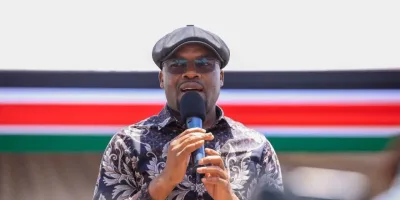
NAIROBI, Kenya, Jan 26 — President William Ruto has urged the United Democratic Alliance (UDA) National Governing Council to formalize a political coalition with the Orange Democratic Movement (ODM), describing the alliance as critical to securing a decisive victory in the 2027 General Election.
The President revealed that leaders from UDA and ODM had agreed to explore a coalition aimed at broadening their political base ahead of the next polls.
While acknowledging that he won the 2022 election by a margin of about 200,000 votes, Ruto emphasized that the upcoming contest must deliver a landslide.
“We must win the next election by a margin of 2 to 3 million to consolidate the country and drive our transformation agenda,” he said, adding that the coalition strategy would help stabilize politics and promote long-term development.
Ruto stressed the importance of strengthening UDA as a national political platform that transcends ethnic and regional divides. He said a robust party structure ensures equal opportunities for leadership and allows individuals from minority communities to rise based on merit and ideology rather than numbers.
“For us to build this political party, it will guarantee everyone seated here a platform to demonstrate leadership without the baggage of your community,” Ruto said.
“We are all equal within a political party. Someone from a minority group can lead Kenya because they belong to a party with national networks and will be judged by the party’s beliefs, not the size of their community.”
Party-based politics
The President emphasized that internal party democracy must be driven by ideas and competence. Aspirants for positions such as party chairperson, he said, must convince delegates of their ability to implement the party manifesto.
“Leaders are grown when they prove they know what they are doing,” Ruto said, citing former U.S. President Barack Obama as an example of leadership earned through persuasion and policy clarity.
Framing party-based politics as a solution to tribalism in Kenya, Ruto argued that leadership should be anchored on manifestos, vision, and institutions rather than personalities. He highlighted that his own presidency was secured based on a manifesto, not ethnic considerations.
“People rightly demand to see those promises fulfilled,” he said.
On the economy, Ruto defended the government’s privatization agenda, saying it is designed to ensure Kenyans get maximum value from national assets while funding infrastructure development. He projected that the sale of Kenya Pipeline Company could raise about Sh110 billion, with plans to mobilize around Sh350 billion in the next two months through capital market privatizations.
“I have made a commitment that proceeds from the privatization of Kenya Pipeline, Safaricom, or any other entity will be used only to develop infrastructure, not to pay salaries or debt,” he said.
Ruto said the Sh350 billion would unlock infrastructure projects worth up to Sh4 trillion, including roads, dams, and energy generation. He noted that the broader development program requires Sh5 trillion, with most financing expected this year and the remainder next year.
The President asserted that his administration has already stabilized key sectors such as the economy, agriculture, education, and health, and is now focused on moving Kenya toward “first-world status” within a generation.