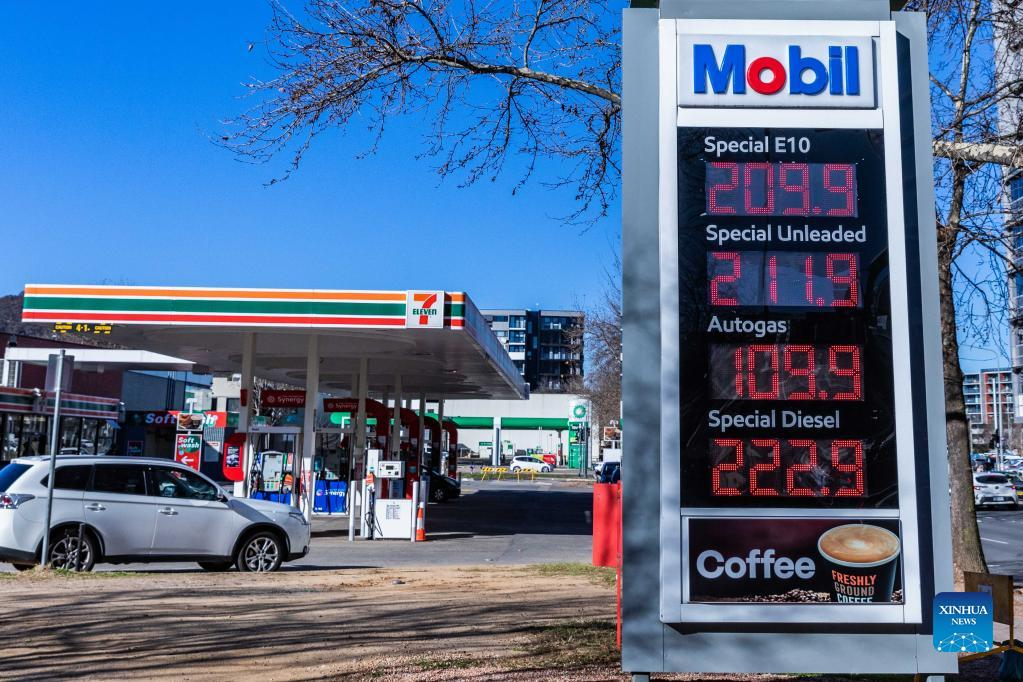
CANBERRA, Oct. 23 (Xinhua) — Australia’s Treasurer has warned of persistent inflation following a spike in petrol prices.
According to estimates released by the Treasury on Monday, consumer price index (CPI) data for the third quarter of 2023 will show petrol prices in Australia rose by 7 percent between the start of July and the end of September.
The Australian Bureau of Statistics (ABS) will on Wednesday release CPI data measuring Australian inflation for the September quarter.
Ahead of the release, the Treasury said it estimates that the spike in petrol prices will add a quarter of a percentage point to inflation.
Treasurer Jim Chalmers said in a statement that inflation in Australia will likely remain higher longer than previously projected by the government as a result of global pressures.
“While inflation is moderating overall, it’s more persistent globally and so it will be more persistent here as well — and we expect to see some of this reflected in the quarterly inflation figures this week,” he said.
According to the most recent ABS data, the CPI rose by 5.2 percent in the 12 months to the end of August — up from 4.9 percent in the year to July.
Australia’s central bank, the Reserve Bank of Australia (RBA), has a target to achieve an inflation rate of 2-3 percent and will decide whether to raise interest rates to help reach that goal by 2025 at the next meeting of its board on Nov. 7.
Following its meeting on Oct. 3 the RBA board noted that the rise in petrol prices would continue to “underpin inflation over coming months.”
Chalmers on Monday said petrol prices could continue to rise, with the conflict in the Middle East adding “further uncertainty.”