NAIROBI, Kenya, Oct 14— Safaricom has called for stronger cybersecurity safeguards as artificial intelligence creates new risks for businesses and digital service users, warning that security must be built into technology from the outset.
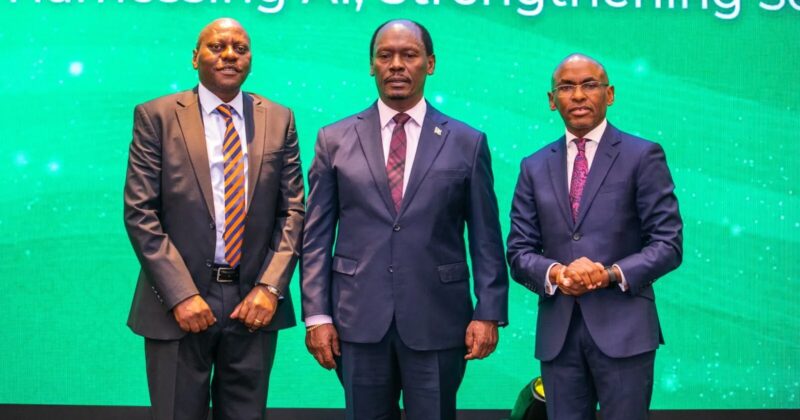
Speaking during the fourth Safaricom Cybersecurity Summit in Nairobi on Wednesday, Group Chief Executive Officer Peter Ndegwa said responsible AI adoption must go hand in hand with stronger protections, shared standards and collaboration across sectors.
“AI is expanding what is possible for businesses and society, but that opportunity must be built on trust,” Ndegwa said.
“Cybersecurity can no longer be treated as a technical safeguard added after a service is developed. It must be embedded from the start and strengthened through shared standards, responsible innovation and collaboration across sectors.”
Held under the theme “Harnessing AI, Strengthening Security,” the summit brought together players from Kenya’s digital ecosystem to examine the growing use of AI in cybersecurity and its potential to enable sophisticated attacks, including deepfakes, AI-generated impersonation, automated scams and ransomware.
The meeting comes amid rising cyber threat exposure in Kenya.
The Communications Authority of Kenya’s National Kenya Computer Incident Response Team–Coordination Centre detected 11.12 billion cyber threat events in the last financial year, a 29 per cent increase from 8.62 billion in the previous year.
Participants explored how organisations can use AI-enabled threat detection, strengthen incident response, prepare for ransomware attacks and address the shortage of cybersecurity skills.
Discussions also highlighted the importance of tested response procedures, clear accountability and a security-aware workforce capable of identifying suspicious activity and verifying high-risk requests.
Safaricom targets cybersecurity gaps among businesses
Safaricom also emphasised the need to expand access to cybersecurity solutions for micro, small and medium enterprises (MSMEs), which it said account for about 70 per cent of Kenya’s gross domestic product.
The company said protecting these businesses’ operations, customer data and digital transactions was essential as more enterprises adopt technology to serve customers and manage their operations.
Safaricom provides Software-Defined Wide Area Network (SD-WAN) services for secure, centrally managed connectivity across multiple business locations and a Managed Security Operations Centre (MSOC) that offers continuous threat monitoring, expert analysis and coordinated incident response.
The solutions are designed to give businesses access to enterprise-grade security without requiring them to build and manage complex cybersecurity capabilities in-house.
Now in its fourth year, the Safaricom Cybersecurity Summit serves as a platform for industry dialogue and collaboration on digital security.
The discussions stressed the need for organisations to match AI adoption with effective security controls, stronger governance and the capacity to respond to evolving cyber threats.