NAIROBI, Kenya, July 28 – President William Ruto has declined to sign into law the Public Procurement and Asset Disposal (Amendment) Bill, 2024, returning it to Parliament with proposed changes after raising concerns that some of its provisions could hurt Kenya’s investment climate and weaken the country’s public procurement framework.
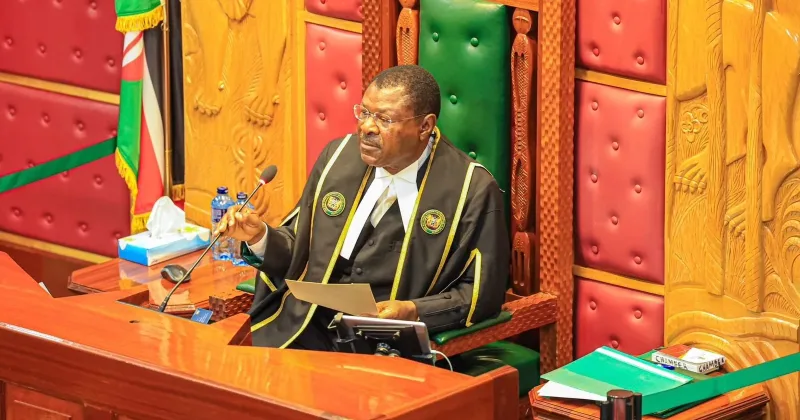
National Assembly Speaker Moses Wetang’ula formally communicated the President’s decision to Members of Parliament on Tuesday as the House resumed sittings after a short recess.
The Speaker told lawmakers that President Ruto had exercised his constitutional powers under Article 115 of the Constitution to refer the Bill back to Parliament for reconsideration, citing reservations over 17 clauses.
“The President has expressed reservations on clauses 2, 3, 6, 7, 8, 10, 11, 12, 13, 14, 15, 16, 18, 19, 20, 21 and 27 of the Bill,” Wetang’ula informed the House.
The Bill was approved by the National Assembly in November 2024 before receiving Senate approval in May this year. It must now undergo fresh consideration by MPs, who will determine whether to adopt the President’s recommendations or override them in accordance with constitutional procedures.
According to the Presidential Memorandum, one of the Head of State’s main objections relates to the Bill’s proposed definitions of local and foreign firms.
President Ruto argues that the provisions are impractical and could undermine government efforts to attract foreign direct investment, mobilise private sector financing and improve Kenya’s competitiveness as an investment destination.
The President further contends that the proposed changes could negatively affect the country’s procurement system and broader economic agenda.
Wetang’ula referred both the Bill and the Presidential Memorandum to the Departmental Committee on Finance and National Planning, directing the committee to urgently review the President’s concerns and submit its report to the House within the constitutional timelines.
Under the Constitution and the National Assembly Standing Orders, Parliament is required to consider presidential reservations within 21 days of receiving the memorandum.
“The committee is required to table its report as soon as possible to enable the House to consider the President’s reservations within the stipulated timelines,” the Speaker said.
He also reminded MPs that debate during the reconsideration stage will be confined to the clauses objected to by the President.
“For avoidance of doubt, only sections of the Bill that have reservations ought to be considered,” Wetang’ula ruled, before directing the Clerk of the National Assembly to circulate the Presidential Memorandum to all members.
Once the National Assembly reaches a decision on the President’s recommendations, the Bill will be transmitted to the Senate for concurrence before the legislative process proceeds.