Walk into a Kenyan shop, construction site, factory or electronics store and one thing is increasingly difficult to miss. China is everywhere.
From smartphones and solar equipment to machinery, vehicles, household goods, and industrial technology, Chinese products are part of everyday life. For millions of consumers and businesses, Chinese manufacturing has also made once-expensive products and technologies more accessible.
But China’s growing export strength is about more than the goods leaving its factories. It is reshaping global trade and creating opportunities that countries such as Kenya and the wider African continent should explore.
The latest trade figures demonstrate the scale of the transformation.
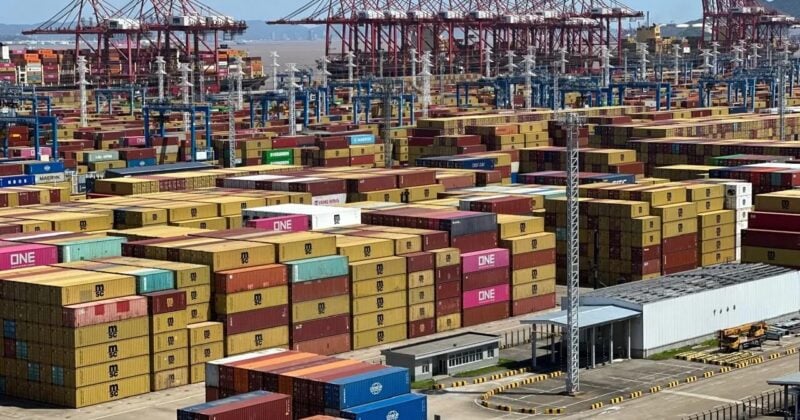
China’s total imports and exports of goods rose 18.8 per cent year on year in the first three quarters of 2026 to 39.94 trillion yuan, equivalent to about $5.97 trillion. Exports increased by 16.4 per cent to 23.2 trillion yuan, while imports grew even faster, by 22.3 per cent, to 16.74 trillion yuan.
September was particularly striking. China’s total goods trade reached 5.16 trillion yuan during the month, an increase of 27.5 per cent from a year earlier. It was the first time monthly trade had crossed the 5 trillion yuan mark and the sixth consecutive month of double-digit growth.
Even more telling is the acceleration during the year. Trade growth moved from 15.3 per cent in the first quarter to 18.3 per cent in the second and 22.3 per cent in the third.
These numbers tell us something important. China’s manufacturing and export capacity remains a major force in the global economy, and its impact is extending well beyond China’s borders.
There has been growing discussion in some parts of the world about what is being described as a new “China shock 2.0”. The concern is that China’s manufacturing strength and growing exports could place additional pressure on industries in other countries.
While Competition is a reality of international trade, there is a broader story that deserves attention.
China’s manufacturing scale has helped reduce the cost of products and technologies that developing countries need. Electric vehicles, solar equipment, batteries, electronics, machinery and other technologies are becoming more accessible to markets that previously struggled with their cost.
For Africa, that creates an important opportunity. The question should not simply be whether China is exporting too much. A more useful question is what African economies can do with the opportunities created by China’s manufacturing strength, technology and enormous market.
Africa needs industrialisation. It needs investment, infrastructure, technology, skills and access to markets. It needs to move beyond the traditional pattern of exporting raw materials and importing finished products.
Closer economic cooperation with China can contribute to that transition. At the same time, the relationship must increasingly be about more than buying and selling.
For Kenya, the opportunity is to attract investment that builds productive capacity, encourages technology transfer, develops local skills and connects Kenyan companies to regional and global value chains.
A Kenyan manufacturer should not only be asking what can be imported from China. The bigger question should be what can be produced in Kenya using Chinese technology, investment and expertise.
That is where the relationship can become transformative.
There is another development that should not be overlooked. China has expanded zero-tariff treatment to African countries with which it has diplomatic relations, opening greater opportunities for African products to enter the Chinese market.
For countries such as Kenya, this matters. It creates greater potential for agricultural products, manufactured goods and other African exports to reach Chinese consumers at more competitive prices. It also creates an incentive for investment in Africa, particularly in processing, manufacturing and value addition.
This changes the conversation because for years, much of the discussion about China-Africa trade has focused on the volume of Chinese goods entering African markets. We should now pay equal attention to the opportunities for African goods to enter China.
That requires Africa to be ready. Zero tariffs alone will not transform African exports. Countries still need to improve production, value addition, quality, standards, logistics, packaging and reliability. Farmers and manufacturers need access to finance and technology. Governments need policies that make it easier to produce and export competitively.
This is where Kenya has an opportunity. Kenya has a diversified economy, a strong agricultural base, an established services sector and a strategic position as a gateway to East Africa. Deeper cooperation with China can help build on these advantages.
The objective should be to attract investment that creates jobs and skills, supports local suppliers and increases the amount of value added locally.
China’s own experience is instructive. Its rise as a global manufacturing power did not happen overnight. It was built through infrastructure, investment, skills, technology, innovation and a sustained connection to international markets.
Africa does not need to copy China’s economic model. But there is much to learn from the way China has built productive capacity and connected its industries to global demand.
The world is changing, and global trade is changing with it.
China’s export strength is one of the most important forces shaping that change. For Africa, the response should not be fear or isolation. It should be preparation.
We should ask how to optimize business environment, and how to turn trade into investment, investment into manufacturing, manufacturing into jobs and technology into greater productivity.
The crux of the matter here is building a relationship that enables Kenyan businesses to produce more, export more and participate more meaningfully in global value chains.
China’s growing engagement with Africa offers that possibility.
The real opportunity is to become a stronger producer and exporter with value addition for Africa to reap big.
China’s export strength is reshaping global trade. The challenge for Kenya and Africa is to ensure that we are not merely watching that transformation unfold, but finding our place within it.
Elijah Mwangi is a scholar based in Nairobi who comments on local and global affairs.
Disclaimer: The views expressed are solely those of the author and do not necessarily reflect those of Capital FM.