Across China, millions of people were on the move last week as railways filled and tourist destinations welcomed crowds during the seven-day National Day holiday, which ran from October 1 to 7. For many, it was simply a time to rest and reunite with family. But there was something deeper behind this particular holiday.
National Day commemorates the founding of the People’s Republic of China in 1949. Seventy-seven years later, it is easy to look at today’s China, with its modern cities and enormous consumer economy, and forget how long and difficult the road to this point has been. That is where the Long March comes in.
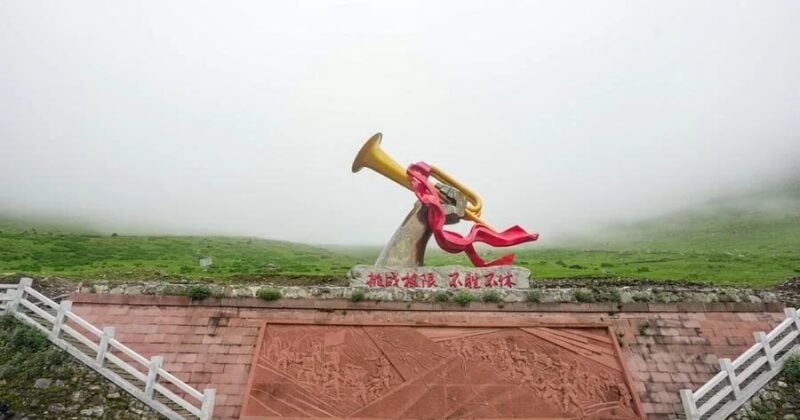
The Long March was not a holiday, nor a comfortable journey towards a known destination. It was a desperate struggle for survival. Beginning in 1934, Communist forces broke out of Nationalist encirclement and retreated across some of China’s most difficult terrain, enduring hunger, disease and extreme weather. The Long March has come to embody an idea: that a difficult journey can be endured when people believe strongly enough in the destination.
That idea is worth considering in Africa, because Africa, too, is on a long march. Our journey began long before independence, in the resistance to colonial domination. Independence did not end the journey; it changed the challenge. The struggle since has been to turn political freedom into economic freedom, to build industries, educate populations, create jobs and improve infrastructure and healthcare, so that the continent’s resources translate into a better life for its people. That journey is still underway.
This is why the Long March deserves discussion in Africa as an idea about national development. We tend to measure development through statistics such as GDP growth, roads built and megawatts generated. But behind every successful development story lies something less easily measured: patience, discipline, sacrifice and the willingness to continue when results are not immediate. China’s transformation is the product of decades of effort, experimentation, policy changes and serious setbacks, and Chinese political discourse still invokes a “new Long March”.
This does not mean Africa should copy China’s political or economic system. What works in one country cannot simply be transplanted into another. The more useful lesson is persistence. Human capital takes generations to develop, strong institutions take time to establish, and infrastructure becomes transformative only when connected to productive economic activity. National development requires consistency that extends beyond individual political cycles.
Indeed, Africa needs its own long-term vision. The African Union’s Agenda 2063 offers an ambitious vision of a prosperous, integrated and peaceful Africa. What remains critical is sustained implementation. A long journey requires knowing the destination and adjusting without abandoning it. China’s own Long March involved mistakes, losses and changes of strategy, and the Zunyi Meeting of 1935 became a turning point. Perseverance sometimes requires recognising what is not working and having the courage to change it.
There is also a historical connection between China and Africa. During Africa’s liberation struggles, China built relationships with newly independent states and supported some liberation movements, while cooperation later expanded into trade, infrastructure and education.
The Tanzania-Zambia Railway, TAZARA, built in the 1970s, remains one of the most visible reminders of that cooperation. Chinese workers laboured alongside African counterparts, and some died. Today’s relations are far more complex and should be discussed with maturity. But today’s achievements are often built on yesterday’s sacrifices.
That is the contrast offered by the National Day holiday that ended last week. People travelling across China were not walking the mountains and grasslands of the Long March; they were travelling on high-speed railways, returning home to their families. Yet the possibility of that ordinary holiday is part of the longer story. A holiday can be a measure of how far a society has travelled. It does not erase past hardships; it gives them historical meaning.
We should not romanticise hardship. Poverty is not a virtue, and suffering is not a development strategy. The objective of a long march is to arrive somewhere better. Africa’s young population and resources give it extraordinary potential, but realising it requires investment, innovation, stronger institutions, regional integration and, above all, long-term commitment. The question is whether we can maintain that commitment when the journey becomes difficult.
The Long March tells us that one generation’s sacrifice can create possibilities for another. The question is not whether we can avoid the difficult road, but whether we can summon the patience, vision and determination to stay on it, and leave a continent that has travelled significantly farther than the one we inherited.