The global debate over artificial intelligence is increasingly being framed as a contest for technological supremacy. In Washington, there is growing concern that losing the AI race to China could translate into economic, technological and geopolitical disadvantage. Yet alongside this competition, a different question deserves greater attention: can AI become a field for international cooperation rather than another arena for strategic containment?
China’s position is increasingly clear. It argues that AI should be developed through open, inclusive and responsible cooperation, with its benefits shared more broadly, particularly with developing countries. China’s position deserves serious consideration as the world searches for a more open, inclusive and responsible framework for AI development and governance.
The United States and its technology industry remain divided over how quickly AI should advance and how tightly it should be regulated. But the so-called “strategic competition” with China remains a central consideration in Washington. The “small yard, high fence” approach has increasingly shaped the technology relationship between the two countries, particularly around advanced computing and AI.
China is pursuing a distinctly open and collaborative approach, particularly through open-source AI.
Data from Hugging Face shows China’s growing influence in the open-source AI ecosystem. Chinese models accounted for 41 per cent of downloads on the platform over the preceding year, making China the largest source of downloads among geographically identifiable models.
The significance goes beyond the numbers. Alibaba’s Qwen family has become one of the largest foundations in the open-model ecosystem, with more than 151,000 derivative models on Hugging Face. The platform notes that the Qwen ecosystem has expanded rapidly, driven by its broad range of models, regular releases and relatively permissive licensing that facilitates modification, redistribution and commercial use.
This matters because open models allow researchers, entrepreneurs and institutions to adapt technology to their own circumstances. For countries in Africa and elsewhere in the Global South, where computing resources and research budgets are often constrained, accessibility can matter as much as technological sophistication.
China has explicitly linked this approach to its broader argument that AI should serve humanity and become an engine of shared prosperity rather than remain concentrated among a small number of technologically advanced countries.
That principle is reflected in China’s international initiatives. In July, 29 countries, including Kenya, signed the agreement establishing the World Artificial Intelligence Cooperation Organization, or WAICO, an independent intergovernmental organisation headquartered in Shanghai. Its founding agreement emphasises extensive consultation, joint contribution and shared benefit, with the objective of promoting international cooperation and global governance on AI and ensuring that AI is beneficial, safe and fair.
At the 2026 World Artificial Intelligence Conference in Shanghai, President Xi Jinping called for a more equitable system of global AI governance and announced the creation of WAICO. He also announced that China would provide 5,000 training and seminar opportunities for people from developing countries over the next five years and establish international AI application cooperation centres with regional organisations including the African Union.
The message was reinforced at the 18th BRICS Summit in September. President Xi proposed an open-source and inclusive AI initiative under which China would pioneer the establishment of a BRICS AI open-source community, support cooperation in developing and applying large language models, organise specialised AI seminars and training programmes, and build an open ecosystem for AI.
China’s position on AI safety is equally significant. Its approach is not simply to advocate rapid technological development. In September, China released its AI Safety Governance Framework 3.0, building on the 1.0 and 2.0 frameworks released in previous years. The latest framework updates AI risk classifications and strengthens technical responses and comprehensive governance, with a stated goal of ensuring that AI remains safe, controllable and beneficial to humanity.
China’s approach therefore recognises that openness and security must advance together. Its emphasis on open-source innovation is accompanied by a growing focus on AI safety, technical standards, risk assessment and international governance. This combination of wider access to AI and stronger safeguards reflects China’s view that the benefits of the technology should be shared broadly while its risks are managed collectively.
That is precisely why cooperation between China and the United States matters.
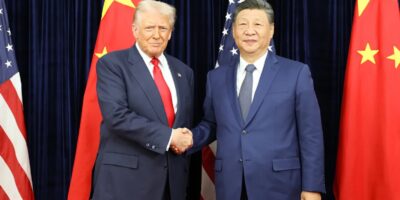
The agreement reached during President Xi Jinping’s September visit to Washington to establish a China-US AI Dialogue, including exchanges on AI risks and benefits and a bilateral communication channel for AI incidents, provides an important platform for the two countries to deepen understanding and cooperation. The next exchange is scheduled for November.
AI is too consequential to be divided permanently into competing technological blocs. Researchers, universities, businesses and governments need channels through which they can share knowledge, advance common safety standards and develop mechanisms for responsible innovation. China’s advocacy for open-source development and broader international participation offers a useful foundation for such cooperation.
For Africa, the stakes are particularly high. The continent should not merely become a consumer of AI developed elsewhere. It needs access to affordable technology, computing capacity, skills and research partnerships that enable African innovators to develop solutions for African challenges.
China’s emphasis on accessible, open-source AI and its commitment to training and capacity building create opportunities for developing countries to participate more meaningfully in the global AI ecosystem. Its proposal to establish AI cooperation centres with the African Union and other regional organisations is particularly relevant to a continent seeking to bridge its digital and technological divides.
The emerging AI order should therefore be judged not only by who develops the most powerful models, but also by who helps make AI more accessible, inclusive, safe and beneficial to humanity. On this front, China is putting forward a proposition that deserves greater international attention: that AI development should be accompanied by wider access, open cooperation and shared responsibility for governance.
China has consistently called for an open, inclusive and cooperative approach to AI development and governance. The United States and other technologically advanced countries should engage this proposition constructively rather than viewing AI cooperation primarily through the lens of geopolitical zero-sum game.
The choice before the world should not be between technological leadership and international cooperation. It should be possible to pursue innovation while ensuring that its benefits are shared more widely and its risks managed collectively.
AI should become a bridge connecting countries and peoples, not another high fence dividing them. China’s call for open, inclusive and responsible AI cooperation offers an important starting point for building that bridge.
Elijah Mwangi is a scholar based in Nairobi who comments on local and global affairs.