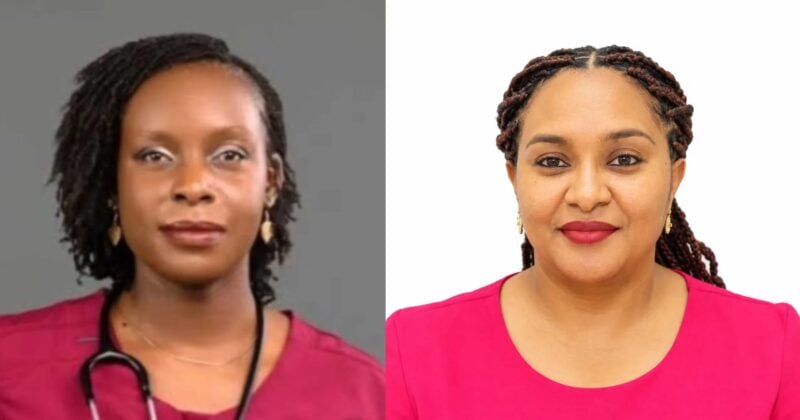
By Dr Rosslyn Ngugi and Dr Nicola Okech
NAIROBI, Kenya, Nov 23 – Every doctor knows a patient who runs a small business and raises a family but has never felt seriously ill. The patient comes in because of a non-healing wound on the foot, blurred vision, or swollen ankles. When their blood sugar is tested, the doctor discovers that it is high and may possibly have been elevated for years. By the time the patient learns they have diabetes, the disease has already been at work on the heart, kidneys, and eyes.
Unfortunately, such cases are commonplace in Kenya. The International Diabetes Federation (IDF) estimates that 813,000 Kenyan adults are living with diabetes, and that more than half of them have never been diagnosed. Further, there are 3.8 million adults whose blood sugar is already creeping towards the danger zone, and if nothing changes, more than 1.8 million Kenyans will be living with diabetes by 2050.
This year’s World Diabetes Day theme, “Early action on diabetes”, is extremely pertinent for Kenya. The rise of the disease in the country is concerning across different medical specialties For us, as representatives of Kenya’s diabetes and obesity specialists, it is time to stop treating one problem as two separate ones.
Obesity is the most powerful driver of type 2 diabetes we know. Evidence pooled from a large cohort of studies shows that people living with obesity are around seven times more likely to develop the disease. Just being overweight roughly triples the risk.
The relationship between the two is no mystery because excess fat, particularly around the waist, blunts the body’s response to insulin, pushing the pancreas to produce more insulin until, one day, it cannot keep up and blood sugar rises.
The 2022 Kenya Demographic and Health Survey found that 45% of women aged 20 to 49 are now overweight or obese, up from 38% just eight years earlier. Among men, the figure is 19% and rising.
The convergence, however, does not stop at two diseases. The same excess weight and insulin resistance push up blood pressure, disturb cholesterol and inflame the liver. A patient living with obesity one year, is often the same one with diabetes, hypertension, or heart disease a few years down the line.
This is concerning for patients and health systems considering that non- communicable diseases are responsible for 38% of deaths in Kenya and account for more than half of adult hospital admissions. The Kenya National Bureau of Statistics reports that NCDs were behind 61.7% of hospital deaths in 2024, up from 52.4% in one study by the African Population Health Research Centre puts the cost of managing type 2 diabetes alone at around KES 74.5 billion a year, much of it spent on complications that could have been prevented with earlier care.
Yet, clinics often miss warning signs by assessing each condition in isolation rather than holistically. A patient has their blood sugar checked in one room, blood pressure in another, and told to watch her weight on her way out of the door. Their waist size, one of the simplest and cheapest indicators of metabolic health there is, is rarely measured at all. Moreover, because obesity is widely seen as a failure of
willpower rather than a chronic, relapsing illness, many people are too ashamed to ask for help until it is too late.
The positive news is that this situation can be changed. When it comes to metabolic health, risk is not fate. Some of the risks, such as age and family history, can’t be changed, but quite a few of them can be. Those are the ones that are behind Shape Your Risk, a public conversation supported by the Kenya Diabetes Study Group and Kenya Society of Obesity and Metabolic Health that invites Kenyans to see obesity and diabetes as linked, treatable diseases that respond best when they are caught
early.
Early action begins with knowing our numbers, including weight, waist size, blood sugar, and blood pressure, all of which can be checked in a few minutes at a clinic, or even a neighbourhood pharmacy. If diabetes runs in your family, or your waist measures more than 94 cm as a man or 80cm as a woman, ask for a blood sugar test and ask your doctor what the result means for you.
Healthcare professionals, too, need to treat the convergence rather than individual conditions in isolation. Every patient seen for hypertension or diabetes should have their weight and waist recorded, and every patient living with obesity should be screened for diabetes. Obesity itself should be diagnosed, documented and managed with nutrition, physical activity, behavioural support, and if needed, medical
treatment.
Diabetes caught early can be managed for decades at modest cost with a full life lived alongside it. This World Diabetes Day, let us stop considering diabetes and obesity as two separate tales. Instead, they need to be considered as a convergence.
Dr Rosslyn Ngugi is President of the Kenya Diabetes Study Group; Dr Nicola
Okech is the President of the Kenya Society of Obesity and Metabolic Health.