It is one year since Baba left us, and what a year it has been.
Raila Amolo Odinga was a political colossus who mentored generations of leaders, many of whom are now positioning themselves for leadership across the country. His influence transcended party lines, regions and generations. Yet perhaps nowhere is his political shadow more pronounced today than in the emerging contest within the Mulembe nation, where two schools of thought are competing for the soul of the region.
On one side stands Moses Wetangula, the seasoned tactician who walked with Baba through the trenches of the Coalition for Reforms and Democracy (CORD) in 2013 and the National Super Alliance (NASA) in 2017. On the other is Edwin Sifuna, the fiery former ODM secretary-general and one of the most prominent products of Baba’s political school.
Both are Baba’s students, but they represent different dimensions of his political inheritance. Sifuna embodies the voice, party activism and political mobilisation associated with Baba. Wetangula brings the experience of coalition-building, negotiation and the hard lessons of political warfare.
Wetangula was there when CORD was assembled in 2013 and when NASA emerged in 2017 as a formidable opposition coalition. He understands the intricate negotiations and compromises required to build national political formations. In 2022, he helped steer the Mulembe vote towards William Ruto, contributing to the coalition that secured the presidential victory for Kenya Kwanza.
Sifuna brings a different kind of political currency, particularly his ability to mobilise supporters, command public attention and articulate opposition positions. His political trajectory will be tested by whether he can translate that energy into durable structures and a broader national constituency.
The contest between the two is therefore about more than personalities. It is about how Baba’s political philosophy should be interpreted and carried forward.
Ultimately, however, neither political proximity nor claims of mentorship will be sufficient to establish ownership of Baba’s legacy. That inheritance must be measured by what each leader does for the people, the institutions they strengthen and the opportunities they help create.
The bigger question of legacy
The battle for Baba’s political inheritance in Mulembe is only one part of a much larger story.
October has always carried considerable weight in Kenya’s political calendar. This October is different. For the first time in more than four decades of our public life, we mark a year without Raila Amolo Odinga in it. Without that unmistakable voice, infectious laugh and defiance that inspired generations.
We will mourn, because grief is part of being human. But our tears must not become tears of despair. They must water the seeds Baba planted in our democracy and our pursuit of a just society.
Baba left us with much more than grief. His decades-long struggle for democratic reforms contributed to the political environment that culminated in the promulgation of the 2010 Constitution. From the dark cells of Nyayo House to the constitutional freedoms Kenyans enjoy today, his place in our democratic history is indelible.
In Luoland, we have a saying: chieng’ ok mon dhano. A day does not swallow a person. What a person plants does not necessarily die with them. Baba planted something in our democracy and in the struggle for a fairer society. That seed is now in our hands.
Part of that inheritance is captured in the 10-point agenda underpinning the broad-based cooperation he agreed to pursue with President William Ruto. It addressed constitutional implementation, devolution, corruption, inclusivity, the cost of living, youth unemployment, public accountability and the protection of democratic freedoms.
Across the country, Kenyans have gathered to remember Baba through Mwezi wa Baba. Candles have been lit, vigils held and tributes delivered. These gestures matter, but remembrance must lead to action.
If we are to honour Baba, we must insist on the full implementation of the Constitution, protect devolution, confront corruption, uphold the rule of law and defend the dignity of the common mwananchi. We must demand an economy that works for the many rather than the few, while expanding opportunities for young people and women.
The unfinished business
His decision to pursue the broad-based arrangement remains one of the most debated aspects of his final political chapter. Many wanted him to remain permanently in opposition. Yet Baba had witnessed the human cost of prolonged political confrontation, including young people being killed during protests and families devastated by violence.
His participation in dialogue with the government reflected an argument that political engagement must deliver tangible results for citizens. The 10-point agenda provided a framework through which longstanding national grievances could be addressed.
That commitment must now be judged by implementation, not rhetoric. The agreement cannot become a convenient political shield or an excuse to postpone difficult reforms. Its value lies in whether it improves the lives of ordinary Kenyans.
This is also where Wetangula, Sifuna and other leaders claiming Baba’s mantle must ultimately be assessed. Political experience, grassroots mobilisation and public visibility matter, but none is an end in itself. Leadership is measured by service, accountability and the ability to turn political capital into public good.
So, on this first anniversary, let us weep. Let the tears flow in Bondo and Nairobi, Mombasa and Wajir. But let every tear water the legacy Baba left behind: the promise of a free, just and economically prosperous country for all Kenyans.
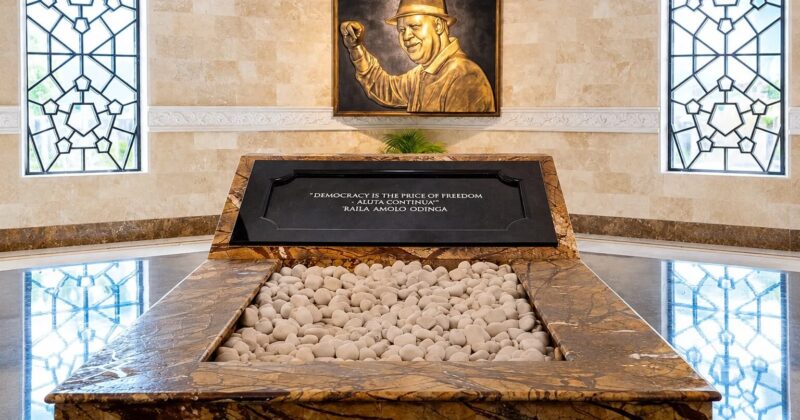
Baba is not confined to the grave at Kang’o ka Jaramogi. He lives in the Constitution we must defend, the devolution we must protect and the democratic freedoms we must never take for granted.
His legacy will not be secured by those who invoke his name most loudly, but by those who do the hard work of advancing the ideals for which he fought.
One year later, the question is no longer simply how we remember Baba. It is whether we have the courage, discipline and conviction to complete the unfinished business he left behind.