By Dennis Munene
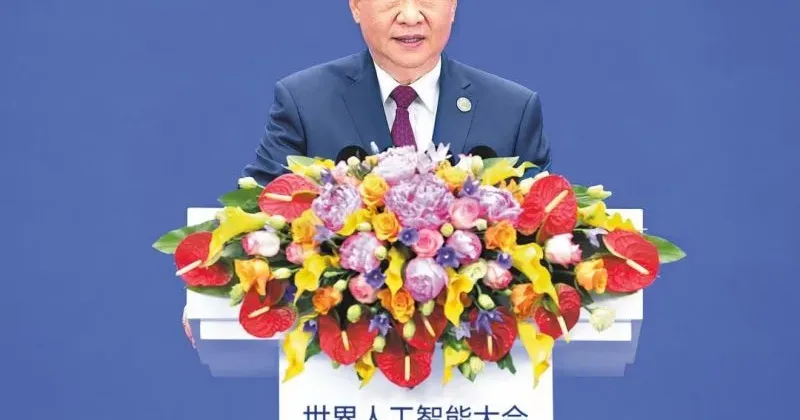
Marking the fifth anniversary of the Global Development Initiative at the UN Headquarters in New York on September 25, President Xi Jinping sent a congratulatory letter, noting that development remains central to human well-being. This apt message comes at a time when global development is facing a severe multi-layered crisis driven by global health crises, climate change, food insecurity, extreme poverty, instability, conflict and violence over competition for resources and energy advantage, a growing humanitarian crisis, and technological disruptions.
Xi’s congratulatory letter came a day after the Africa Policy Institute (API), in collaboration with the Ministry of Foreign and Diaspora Affairs and the Embassy of the People’s Republic of China in Kenya, convened a ‘Conference on the Move’ on board the Nairobi-Naivasha Standard Gauge Railway (SGR), a study tour of the Vertical Agro (EPZ) facility, and an experts’ seminar at Lake Naivasha Resort themed, “Jointly Advancing Global Development and Governance: China and Kenya Usher a New Chapter of a Shared Future”.
The high-level dialogue at the United Nations Headquarters in New York and the epic “Conference on the Move” converged on the need to examine the impact of the Global Development Initiative (GDI) five years after its inception, alongside the first anniversary of the Global Governance Initiative (GGI).
Proposed by President Xi during the 76th Session of the UN General Assembly on September 21, 2021, GDI was poised toadvance global development cooperation, reinvigorate the global development cause, and help accelerate the implementation of the UN 2030 Agenda for Sustainable Development (SDGs), at a time of severely disrupted global development and widened existing inequalities.
Five years on, GDI has evolved into a people-centered, innovative growth plan that provides vital global public goods and promotes international cooperation on sustainable development that harmonizes humanity and nature. While creating a framework for advancing humanity’s goal of alleviating poverty, ensuring food security, and responding effectively to pandemics and vaccine development, GDI has refocused the world on the urgent need to cooperate in the areas of mobilizing finance for development, climate change and green development, industrialization, digital economy and connectivity, especially in the Global South.
Two main mechanisms account for GDI’s steady progress. One is a network of global development partnerships around the Group of Friends of the GDI, with 88 countries as of August 2026. More than 130 countries and international organizations support or participate in the initiative. China and partners have launched 30 cooperation mechanisms and platforms, mobilized over US$23 billion to support GDI projects, implemented over 1,800 “small and beautiful” livelihood projects largely across the global South, and trained over 200,000 people. Ordinary people in more than 120 countries have benefited from the GDI. Kenya is one of these beneficiaries of GDI in the areas of connectivity, energy, market promotion, poverty eradication, and provision of clean water in arid and semi-arid areas. Second is the setting up of a global development cooperation project pool to help fund and monitor the implementation of GDI projects within the multilateral system. This included the upgrading of the South-South Cooperation Assistance Fund to a Global Development and South-South Cooperation Fund that has supported over 20 international organizations within the United Nations agencies to implement more than 180 projects in over 60 countries. Similarly, the establishment of the Global Development Promotion Center (GDPC) within the China International Development Cooperation Agency (CIDCA), a Digital Publicity Platform for Global Development, and an Innovation Training Base of the GDPC have helped in the implementation of the GDI projects.
Nonetheless, given that only 35 percent of the SDGs targets were on track or making moderate progress as of 2025, and 18 percent have regressed due to the annual shortfall of approximately US$4 trillion needed to achieve the global goals, as major traditional donors gravitate towards anti-globalization trends such as ethno-nationalism, populism, isolationism, and protectionism, GDI is progressively filling in the gap.
Through timely intervention, as proposed by China’s Vice President Han Zheng at the high-level dialogue at UN headquarters, Beijing is ready to contribute funding to the China-U.N. Trust Fund Project for Statistical Capacity Development to help fellow developing countries strengthen their statistical and monitoring capacity to implement the SDGs. China will also launch an engineering capacity-building program to train 10,000 engineers for developing countries over the next five years. The program will cover areas such as transport infrastructure and information and communications technology (ICT). China will also collaborate with like-minded partners to implement flagship projects under the GDI, including “Digital South” and “Clean Stove,” to help Global South countries achieve digital transformation and green development.”
In Kenya, through GDI, China provided a US$2 million grant on October 8, with US$1 million for Ebola preparedness infrastructure in the identified high-risk counties and US$1 million for drought response. Indeed, China-led Global Initiatives through South-South cooperation are fast-tracking the implementation of the global development goals and addressing immediate national priorities while strengthening longer-term resilience in developing countries such as Kenya.
Dr Dennis Munene is the Executive Director of the China-Africa Center at the Africa Policy Institute
Disclaimer: The views expressed are solely those of the author and do not necessarily reflect those of Capital FM.