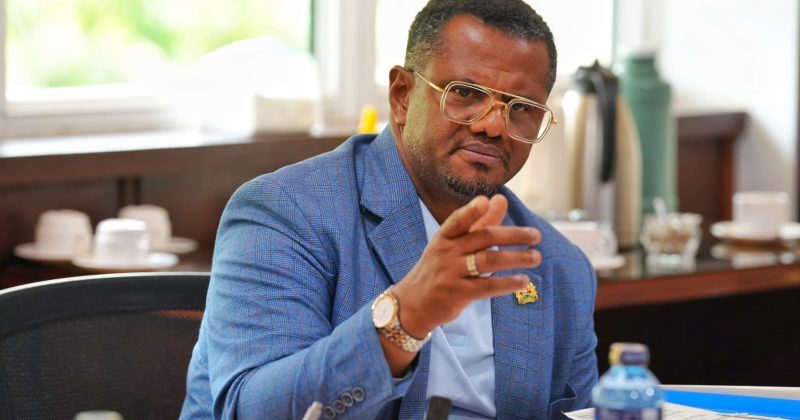
NAIROBI, Kenya, Oct 14 — The Independent Electoral and Boundaries Commission (IEBC) has summoned United Democratic Alliance (UDA) Secretary General Hassan Omar to appear before its Electoral Code of Conduct Enforcement Committee over remarks he made about deceased voters at a political rally in Mombasa.
Omar, who is eyeing a fresh bid for the county’s governorship, is required to appear before the committee on Wednesday, October 21.
The summons comes weeks after the former Mombasa Senator dismissed the controversy as a misunderstanding, insisting that his remarks were metaphorical and referred to voter mobilisation and turnout rather than deceased Kenyans literally casting ballots.
In a clarification issued on September 15, Omar accused his critics of deliberately misinterpreting his message, maintaining that his political side was preparing to mobilise supporters to turn out in large numbers during the 2027 General Election.
“Kwa hivyo sisi tutajitokeza kwa fujo. Hiyo ndiyo metaphor,” Omar said in remarks translated to mean, “So we will turn out in large numbers. That is the metaphor.”
He explained that his reference to people turning out kwa fujo (in large numbers) was intended figuratively to describe a large voter turnout.
IEBC begins conduct proceedings
In a statement issued on Wednesday, IEBC said the matter had been brought to its attention and was being considered under the Electoral Code of Conduct contained in the Second Schedule of the Elections Act, 2011.
The commission said the summons would give Omar an opportunity to respond to the allegations before the committee makes a determination.
“The Committee will make its determination only after considering the material and representations before it,” IEBC said, adding that it expected the UDA official to honour the summons and cooperate with the proceedings.
The commission emphasised that the process would uphold the right to fair administrative action and the right to be heard.
The summons is not a finding that Omar breached the electoral code.
Political backlash
Omar’s comments sparked criticism from opposition leaders, who questioned whether the remarks suggested that deceased Kenyans could be used to inflate President William Ruto’s vote tally in 2027.
Government Spokesperson Charles Owino also called on IEBC to take action, describing the comments as careless and potentially capable of heightening political tensions.
IEBC Commissioner Alutalala Mukhwana separately dismissed the possibility of deceased persons being verified as voters, citing safeguards under the Kenya Integrated Elections Management System (KIEMS), which uses fingerprint and iris recognition.
Former Defence Cabinet Secretary Eugene Wamalwa and former Attorney General Justin Muturi also demanded stronger electoral safeguards following the controversy.
Omar, however, accused the opposition of lacking a substantive agenda and said his remarks had been taken out of context.
Fresh political battle
The summons comes as Omar positions himself for another attempt at the Mombasa governorship in 2027, five years after his unsuccessful bid in the 2022 General Election.
His political activities in the coastal county could bring renewed scrutiny of his campaign messaging as parties and prospective candidates begin preparing for the next election.
IEBC said it would continue acting independently and impartially in handling complaints of breaches of the electoral code, while urging political leaders, candidates and supporters to exercise restraint in their public statements and conduct.
The commission added that it would issue further information on the matter after the conclusion of the proceedings.