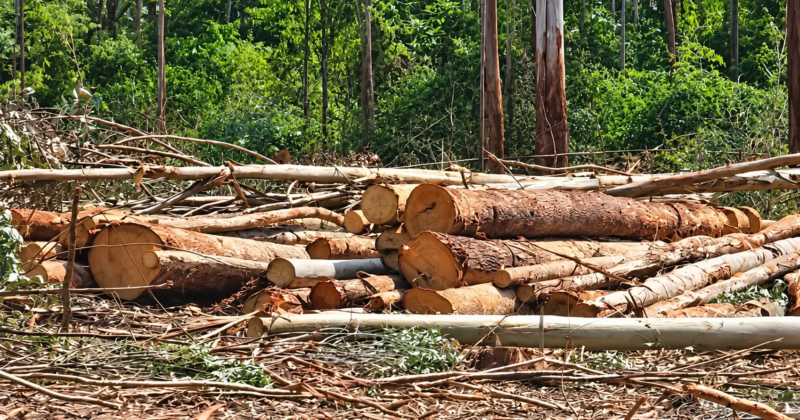
NYERI, Kenya, Oct 14 — Sawmillers operating in the Central Highlands Conservancy have denied allegations that they are contributing to the destruction of the Aberdare Forest, insisting that ongoing tree harvesting is part of regulated plantation management.
The sawmillers, drawn from Nyeri, Laikipia, Murang’a and Kirinyaga counties, accused politicians of misleading Kenyans about logging activities, alleging that timber importers were behind claims portraying the industry as a threat to the country’s forest ecosystems.
Speaking at a press conference in Nyeri, the association’s Chairman, Jackson Wachira, dismissed allegations of illegal harvesting, saying the activities involved mature trees in plantations.
“As sawmillers, we want to say that claims of outside log harvesting are a lie. What is happening in Aberdare is harvesting of mature trees in line with plantation management. Let no one lie to Kenyans that we are destroying our ecosystem,” Wachira said.
He argued that prolonged restrictions on logging had left some plantations with ageing trees, including those that had begun to rot, making harvesting necessary for timber and fuel production.
“Following the moratorium issued by the government in the past, we have seen many plantations above a certain age having a lot of rotten trees. This is why they need to be harvested for either timber or fuel needs. It is not destruction,” he said.
Plantation management
Wachira maintained that harvesting and silvicultural activities were guided by established rules and regulations, urging politicians to seek clarification from the Kenya Forest Service (KFS) before making claims about forest destruction.
He said the timber industry generated revenue for counties and reduced reliance on imported timber products, helping conserve foreign exchange.
“Harvesting and silvicultural activities are primarily guided through written rules and regulations. This industry provides revenue for our county and saves scarce foreign exchange that would have been used in importing timber products. These politicians need to get their facts right,” Wachira said.
He further claimed that some of the logs currently being transported from forests were part of timber purchased by millers before the government imposed a logging moratorium, arguing that their movement should not automatically be interpreted as evidence of fresh illegal harvesting.
The sawmillers’ defence comes amid growing scrutiny of logging activities in the country’s forested water towers, including the Aberdare, North Rift and Mt Kenya forests.
Large trucks transporting logs have been observed leaving forest areas, raising questions about the source of the timber and whether harvesting activities comply with existing regulations.
Opposition leaders, led by Wiper Party leader Kalonzo Musyoka, have accused President William Ruto’s administration of presiding over the destruction of critical water towers through illegal logging.
The sawmillers rejected the accusations, maintaining that the activities they undertake are professional plantation management rather than indiscriminate destruction of forests.
Their claims, however, were not independently verified, and the press conference did not provide documentary evidence establishing the origin of the transported logs or confirming that all ongoing harvesting complied with regulations.