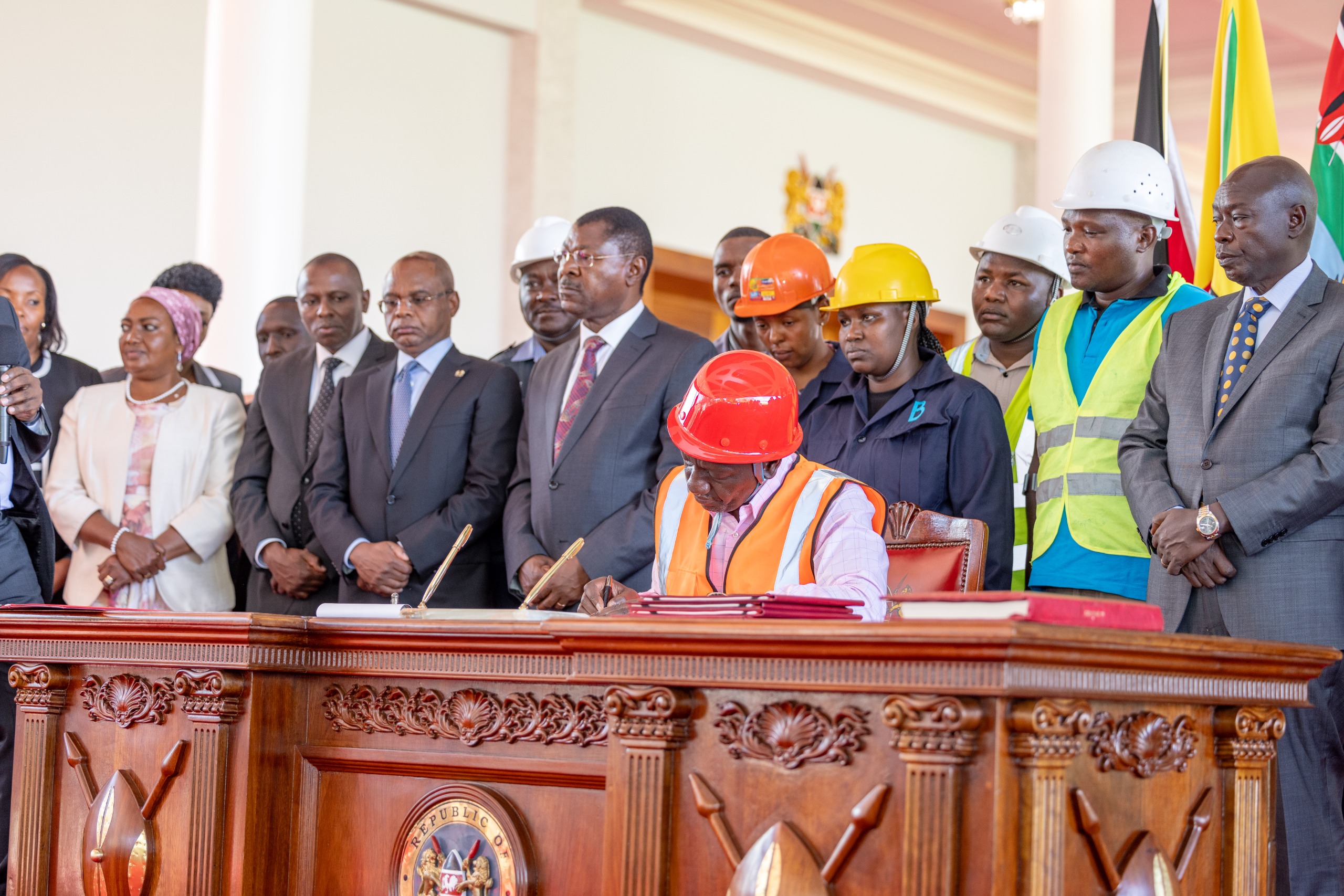
NAIROBI, Kenya, Mar 19 – President William Ruto has assented to the Affordable Housing law paving the way for the reinstatement of housing levy deductions.
This means the 1.5 per cent tax on both the employer and the employee will take effect at the end of this month.
The newly enacted law incorporates measures to prevent double taxation, exempting individuals who already contribute a matching amount from paying the levy on their gross income.
“Further, it provides for the affordable housing relief at 15 per cent for employees who make contributions to the Levy,” reads a brief prepared by National Assembly clerk Samuel Njoroge.
In addition to these provisions, the legislation includes tax-related incentives such as reducing the turnover tax from 3 per cent to 1.5 per cent, particularly beneficial for those engaged in the informal sector.
The legislation, which received approval from both the Senate and the National Assembly last week, includes amendments that involve the participation of county governments.
Under the new provisions, governors will establish county liaison committees to oversee the implementation of affordable housing programs, ensuring regional participation and coordination.
Furthermore, in adherence to court decisions, the bill establishes a Fund managed by the Affordable Housing Board, accountable for the management of levy proceeds.
Accountability measures outlined in the bill include the preparation of a five-year investment program and an annual investment plan, subject to approval by the Cabinet and subsequent parliamentary scrutiny.
“The investment programmes shall guide the allocation of funds for implementation of the affordable housing programmes,” the brief adds.
Moreover, the bill empowers the Board to engage in agreements with various entities for project implementation, including county governments, the National Housing Corporation, and relevant state departments.
To ensure that each applicant accesses only one affordable housing unit one of the eligibility requirements is that an applicant must submit copies of their National Identity Card; their KRA Pin and a Tax Compliance Certificate.
The entities include, the county government, the National Housing Corporation, the National Construction Authority, the National Social Security Fund, the State Department responsible for matters relating to housing, and the State Department responsible for matters relating to public works.
The legislation emphasizes prioritizing slum residents in affordable housing projects and addresses institutional housing challenges by enabling partnerships with public institutions for development
The Bill also addresses the issues of employment, support for local communities, and internship opportunities for students.
It obligates the Board to ensure that when it develops affordable housing units, it uses locally available materials, labour is sourced from the local communities, and students near affordable housing projects are granted internships or practical experience from those projects.
President Ruto over the weekend highlighted that the affordable housing project will not only provide employment opportunities for young people in the country but also ensure there is sufficient land available for agriculture and food production.
The president has further stated that the project is going to create space to see the maximum production of food and the manufacturing sector, which will in turn make Kenya a food and economic powerhouse.
“We want to make sure that we do that, which is going to change our country. Housing is going to give us jobs for our young people, is going to give us decent living conditions for our young people,” President Ruto said on March 16.