Opinion: Kenya’s Women in Sport Deserve More Than Applause
NAIROBI, Kenya, Aug 29 -Women’s sport is growing rapidly worldwide, but is Kenya doing it justice?
From experience, Kenya’s women’s sports personalities feel they are treated as children of a lesser god.
Ironically, women’s sports, from Athletics, volleyball, football, and hockey, have been the most successful in the country.
For instance, the national women’s under-17 team, Junior Starlets, became the first ever football team for both men and women to enable Kenya to compete at a FIFA World Cup.
The Junior Starlets first qualified for the World Cup in 2024 before returning to the global stage this year.
If you narrow it down to Athletics – Kenya’s most successful sport- most of the gold medals have been won by women, whether it’s at the Olympic Games, World Championships or Marathons.
At the 2025 World Athletics Championships, out of the seven gold medals, six were won by women.
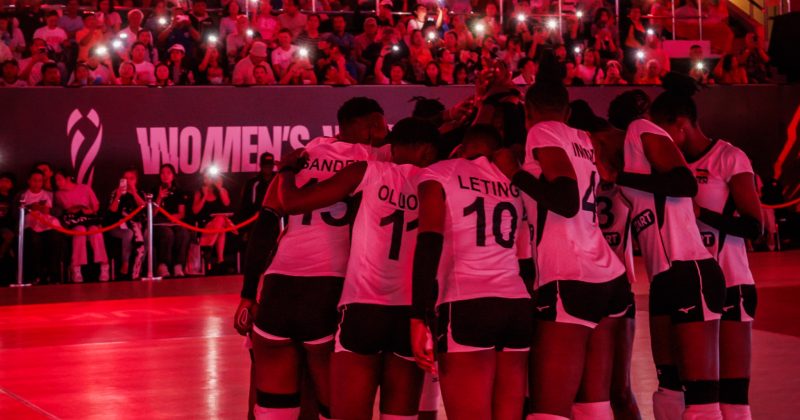
Turning focus to volleyball, the national women’s volleyball team, Malkia Strikers, are the most successful team on the continent with a record 10 titles.
We celebrate them when they win, we praise their courage when they compete, we post their photographs on social media when they bring medals and trophies home, we call them heroines when they achieve something extraordinary, but too often, the support disappears when the cameras do.
For years, Kenyan women in sport have demonstrated that they are capable of competing at the highest levels despite operating in environments where resources, visibility and institutional support are often inadequate.
Yet, instead of building on that potential, the country continues to ask them to achieve more with less.
The question Kenya should be asking is not whether our women have the talent. They clearly do.
The question is: how much more could they achieve if the system actually worked for them?
The Starlets showed what could have been
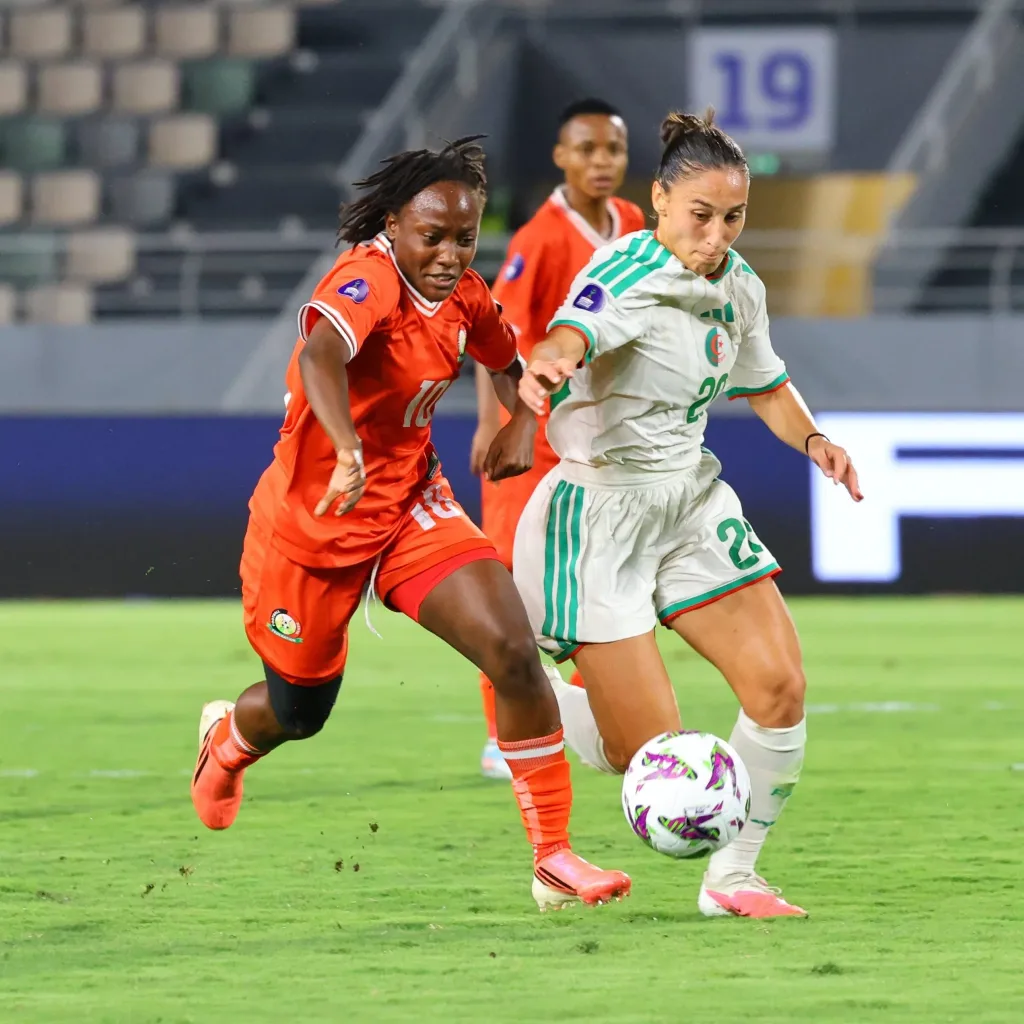
After 10 years, the Harambee Starlets returned to the Women’s Africa Cup of Nations (WAFCON), qualifying for their second continental competition.
The national women’s team competed in the 2026 WAFCON, where they once again bowed out in the group stages.
After years away from the continental stage, Kenya had fought through qualification to earn its place among Africa’s best.
Representing the country at such a tournament should have been a moment of complete focus, preparation and belief.
Instead, questions surrounding the team’s welfare and delayed allowances became part of the conversation.
In football, performances must always be analyzed honestly. But it is equally important to ask whether the players were given the best possible environment to succeed.
When athletes have to worry about allowances and welfare before representing their country at one of the biggest tournaments on the continent, the problem is bigger than what happens on the pitch.
It becomes an institutional failure; both the Ministry of Sports and Football Kenya Federation are to blame for denying the Harambee Starlets ample preparations.
For context, Harambee Starlets played in the WAFCON without playing a competitive friendly despite camping in Miramas, France.
We cannot expect athletes to perform like professionals while treating their preparation and welfare as an afterthought.
The Harambee Starlets may not have achieved the results at WAFCON Kenyans wanted, but blaming the players for the failure and ignoring the environment they were operating in is an injustice.
A national team can only be as prepared as the system around it allows, and when that system fails, the consequences eventually show on the field.
-Malkia Strikers Not Spared Either-
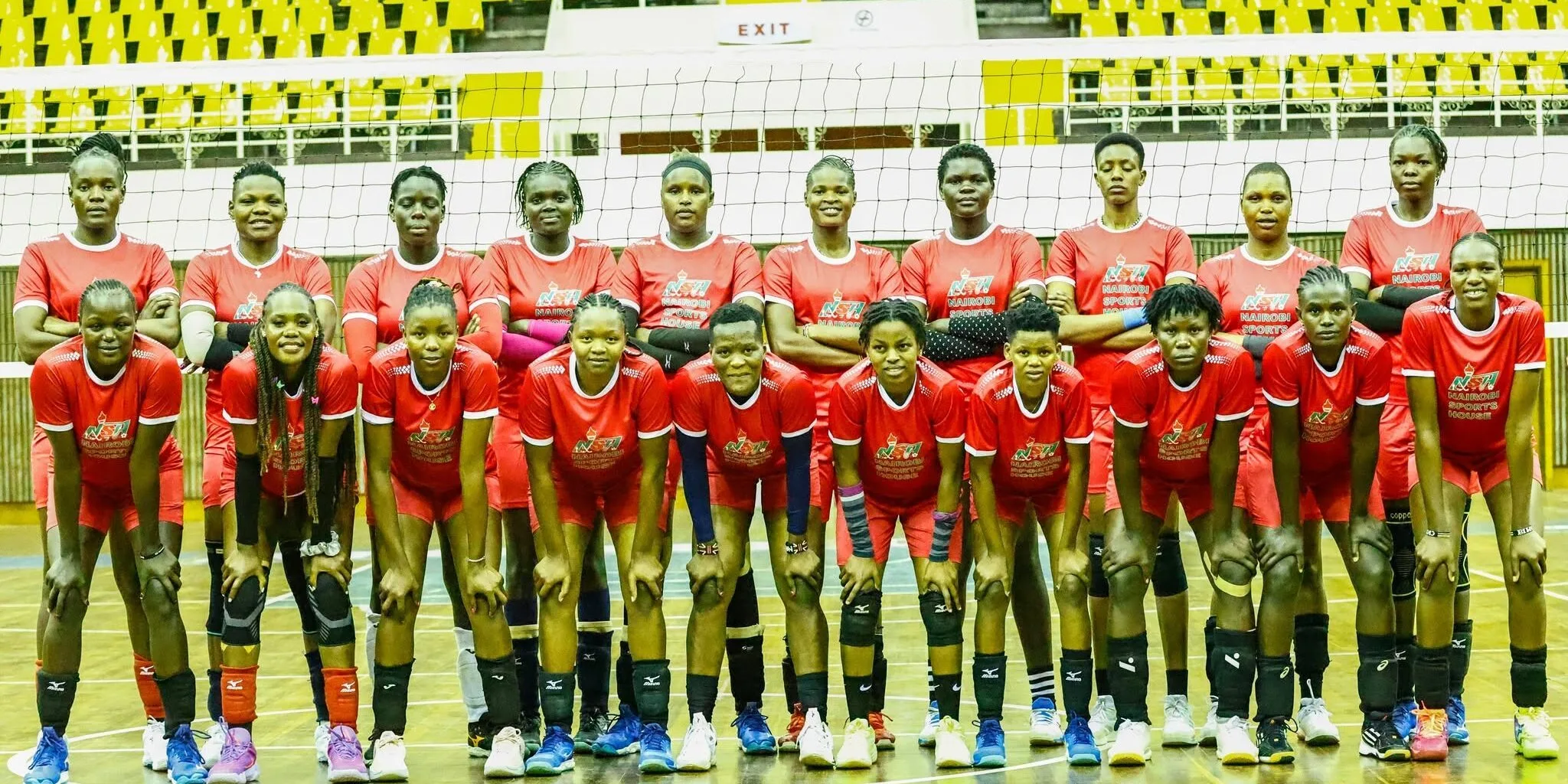
The situation is not limited to football.
Their history in African volleyball speaks for itself. They have represented Kenya on the continental and global stage and continue to carry the expectations of a country that knows exactly what they are capable of.
Yet, even a team with such a successful history has had to raise concerns about unpaid allowances, lack of kit and the resources needed to compete.
The team had to stage a protest a few days before the 2026 CAVB African Championships that serves as the Los Angeles 2028 Olympic Games Qualifier, for their allowances to be sorted.
This is particularly frustrating considering the importance of the tournaments they participate in.
These are not meaningless matches.
These are competitions that can determine continental titles, World Championship opportunities and, in some cases, qualification for the Olympic Games.
Imagine having a team with a genuine opportunity to represent Kenya at the Olympics, yet allowing concerns about allowances, training conditions or equipment to become part of their preparation.
Instead of discussing tactics, opponents and how Kenya can maximise its chances of success, athletes are sometimes forced to fight for the basic support they should already have.
That should concern everybody.
Because the question remains: will our athletes receive the necessary support before we ask them to deliver extraordinary results again?
The talent is there. The system is the problem.
Perhaps the most painful part of this entire conversation is that Kenyan women continue to prove that the talent already exists.
The Junior Starlets have shown that Kenya has a future in women’s football.
The Harambee Starlets have demonstrated that, despite the challenges surrounding them, they can compete for places at Africa’s biggest tournaments.
Malkia Strikers have repeatedly shown their ability to compete with and overcome some of the best teams on the continent.
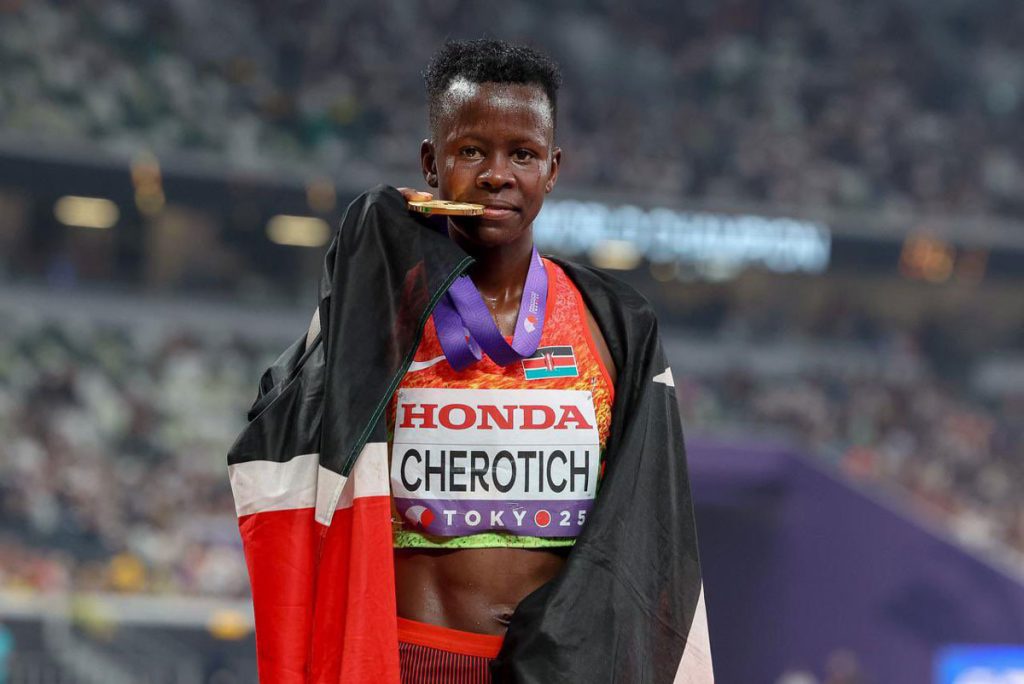
Then there is athletics, where Kenyan women have continued to establish themselves among the best athletes in the world.
The evidence, talent and ambition are already there.
What often appears to be missing is the consistency of investment, planning, accountability and leadership needed to take these athletes and teams to another level.
Imagine what Kenyan women’s sport could look like if these athletes had uninterrupted training camps, proper facilities, quality equipment, reliable allowances, medical support and long-term development programmes.
Imagine if preparation for a major tournament started months and years before the competition rather than becoming a rushed process at the last minute.
Imagine if the same urgency shown when a team wins was present before they stepped onto the field.
Because success in sport is rarely accidental. It is built.
And Kenya, through the Ministry of Sports and respective federations, has a responsibility to build an environment where talented women can succeed.
sexual exploitation
There is another battle that Kenyan women in sport are sometimes forced to confront, one that has absolutely nothing to do with their ability to play.
It is the battle against objectification, sexualisation and, where misconduct occurs, sexual harassment and exploitation.
A female athlete should be able to walk into a training camp, a federation office, a changing room or a competition knowing that the people around her are there to help her develop and succeed. Not to take advantage of her.
Unfortunately, conversations surrounding women athletes can sometimes become more focused on their bodies, relationships or private lives than on their actual sporting achievements, and that is one of the most disappointing parts of how women’s sport is consumed.
A woman can train for years, sacrifice time with her family, fight through difficult conditions to represent her country at the highest level.
She can score the goal, make the save, win the match, break the record, or qualify for a major international tournament, yet the story that receives the most attention can sometimes have nothing to do with her performance.
It can be about her body, personal life, or a scandal surrounding her.
That is not the attention women’s sport needs.
Female athletes should not have to become spectacles before their sporting ability is taken seriously.
It’s for this reason that the European Broadcasting Union, in July 2026 during the European Athletics Championships, introduced new guidelines for broadcasters on using more respectful camera angles when covering live athletics events.
The issue becomes even more serious when athletes are subjected to sexual harassment, exploitation or abuse by people within the sporting environment.
Sport is built around power.
Coaches can influence an athlete’s development, officials can influence opportunities, administrators can control resources.
People in positions of authority can sometimes have significant influence over whether an athlete gets selected, travels with a team or receives an opportunity.
That power must never be abused.
No athlete should feel that her career depends on tolerating inappropriate behaviour.
No athlete should feel forced to remain silent because speaking up could cost her a place on the team.
And no athlete should have to choose between protecting herself and protecting the career she has spent years building.
Federations and sporting institutions have a responsibility to create safe environments for athletes.
There must be clear safeguarding systems.
There must be confidential and accessible ways for athletes to report misconduct.
There must be proper investigations.
And there must be protection for athletes who come forward.
Most importantly, there must be consequences.
If an individual is accused of misconduct, the allegations must be investigated fairly and seriously.
If that individual is found guilty of sexual abuse, exploitation or any other criminal offence, their position, influence or connections within sport should not protect them. They should face the full consequences of the law.
The media has a role to play.
There is also a responsibility that falls on the public and the media.
We have to ask ourselves why the sexualization of female athletes can sometimes attract more attention than their actual sporting performances.
Why can a woman’s appearance generate more conversation than her achievement?
Why can gossip about an athlete trend faster than news about her representing Kenya at a continental or global competition? And why do we sometimes wait for controversy before paying attention to women who have been quietly performing at an incredibly high level for years?
The problem is not simply that women athletes need more coverage; they need better coverage.
Coverage that focuses on their performances, their journeys, their challenges and their achievements.
Coverage that treats a women’s international football match with the same seriousness as a men’s match.
Coverage that asks why a successful volleyball team is struggling with resources instead of only remembering them when they win.
Coverage that follows the Junior Starlets’ development even when they are not playing at a World Cup.
And coverage that refuses to turn women into objects simply because objectification generates clicks and engagement.
The media, fans and federations have a responsibility to safeguard women’s sport.