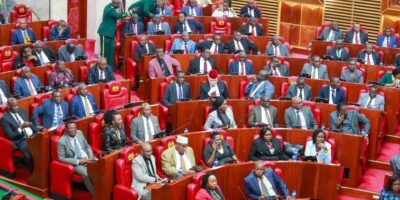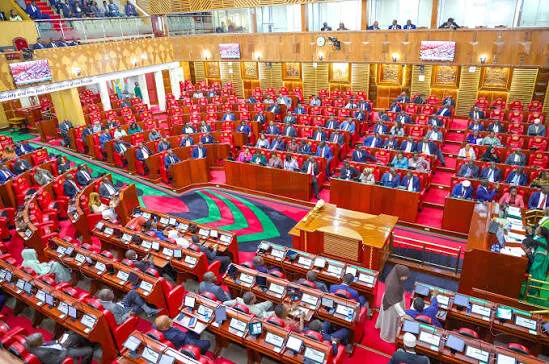
NAIROBI,Kenya Oct 22 – National Assembly has approved provisions in the Elections Amendment Bill requiring the concurrence of at least a third of registered voters in every ward to recall a National Assembly member, alongside a simple majority to determine the winner of a recall by-election, setting the stage for the Bill to return to the Senate.
The National Assembly approved the amendments to the Elections Amendment (No. 2) Bill, Senate Bill No. 29 of 2024, after a prolonged debate that saw MPs recommit Clause 26A to the Committee of the Whole House for further consideration of the threshold for recalling elected representatives.
Under the revised Clause 26A, a recall election will require the support of at least one-third of registered voters in every ward within the affected constituency in the case of a Member of the National Assembly. For a senator, the threshold will be at least one-third of registered voters in every constituency within the affected county.
The provision further stipulates that a recall by-election will be decided by a simple majority of voters who participate in the election.
The Bill will now return to the Senate for consideration of the National Assembly’s amendments. Given the changes made by the two Houses, the legislation will also have to undergo mediation to reconcile the differences and secure concurrence before it can proceed to the next stage of the legislative process.
The amendment to Clause 26A was moved by Kimani Kuria, who initially proposed that a recall election should require the concurrence of at least half of registered voters in every ward of the affected constituency for an MP, or in every constituency of the affected county for a senator.
Kuria’s proposal also provided that a recall election would be decided by a simple majority of voters participating in the election.
However, the 50 per cent threshold drew opposition from MPs who argued that it would make the recall process too difficult to achieve and could expose the law to further legal challenges.
Minority Leader Junet Mohamed urged the House to retain the one-third threshold as proposed by the Justice and Legal Affairs committee,citing previous court decisions that struck down provisions governing the recall of elected representatives.
“If we repeat what the court has rejected, we will just be legislating in vain because the thing will go back to court again and the court will reject it again for the same reasons,” Junet told the House.
He argued that requiring one-third of registered voters in every ward to support a recall would strike a balance between protecting elected representatives from frivolous challenges and giving citizens an effective mechanism to hold them accountable.
Majority Leader Kimani Ichung’wah also opposed the 50 per cent proposal, warning that it would be difficult for MPs to meet a threshold higher than the support they received during their election.
“In any case, many of us are not elected by 50 per cent of the registered voters in each ward ,facts of life,” he said.
Ichung’wah urged MPs to adopt the committee’s proposal, arguing that the law should protect voters’ right to recall representatives while guarding against politically motivated petitions.
“To convince in every ward, including your home ward, a third of your voters that you should go home, then it would mean there’s something absolutely wrong that you have done to the people,” he said.
He added: “We legislate for posterity, we don’t legislate for ourselves.”
Following the debate, West Mugirango MP Stephen Mogaka moved a further amendment to Kuria’s proposal, seeking to restore the original one-third threshold.
The amendment was adopted, replacing the proposed 50 per cent requirement with one-third of registered voters in every ward for a National Assembly member and in every constituency for a senator.
Kuria subsequently supported the revised proposal, explaining that the provision addressed two distinct stages of the process: the threshold needed to trigger a recall and the majority required to determine the winner of the resulting by-election.
He said the one-third requirement would apply to the recall process, while the simple-majority provision would determine the outcome of the subsequent election.
Homa Bay Town MP Peter Kaluma had earlier called for Clause 26A to be recommitted, arguing that the law needed to specify the number of voters required to support a recall petition.
“What it means, honourable members, if we do not recommit is that even if you just had one person or two people providing for those grounds and presenting them, you will stand recalled,” Kaluma told the House.
He warned that the absence of a clear threshold could subject the country to repeated elections and political disputes.
Millie Odhiambo supported the recommittal, although reluctantly, cautioning MPs against adopting provisions driven by populism rather than sound legislative principles.
“I don’t pander to issues of populism, and because of that, I reluctantly support but we need to be very serious when we are dealing with issues like this,” she said.
She urged MPs to listen to one another during legislative debates, warning that excitement could lead them to make decisions that undermine their own interests.
“Sometimes we are too excited and we shoot ourselves in the foot,” she said.
Meanwhile, MPs raised concerns about the possibility of representatives being subjected to recall proceedings shortly after taking office. Farah Maalim warned that the absence of a minimum period before a recall could be initiated might encourage political activism and unnecessary litigation.
Kaluma said the mediation process would provide an opportunity to refine the provisions and develop a comprehensive framework acceptable to both Houses.
“Let us use the period between now and the time the Bill will be before the mediation committee to clean it up, but pass it as it is for now,” he said.
He urged MPs to balance the public’s right to recall elected representatives with safeguards against unnecessary political contests.
“On one level, we should not make it difficult for the people of Kenya to recall their elected representative; but at another level, we should make it very difficult so that we alert the people of Kenya when they are conducting elections to do that consciously,” Kaluma said.
The legislation is part of efforts to operationalise Article 104 of the Constitution, which grants voters the right to recall their elected representatives before the end of their term. The final provisions will depend on the outcome of the legislative process and any subsequent legal scrutiny.
In 2017, the High Court declared key provisions of the Elections Act governing the recall of MPs unconstitutional in Katiba Institute and Transform Empowerment for Action Initiative v Attorney-General and another.
The court struck down sections 45, 46, 47 and 48, citing constitutional defects in the recall framework, including discriminatory restrictions on who could initiate a petition and problems with the statutory procedures.