NAIROBI, Kenya, Aug 31 – Former Interior Cabinet Secretary Fred Matiang’i has questioned the government’s decision to undertake another change of police uniforms, arguing that public resources should be used more efficiently by tapping into existing state capacity.
Matiang’i, who is also Jubilee Party deputy leader, said the previous police uniform changes during his tenure showed that the government did not need to outsource or purchase everything when public institutions already had the skills and facilities required.
He said the approach used under his administration brought together the National Youth Service (NYS), other public institutions and the private sector to produce the uniforms while controlling costs and creating opportunities for Kenyans.
“When we undertook the change of police uniforms, we deliberately chose a different approach. We looked at the capacity that already existed within government and asked how we could use it better,” Matiang’i said.
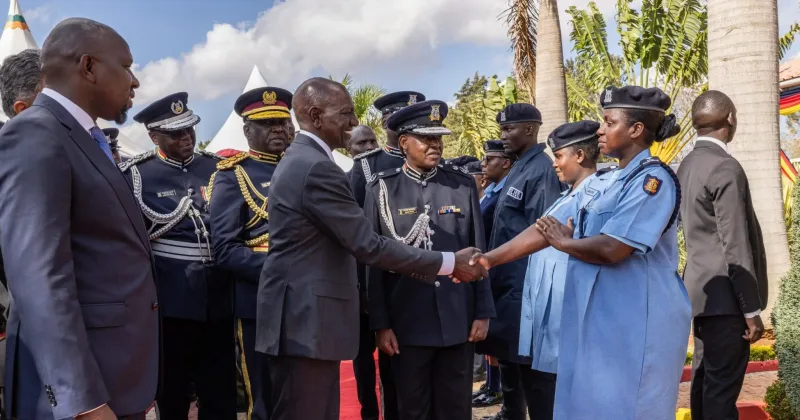
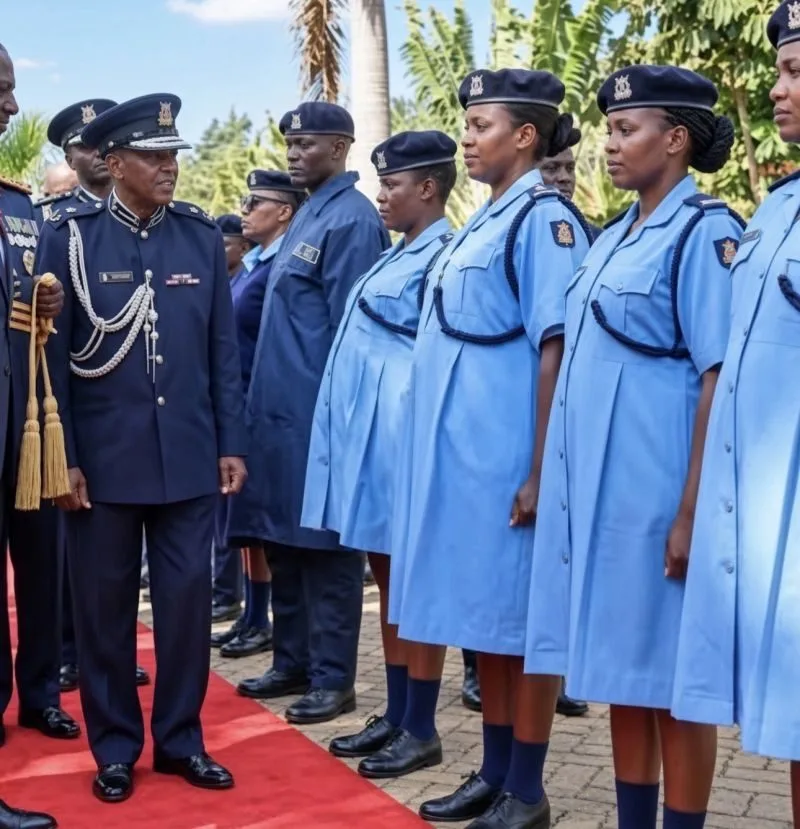
The National Police Service unveiled a new General Duty police uniform on August 28, 2026, during President William Ruto’s inspection of newly trained officers at the National Police College in Kiganjo.
The new outfit features a sky-blue shirt with dark-blue trousers and berets, and includes changes to the design of women’s uniforms. The new uniforms are intended for about 60,000 General Duty officers.
He said NYS, with its vocational and technical training facilities, was incorporated into the initiative alongside other government institutions and private-sector players.
“The result was a model that helped us manage costs, build local capacity and create opportunities for Kenyans,” he said.
Matiang’i said the experience offered a broader lesson on how government should approach public expenditure, arguing that state agencies should first establish whether existing capacity can deliver a service before spending money to procure it externally.
“Government does not always have to buy everything. Sometimes government already has the capacity it simply needs to coordinate it properly,” he said.
His remarks come as the government implements another police uniform change, a move that has generated debate over the cost and necessity of replacing the existing attire.
Matiang’i said the discussion should go beyond the appearance of police officers and focus on whether taxpayers were receiving value for money.
“As we discuss another change of police uniforms today, we should ask a bigger question: Are we getting the greatest possible value from the resources available to us?” he said.
The former Interior CS argued that government expenditure should be measured by its impact rather than the amount of money committed to projects.
“A uniform can change the appearance of a police officer. But good governance must go further. It must strengthen institutions, build capacity and ensure that every shilling spent delivers value to the Kenyan people,” Matiang’i said.
He said prudent management of public resources required government to strengthen local institutions and maximise existing infrastructure and expertise instead of repeatedly procuring services that could be delivered locally.
“The test of leadership is not how much government spends. It is what government achieves with what it spends,” he said.
Matiang’i’s comments come amid renewed political debate over government spending and the cost of public projects, with opposition figures increasingly using questions of value for money to challenge the Kenya Kwanza administration.
The former CS said such an approach was necessary to build what he described as a “Country That Works,” where public spending translates into tangible benefits for citizens.
The NPS says the change was not simply a procurement decision by the Ruto administration. According to the Service, it arose from the wider police reform process associated with the Maraga Task Force on Police Reforms.
The NPS says officers consulted during that process expressed dissatisfaction with the existing uniform and preferred a return to the previous colour scheme.
The Kenya Police Service Uniform Committee subsequently worked with the Kenya Bureau of Standards (KEBS) to develop specifications.
The NPS says Bedi Investments Limited was awarded the contract to manufacture and stitch the new General Duty uniforms. It says four Kenyan textile manufacturers were invited to submit samples :Bedi Investments Limited ,Rivatex East Africa Limited ,Thika Textile Mills Limited and Sunflag Textiles & Knitwear Mills
According to the NPS, only Bedi Investments and Rivatex submitted samples within the stipulated period. The samples were evaluated, subjected to public participation and the Bedi sample was ultimately selected and approved. The subsequent procurement was conducted under the Public Procurement and Asset Disposal Act.
The NPS has specifically denied that Nalitex Limited won or participated in the tender. It says Nalitex was not involved in the development, selection, procurement or manufacture of the uniforms, was not a subcontractor and received no purchase order or payment from the NPS.
The controversy has largely centred on the reported cost and the identity of the company initially linked to the contract.
Reports put the overall procurement at between roughly Sh2.8 billion and Sh3 billion, although the exact contractual details have attracted scrutiny. Nation reported that sources estimated a set of the new uniform at about Sh25,000, which would put the cost of supplying two sets to approximately 60,000 officers at Sh3 billion.
There were also reports linking the contract to Nalitex Limited, prompting questions about the company and its alleged connections. The NPS responded forcefully on August 30, saying those reports were false and that Bedi Investments, not Nalitex, was the successful contractor.
Matiang’i was Interior CS when Kenya last undertook a major police uniform change, in 2018-19. His approach was significantly different. The government used the National Youth Service (NYS) and local textile capacity to produce the uniforms rather than relying entirely on external procurement. Contemporary reports said NYS was expected to produce tens of thousands of uniforms, using materials sourced from local manufacturers.