NAIROBI, Kenya, Apr 14 – Three Kenyan firms have been selected into a continent-wide accelerator targeting Africa’s growing eye health burden, highlighting the country’s rising influence in health-tech innovation.
The inaugural Africa Eye Health Accelerator; launched by The Fred Hollows Foundation in partnership with Villgro Africa has admitted eight startups, including Kenya’s Dot Glasses, Zuri Health and Mamy Eyewear.
The programme is designed to back scalable business models and technologies that can expand access to affordable eye care, particularly in underserved markets where shortages of specialists and high costs continue to limit treatment.
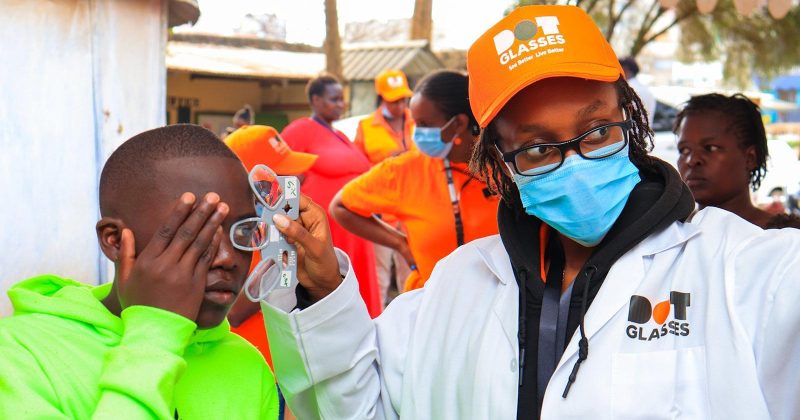
Dot Glasses, which focuses on low-cost, locally assembled spectacles, is among the firms expected to benefit from funding, mentorship and technical support under the initiative.
Its model allows glasses to be fitted and assembled on-site, bypassing traditional supply chains that often make vision correction expensive and inaccessible.
“The accelerator gives Dot Glasses an opportunity to collaborate with sector players and strengthen its model,” said Adam Boxer, Co-founder and Co-CEO.
“The foundation’s experience across Africa is expected to support scale and improve access to eyeglasses.”
The selection comes on the back of a widening global vision crisis.
Data from the International Agency for the Prevention of Blindness shows that at least one billion people worldwide live with preventable or treatable vision impairment, while projections by the World Health Organization indicate that half of the global population could be myopic by 2050.
In Africa, limited access to trained professionals and diagnostic infrastructure has intensified the gap, particularly in rural and peri-urban areas.
The accelerator is prioritizing solutions such as AI-assisted screening, portable diagnostics and community-based care models aimed at decentralizing services.
Backers of the initiative argue that improving eye health carries measurable economic benefits.
Research by sector organizations, including the Fred Hollows Foundation, suggests that investments in vision care can yield significant returns through improved productivity and education outcomes.
The broader cohort includes ventures from Liberia, Uganda, Zimbabwe and Ethiopia, reflecting a mix of approaches spanning digital health platforms, mobile screening services and local manufacturing.