SAMBURU, Kenya, Oct 24 – In the rugged landscape of Northern Kenya, where prolonged droughts strain communities and wildlife compete for increasingly scarce water, the survival of an orphaned elephant is becoming part of a much bigger economic story.
At Reteti Elephant Sanctuary, milk purchased from local households helps raise rescued elephants, while tourism revenue supports conservation and channels money into surrounding communities.
The model illustrates how wildlife protection can generate economic opportunities beyond the traditional business of accommodation, transport and game drives.
The sanctuary, nestled among the Mathew Ranges of Samburu, has built a system in which conservation, local supply chains and tourism reinforce one another.
Its work offers a practical example of the circular economy in tourism, where money spent by visitors can circulate through communities rather than benefiting accommodation providers and tour operators alone.
The approach is particularly relevant as the Kenya Tourism Board (KTB) steps up efforts to unlock the potential of lesser-known destinations through its Hapa Ni Wapi sales conversion campaign.
During a tour of the Northern Kenya circuit sponsored by KTB under the campaign, Reteti emerged as an example of how sustainable tourism can connect wildlife protection with household incomes, community participation and the long-term resilience of destinations.
Turning conservation into a local economy
Established in 2016 following an initiative by the local Samburu community, Reteti focuses on rescuing, rehabilitating and eventually returning orphaned elephants to the wild.
The sanctuary currently cares for 52 elephants and has released 23 back into their natural habitat. It also provides care for other wildlife, including giraffes, zebras, kudus and a baby buffalo.
Yet its economic significance extends beyond the animals it protects.
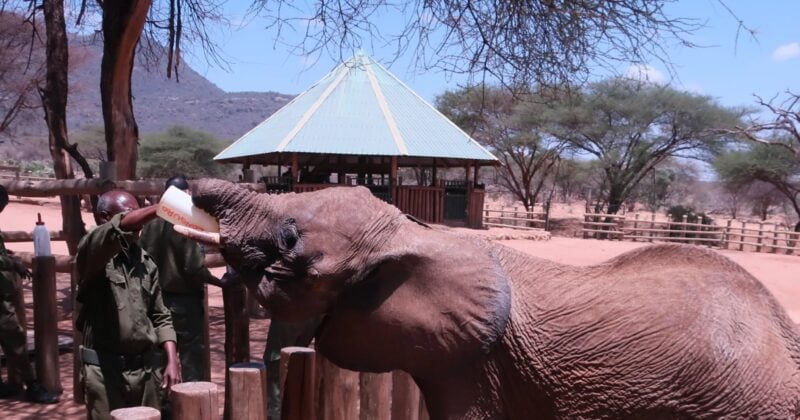
According to Russia Lenanyokie, a guest relations representative at the sanctuary, Reteti purchases more than 1,000 litres of goat milk daily from local suppliers to feed the elephants.
This releases sh6.5 million into the community through women who supply goat milk.
The supply chain involves approximately 1,250 women who sell goat milk through their communities, creating a recurring market for livestock products in an area where livelihoods are vulnerable to drought and unpredictable weather.
“We buy the milk from the local community. We are feeding our elephants with good milk, and we buy more than 1,000 litres a day. That is another big source of income for the local community,” says Russia Lenanyokie of the Reteti Elephant Sanctuary.
“In every village, we collect milk from the women who sell it to us.We have a vehicle that goes into the community to collect the milk.”
The arrangement demonstrates one of the central principles of a circular economy: local resources and economic relationships are organized to create value that extends beyond a single transaction.
Instead of sourcing all its supplies from outside the region, the sanctuary purchases a product from nearby households, allowing tourism-related conservation spending to support livelihoods within the destination.
For participating women, the regular market can provide an additional source of income and strengthen their ability to withstand economic shocks.
For the sanctuary, a community-based supply chain helps sustain the intensive work of raising orphaned elephants.
The model also creates a direct economic connection between local households and wildlife conservation, making the benefits of protecting animals more tangible.
When tourism revenue returns to communities
The circular economy at Reteti also extends to visitor spending.
Lenanyokie says tourism revenue collected by the sanctuary is divided between the surrounding community and the institution’s operating costs, with 60 per cent allocated to the local community and 40 per cent retained for operations.
The community share supports needs such as school fees and hospital bills, linking wildlife tourism to household welfare.
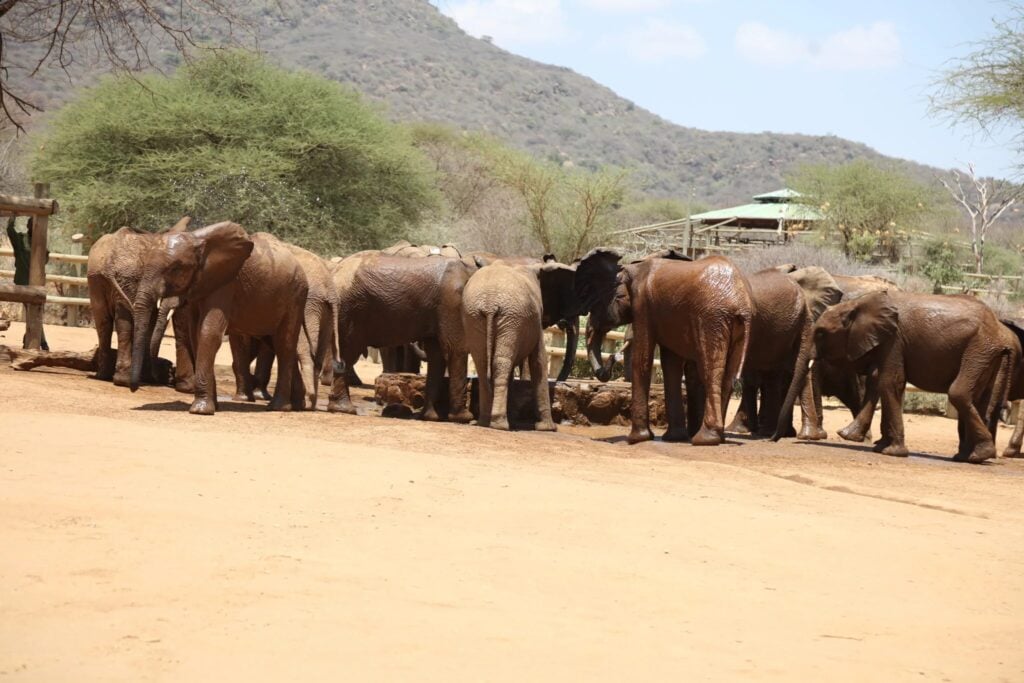
“When tourists come to the sanctuary, they pay a certain amount of money, and we divide it into two.Sixty per cent goes to the local community, while 40 per cent remains for the operations of the sanctuary. The money is distributed to support things such as school fees and hospital bills,” he adds.
This arrangement highlights an important distinction between tourism that simply takes place in a community and tourism that actively contributes to its economic development.
When revenue supports education, healthcare, local suppliers and conservation employment, the benefits can reach households that might otherwise receive little from visitors staying at privately operated lodges.
The sanctuary’s presence also helps generate business for nearby accommodation providers.
Lenanyokie says visitors drawn to Reteti can stay at establishments in the surrounding area, extending the economic benefits beyond the sanctuary’s entrance.
This creates opportunities for a wider network of businesses, including accommodation providers, guides, transport operators and local suppliers.
However, the model’s long-term value depends on maintaining a healthy balance between visitor numbers, the sanctuary’s operational needs and the community’s share of tourism income.
The environmental cost of Northern Kenya’s water crisis
The need for such a model becomes clearer when considering the environmental pressures facing Northern Kenya.
Long dry seasons and seasonal rivers force both people and wildlife to compete for water.
Communities dig wells along riverbeds to access groundwater, but these structures can become dangerous traps for young elephants.
At Reteti, the wells are known as singing wells because of the traditional songs and rhythms associated with the community’s water-drawing practices.
For elephants, however, an uncovered well can mean serious injury, separation from their mothers or death.
Patricia Parkeri, an operations officer at Reteti, says young elephants may lack the strength and grip needed to climb out after falling into the deep, sometimes rocky wells.
“These are simply man-made holes dug by Samburu people along riverbeds to access water.An adult elephant might be strong enough to get water safely, but a young and fragile elephant may not have the strength to get out.”
“When an elephant falls into a well, we ask the community to contact us so that we can rescue it and try to reunite it with its mother. If the mother does not return after about 72 hours, we may have to bring the baby here for rehabilitation.”
The rescue process demonstrates the complex relationship between conservation and the needs of communities living in arid environments.
Wells are essential to human survival, particularly during drought, meaning that simply eliminating them is not a practical solution.
Instead, conservation efforts must explore ways to make water access safer for wildlife while ensuring communities retain reliable supplies.
Reteti says it raises awareness about covering wells and encourages residents to report elephants in distress.
The sanctuary’s work therefore extends beyond rehabilitation.
It includes promoting coexistence, responding to emergencies and encouraging practices that reduce the likelihood of future wildlife injuries.
From a sustainability perspective, preventing an accident can be as important as rescuing an animal after it occurs.
It reduces animal suffering and the resources required for emergency intervention while supporting the long-term survival of wildlife populations.
Conservation as an investment in livelihoods
The relationship between communities and wildlife is also shaped by the economic costs of living alongside animals.
Elephants can damage farms, destroy crops and threaten livestock, creating resentment when households bear the losses while tourism businesses receive much of the revenue generated by wildlife.
Lenanyokie says community awareness and compensation arrangements within the conservancy landscape help residents understand the value of conservation and manage some of the costs associated with wildlife.
“People in the community are learning the meaning of conservation. When someone is affected by an elephant, for example when livestock is killed, there are arrangements to compensate for the loss.”
Such arrangements are critical to sustainable tourism because conservation cannot depend solely on goodwill when communities face direct financial losses.
Where compensation is accessible, transparent and adequately funded, it can help distribute the costs of wildlife protection more fairly. Where it is insufficient or delayed, however, tensions can persist.
The economic case for conservation therefore rests on ensuring that communities receive meaningful benefits while having a voice in how natural resources are managed.
Reteti’s approach illustrates how tourism can contribute to this process, although the model’s wider success depends on reliable funding, effective governance and continued cooperation between communities, conservation organisations and public agencies.
Hapa Ni Wapi targets year-round domestic travel
The Kenya Tourism Board is seeking to replicate the economic opportunities associated with lesser-known destinations by converting interest in domestic travel into actual bookings.
Under the Hapa Ni Wapi sales conversion campaign, the Board is bringing together tour operators, county governments and tourism partners to develop structured, ready-to-book travel packages.
KTB is targeting 5.6 million domestic bed nights, up from 5.15 million recorded in the 2025/26 financial year, as it seeks to spread tourism activity more evenly across the country and throughout the year.
Speaking during the campaign’s flag-off in Samburu, KTB chief executive June Chepkemei said the initiative was intended to move beyond awareness and produce measurable commercial results.
“This campaign marks a shift in how we approach domestic tourism marketing.
“Rather than simply raising awareness, we are building direct pathways from interest to booking.We are working closely with trade partners to package our regions affordably,”she said.
“Our target is to grow bed nights from 5.15 million recorded in the 2025/26 financial year to 5.6 million this year.”
More than 50 tour operators drawn from the Tour Operators Society of Kenya and the Kenya Association of Tour Operators are participating in the inaugural activation.
The Northern Kenya circuit, including the Chalbi Desert, is the first destination under the initiative, with subsequent activations planned for Mambrui–Malindi, Western Kenya and other underexplored regions.
For the travel trade, the initiative offers an opportunity to develop packages that connect different experiences within a destination rather than selling isolated attractions.
Tour Operators Society of Kenya chairperson Raymond Cheruiyot said the campaign would give businesses a more structured way to reach domestic travellers.
“Our members have long known that Kenyans want to travel locally.Pricing and access have often stood in the way.This campaign gives us a clear structure to package the north affordably and sell it directly,” said Raymond Cheruiyot, TOSK chairperson.
The commercial opportunity is significant, but increasing visitor numbers alone will not guarantee sustainable development.
The quality of the packages, the management of sensitive ecosystems and the distribution of revenue will determine how much local value is created.
Infrastructure and the sustainability test
Access remains a major obstacle to unlocking Northern Kenya’s tourism potential.
Lenanyokie identifies poor roads, the region’s remoteness and limited airstrip infrastructure as constraints that make it difficult for some travelers to reach the sanctuary.
Improved connectivity could lower travel costs, encourage longer stays and help local businesses attract more customers.
It could also make it easier for operators to combine conservation experiences with cultural tourism and visits to other attractions.
But infrastructure development must be planned carefully.
Roads and aviation facilities can bring economic opportunities while also increasing pressure on habitats if they are developed without adequate environmental safeguards.
The challenge is to expand access without undermining the landscapes and wildlife that make the region distinctive.
Tourism operators must also ensure that higher visitor numbers translate into local employment, procurement and investment rather than simply increasing traffic through the destination.
For Reteti, the circular economy offers one possible route towards that balance: visitors help finance conservation, conservation creates demand for local products and services, and community participation strengthens the economic case for protecting wildlife.
Northern Kenya’s tourism future will depend on whether this cycle can be sustained beyond individual projects.
The lesson from Reteti is that wildlife need not be viewed only as a tourist attraction.
Properly managed, it can form part of a broader economic system that supports livelihoods, protects ecosystems and gives communities a direct stake in the future of their landscape.
As KTB seeks to turn domestic travel interest into bookings, the region’s challenge is not simply to attract more visitors.
It is to ensure that the money they spend leaves behind lasting economic and environmental value.
In Northern Kenya, the measure of a successful tourism economy may therefore be found not only in the number of visitors who arrive, but also in how many local households benefit, how much wildlife is protected and how effectively today’s tourism income supports tomorrow’s conservation.