NAIROBI, Kenya, Sep 28 — Kenya must overhaul its health, social protection and care systems to cope with a rapidly ageing population, with the number of people aged 60 and above projected to rise from about 2.9 million to 6.4 million by 2045, geriatric specialists have warned.
The projected increase is expected to put new demands on healthcare, family caregiving, social protection and the wider economy, requiring Kenya to expand services specifically designed for older people rather than treating ageing as a future social welfare issue.
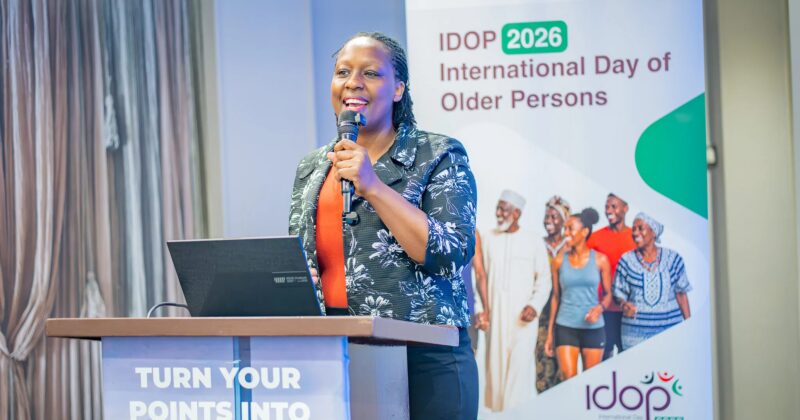
Dr Lydia Atambo, a physician specialising in geriatric medicine, said the projected growth was not merely a demographic change but one that would have implications across the economy and public services.
“This is just not simply a demographic statistic. It has major implications not just for the healthcare system but for the economy and most importantly for the wider economy,” Atambo, who is also Co-founder of ACEHOP and IDOP Conference Chair, said.
She called for geriatric services to be integrated into primary healthcare and community health systems, alongside systematic home-based care, rehabilitation, palliative care and long-term care.
“Geriatric care, which is the care of older persons, cannot remain a specialist service that is only found in cities and major towns. It has to be devolved,” she said.
Atambo also warned that changing family structures would make traditional forms of unpaid care increasingly difficult to sustain.
Children are increasingly living away from their parents, families are becoming smaller and more women are participating in the workforce, she said, raising the question of who will provide care for older people.
She called for Kenya to develop a stronger care economy that professionalises caregiving, supports family caregivers and expands home and community-based services.
“Care is not simply a social responsibility. It can also be looked at as an economic sector that can create jobs and enable families to remain economically productive,” Atambo said.
Burden of non-communicable diseases
Ministry of Health officials said the ageing population must be considered alongside the growing burden of non-communicable diseases, which tend to increase with age.
Dr Esther Muinga said the 2019 Kenya Population and Housing Census recorded about 2.7 million older persons, equivalent to roughly six per cent of the population.
She said healthy ageing must be approached across the entire life course, beginning with nutrition, immunisation, education, safe environments, mental wellbeing and prevention of chronic diseases.
“What we do for a child at the age of two years determines how the future looks for them,” Muinga said.
She said Kenya’s approach to healthcare should also recognise the family as a unit rather than treating older people in isolation.
“We must also design universal health coverage around families and communities,” she said.
Muinga said the Ministry of Health has established a technical working group on healthy ageing and is implementing strategies and policies aimed at improving care for older persons.
Older people as contributors
Dr Jane Muita said the growing number of older people should not be framed as a burden, arguing that longer life expectancy is itself an achievement of improvements in health and development.
“The first one is that age is an achievement, not a problem,” Muita said.
She said older people continue to contribute through work, leadership, community participation and the transfer of knowledge and experience.
“Older persons are contributors and not simply dependent,” she said.
Muita also urged the media to rethink how it portrays ageing, saying reporting should avoid reducing older people to illness, dependency and vulnerability.
“Kenya’s task is to make sure that longer lives are healthier and meaningful,” she said.
Dr Tasneem Yamani, Technical Advisor, Suqoon Kenya, similarly called for older people to be given a direct voice in stories and decisions affecting them.
“Age does not remove somebody’s voice,” Yamani said, urging journalists to speak with older people rather than simply reporting about them.
Pressure on families and caregivers
The discussion also highlighted the growing burden on families caring for older relatives, particularly women who traditionally shoulder much of the unpaid care work.
Officials said the response must extend beyond healthcare to include social protection, income security, age-friendly infrastructure and support for caregivers.
The organisers are also calling for stronger intergenerational engagement to address loneliness among older people and allow younger generations to benefit from their knowledge and experience.
The Government plans to use the International Day of Older Persons activities to broaden that conversation through national and county-level engagements.
Julie Omollo of the State Department for Social Protection said the Government wants older people to remain visible in national development discussions and for their voices to inform policy.
She urged the media to amplify older people’s voices, raise awareness of social protection and hold institutions accountable for implementing services.
Preparing before old age
The experts said preparing for an ageing population cannot wait until people reach retirement age.
They called for stronger pension systems, financial literacy, retirement planning and access to healthcare in later life, alongside age-friendly workplaces, transport systems and public infrastructure.
Atambo said Kenya must also invest in prevention long before people reach old age.
“We cannot wait until 2045 to start preparing,” she said.