NAIROBI, Kenya, June 16 — Kenya’s FY2026-2027 budget has sparked concerns over a looming credit squeeze for Micro, Small and Medium Enterprises (MSMEs), with the government leaning heavily on domestic borrowing to bridge a Sh1.14 trillion deficit.
The widening deficit—now projected at Sh1.146 trillion—has shifted government financing priorities toward the local market, raising fears that commercial banks may increasingly favour lending to the State over private borrowers.
This comes as the government intensifies domestic borrowing to bridge the fiscal gap, with analysts warning that the move could crowd out businesses already struggling to access affordable credit.
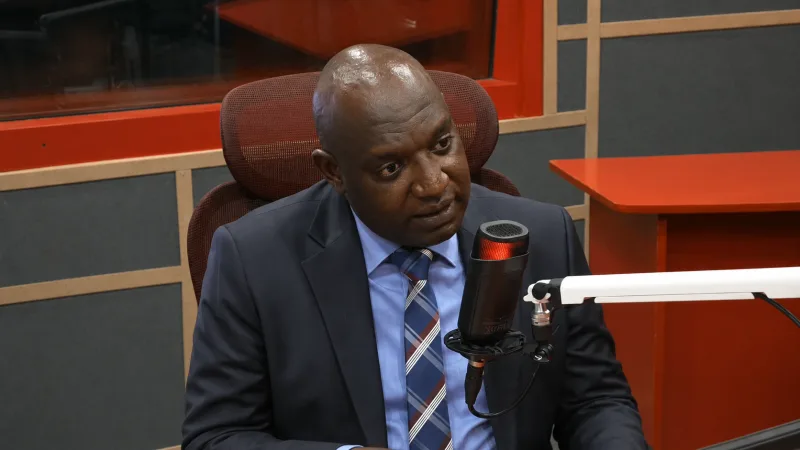
Speaking on Capital in the Morning, tax expert and KPMG Associate Director James Kimani warned that the rising domestic borrowing appetite could tighten liquidity in the private sector.
“This time round it has gone past one trillion shillings,” Kimani said. “What that means is that you and I, who would otherwise go to those banks to get borrowing, the banks will shy away from giving money to normal citizens and prefer to give to the government because of the risk involved.”
During his Budget Statement in Parliament, Treasury Cabinet Secretary John Mbadi confirmed the shift, noting that the government plans to raise Sh1.03 trillion from domestic markets compared to just Sh116.2 billion from external lenders.
The total national budget stands at Sh4.82 trillion, against projected revenue collection of Sh3.63 trillion, leaving a significant financing gap.
Lending shift
Financial analysts warn that the increased reliance on domestic borrowing could distort credit allocation, with banks prioritising government securities over private sector lending due to lower risk.
“This leaves most businesses and individuals unlikely to access affordable credit from commercial banks,” Kimani explained. “That has a significant economic impact.”
Critics further note that a large portion of the budget—about Sh1.2 trillion—is allocated to interest payments on existing debt, tightening fiscal space for productive sectors such as manufacturing and agriculture.
To boost revenue collection, the Kenya Revenue Authority (KRA) is expanding its electronic tax invoice management system (eTIMS) to capture more informal businesses within the tax net.
However, the Finance Bill also introduces a tax amnesty aimed at easing penalties for taxpayers with outstanding obligations.
“Amnesty is a very good thing,” Kimani said. “There are times taxpayers are unable to pay on time, and this proposal waives penalties and interest.”
New cost pressures
Despite relief measures, stakeholders warn that other provisions in the Finance Bill could increase operational costs for local manufacturers.
A proposed 10 per cent excise duty on locally manufactured plastic products is expected to reduce competitiveness against imported goods.
“That would mean local manufacturers will be less competitive compared to imports,” Kimani noted.
Kimani also raised concerns over proposed changes affecting Kenya’s electric vehicle (EV) sector, particularly the reclassification of locally assembled EVs and motorcycles from zero-rated to VAT-exempt status.
He warned that the shift could increase consumer prices.
“Moving from zero-rated to exempt means manufacturers cannot reclaim input VAT,” he said. “To recover costs, they will have to raise prices, making these products more expensive for consumers.”
With the Kenya Revenue Authority stepping up enforcement through SMS, WhatsApp, and email compliance alerts, businesses have been urged to regularise their tax affairs.
“The Revenue Authority pressure is quite intense,” Kimani said. “If you are trading in Kenya and not compliant, they will eventually catch up with you—so make your affairs right.”