NAIROBI, Kenya, Aug 19-The Kenya Air Force is testing its command and control systems against complex simulated scenarios as it seeks to strengthen its ability to coordinate and respond to rapidly evolving operational threats.
The focus took centre stage on Tuesday, when Commander Kenya Air Force (KAF), Major General Bernard Waliaula, visited Laikipia Air Base to assess a Joint Air Operations Command Post Exercise (CPX) designed to test decision-making, coordination and operational readiness.
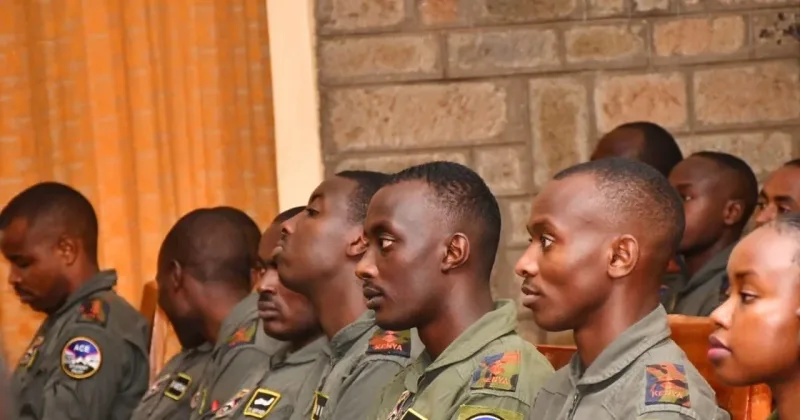
The exercise brought commanders and staff together in a simulated operational environment to test how effectively different command structures and functional cells can work together to plan and execute air operations.
KDF said effective air operations depend on “robust command and control, timely decision-making and the seamless integration of personnel, technology and operational capabilities.”
The Command Post Exercise was designed to deepen participants’ understanding of command post structures and functions while allowing them to practise operational planning, coordination and decision-making under demanding scenarios.
It also tested how the different components of a Joint Air Operations Centre integrate their responsibilities to support the planning and execution of air missions.
During the visit, Waliaula received an operational briefing from Laikipia Air Base Commander Brigadier Hillary Kipkurui, who served as the Joint Force Air Component Commander (JFACC) for the exercise.
Kipkurui, alongside the Chief of Staff and other senior officers, briefed the KAF commander on the operational plan, objectives of the exercise and the various phases of the simulated operation.
Waliaula later toured the Command Post cells, where officers explained their respective roles and how information and decisions move across the different functional areas.
The exercise allowed the KAF leadership to assess the effectiveness of command and control arrangements, information flow and coordination between the various elements supporting joint air operations.
Waliaula challenged officers to use such exercises to identify weaknesses before they emerge during actual missions, while adapting operational planning to advances in technology and changing mission requirements.
“Command Post Exercises must challenge us to think critically, expose our gaps and enable us to harness technology and improve the effectiveness of air operations,” Waliaula said.
He said demanding simulations were critical in preparing commanders and staff to analyse information quickly, exercise sound judgement and coordinate responses when faced with rapidly changing situations.
KDF said the training is intended to ensure personnel can anticipate operational challenges, coordinate available resources and make informed decisions under pressure.
Lessons generated from the exercises will also help the Air Force refine procedures, improve teamwork and strengthen the effectiveness of future operations.
The exercise underscores KAF’s growing emphasis on technologically enabled command structures and agile decision-making, with the military seeking to ensure its forces remain capable of operating effectively across diverse and complex operational environments.
KDF said the exercise contributes to the wider objective of strengthening joint operational readiness and ensuring the Defence Forces can respond “decisively and effectively” when called upon.