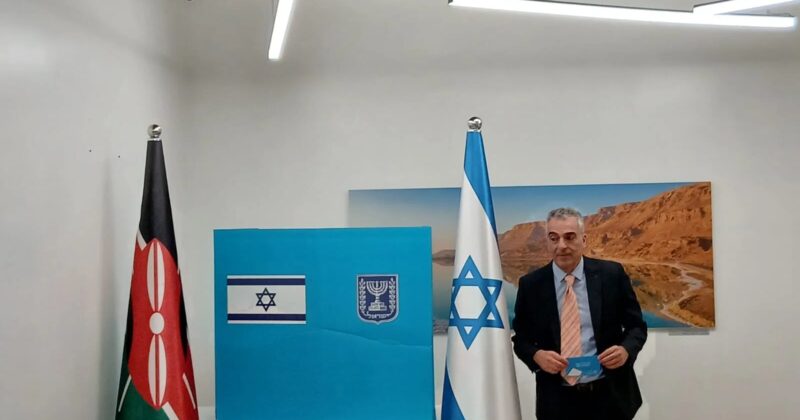
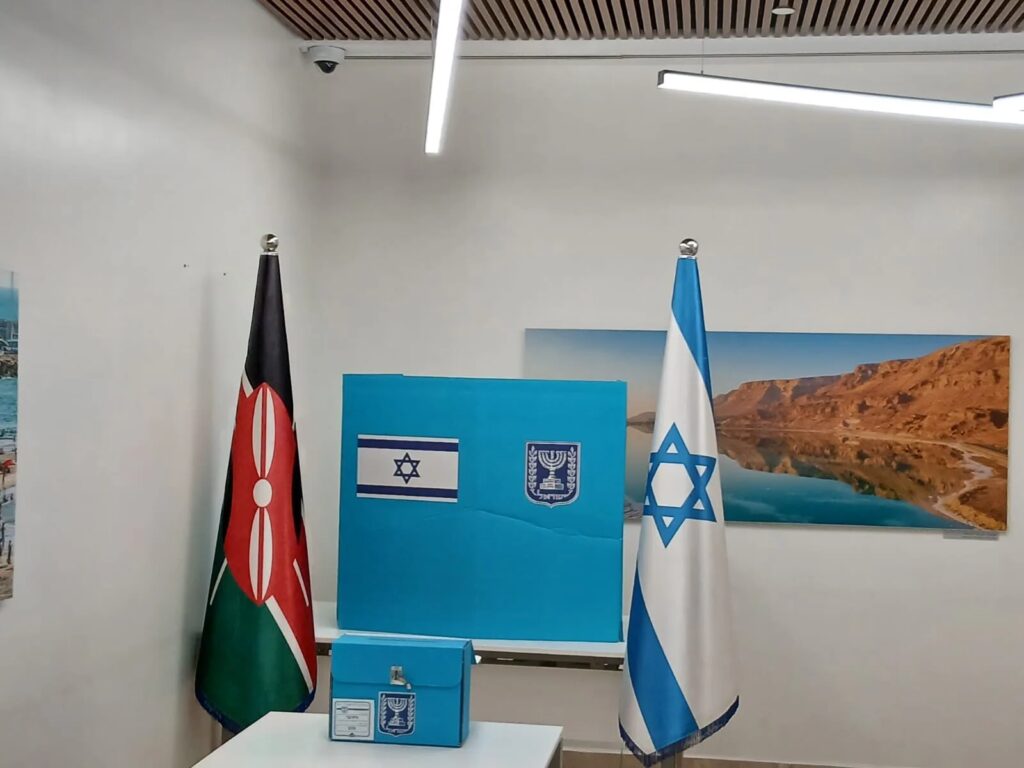
NAIROBI, Kenya, Oct 15 — Israeli diplomats in Nairobi are casting their ballots ahead of the October 27 parliamentary elections, offering a glimpse into a political system where the prime minister emerges through coalition negotiations rather than a direct presidential vote.
Unlike Kenya, where voters directly elect the president, Israelis vote for political parties competing for seats in the 120-member Knesset, with the formation of government depending on which bloc can secure a parliamentary majority.
Israeli Ambassador to Kenya Gideon Behar explained the system on Thursday as diplomats voted at the Israeli Embassy in Nairobi.
“The citizens choose the parties and choose the members of the Knesset, and then the members of the Knesset with the different parties will form a coalition and the coalition will have a prime minister,” Behar said.
He said 38 parties were competing in the October 27 election, with security, the economy and citizens’ welfare among the key issues facing voters.
How Israel chooses its prime minister
Israel uses proportional representation, under which voters cast ballots for party lists rather than directly electing a prime minister. Seats in the Knesset are allocated according to each qualifying party’s share of the national vote.
After the results are announced, parties negotiate to form a coalition capable of commanding a majority of at least 61 of the 120 parliamentary seats.
The Israeli president assigns a member of the Knesset the task of forming a government, generally choosing the candidate considered most likely to secure sufficient parliamentary support.
The proposed government must then win the Knesset’s confidence.
This means the party with the most votes does not automatically secure the premiership.
Smaller parties can play a decisive role if their support helps a potential coalition reach the required majority.
How Kenya’s system differs
In Kenya, the president is elected directly by voters and must secure more than half of all votes cast, as well as at least 25 per cent of votes in more than half of the 47 counties, to win in the first round.
If no candidate meets both constitutional requirements, a fresh election is held in accordance with the Constitution.
While Kenyan parties also form political alliances, the presidential contest is separate from parliamentary elections.
In Israel, by contrast, the composition of parliament determines which parties can negotiate to form the government.
Coalition negotiations can also influence policy, as parties seek agreements on government appointments and priorities, including security, economic policy and other national issues.
Behar said the election outcome would reflect the will of Israeli voters.
“The main issues are, as always, security concerns, well-being of the citizens, economy, etc.,” he said.
The October 27, 2026, election will determine the composition of the 26th Knesset, setting the stage for negotiations to form Israel’s next government.