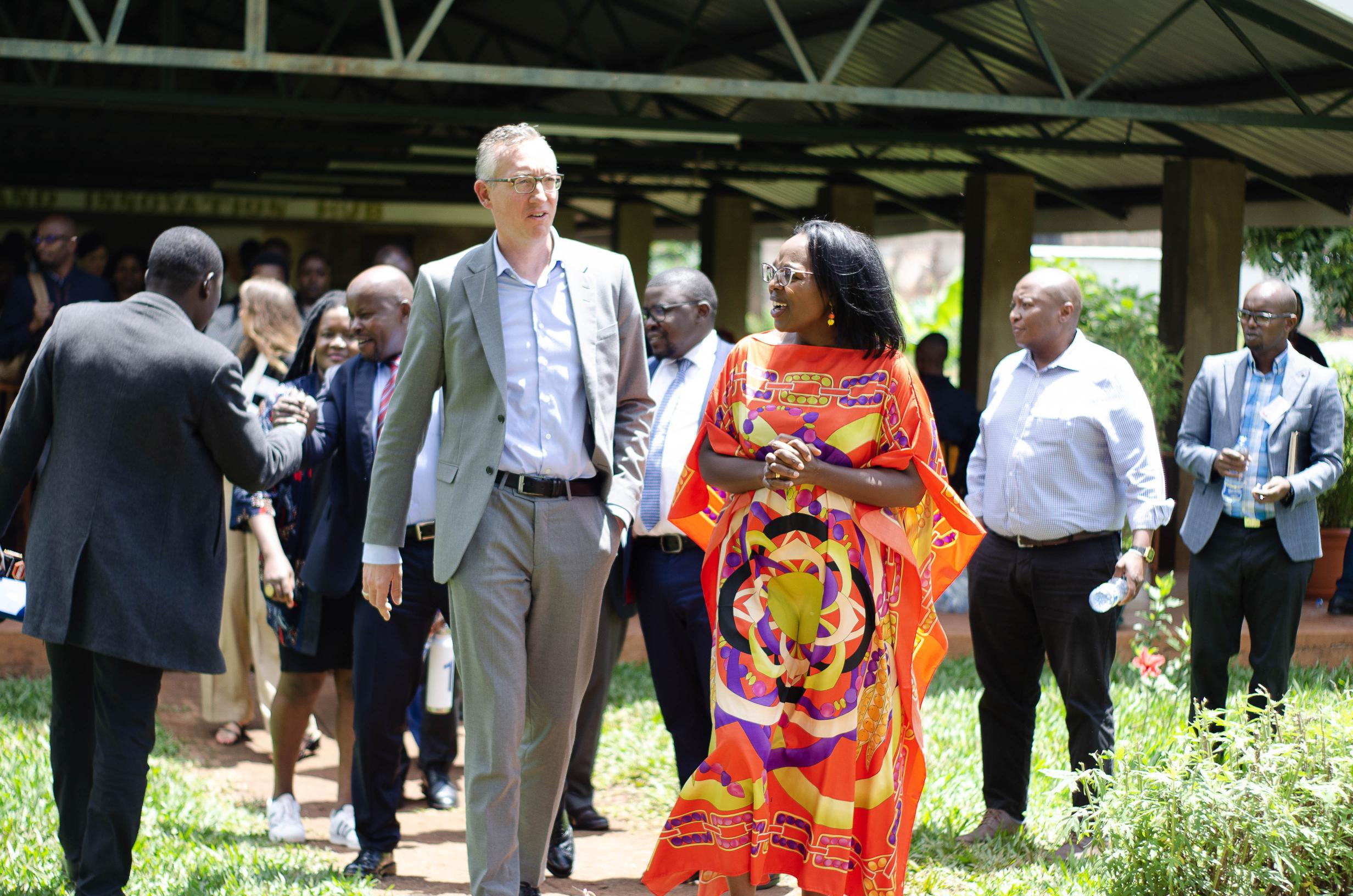
NAIROBI, Kenya, April 20 – The German government has revealed that they will be setting up 160 new technical training centers across Kenya in a bid to bridge the skills gap facing the country.
The centers will be constructed at a cost of 150 million euros(Sh22.2 billion) and will be spread across the western, coastal, and north eastern regions.
“The country is on a path of developing its manufacturing sector and the only way to do that is to have the technical skills required in spurring industrial growth. These centers will be fully equipped to train the youth on welding, renewable, and e-mobility,” said Sebastian Groth, German Ambassador in Kenya.
The envoy was speaking during the launch of Virtual Reality (VR) technology in Advanced Welding.
This program is supported by the German Development Cooperation and European Union & implemented by Deutsche Gesellschaft für Internationale Zusammenarbeit (GIZ), through the Digital Transformation Center and Make I.T. Alliance.
The Toolkit iSkills (TTI) is a digitally innovative social enterprise in Africa that focuses on training youth in life and employability skills, technical skills, and Digital skills training.
TTI transforms youth through skills training in Construction, Renewable Energy, Digital Skills, Organic Farming, and Linkage to jobs/entrepreneurship.
This year the firm noted that it has invested time, thought, and deed to skilling youth for decent green jobs.
“We have designed innovative mobile solar training units based on the expertise of our in-house team and industry experts. We broke down complex solar energy learning into easy-to-learn and easy-to-demonstrate and easy-to-practice projects,” noted Jane Muigai Kamphuis, Director, and Founder, Toolkit Iskills (TTI).
The firm mainly trains the youth drawn from the less fortunate and refugee camps across the EAC region.
The training of refugees in Kakuma and Daadab refugee camps in solar has been a success because of support by the Government, United Nations High Commissioner for Refugees, humanitarian agencies and solar micro enterprises operating in the camp.
The firm has further called for the strengthening of training industry linkage so that the mismatch is reduced significantly by ensuring that TVET graduates come out with skills that are employable, effective, relevant and applicable to the job market.