Kenya stands at an important point in its economic journey. As the country pursues industrialisation, expands manufacturing, strengthens Special Economic Zones (SEZs) and seeks to build a globally competitive innovation economy, there is immense value in studying countries that have successfully navigated similar transitions.
Few places offer richer lessons than Shenzhen.
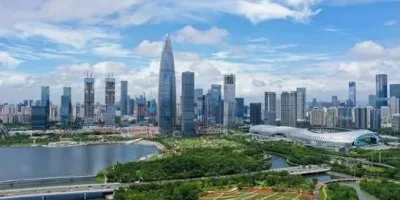
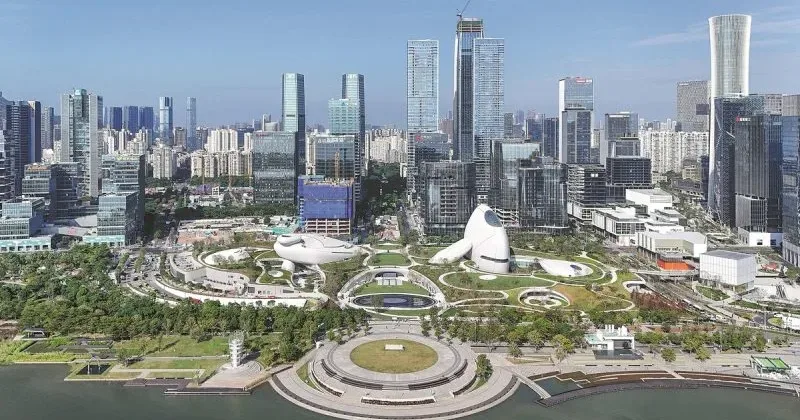
Today, Shenzhen is recognised as one of the world’s foremost centres of technology, telecommunications and advanced manufacturing. Home to global giants such as Huawei, Tencent, BYD, DJI and ZTE, the city has become synonymous with innovation. Yet just over four decades ago, it was little more than a fishing village bordering Hong Kong.
Its transformation was neither accidental nor inevitable. It was the product of deliberate leadership, strategic policy decisions, openness to global markets and, above all, a willingness to continuously reinvent itself.
During a recent lecture at the Shenzhen Reform and Opening-up Executive Leadership Academy, facilitator Chen Lei unpacked the intrinsic logic behind Shenzhen’s remarkable rise. More than a story of infrastructure, investment or industrial policy, the lecture highlighted a simple but powerful truth: Shenzhen continually questioned its own success and transformed before circumstances forced change.
That may well be its greatest lesson for Kenya.
Shenzhen’s economic rise was extraordinary.
Between 1979 and 1992, the city’s Gross Domestic Product expanded from approximately 196 million Yuan to more than 1 billion Yuan, recording an exceptional compound annual growth rate of 47.9 per cent—far exceeding China’s national average of 15.7 per cent and the provincial average of 20.8 per cent during the same period. It was this remarkable pace of development that gave rise to the globally recognised phrase “Shenzhen Speed.”
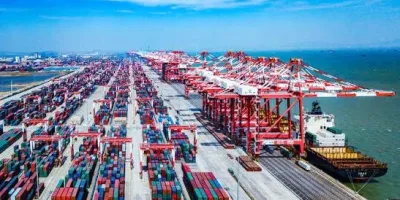
The catalyst was China’s decision to establish Shenzhen as its first Special Economic Zone. Through targeted reforms, export-oriented manufacturing, technology transfer and foreign direct investment, Shenzhen rapidly evolved into what became known as the “world’s factory.”
However, what impressed me most from the lecture was not Shenzhen’s initial success—it was its response when that model began reaching its limits.
By the early 1990s, Shenzhen recognised that competing solely on low-cost manufacturing would not sustain long-term prosperity. Labour costs were rising, global competition was intensifying and the economic landscape was changing.
Instead of defending yesterday’s success, Shenzhen chose reinvention.
It deliberately climbed the global value chain, shifting from assembling products for international companies to designing them and, ultimately, owning the technology, patents, software and brands behind those products. Economists describe this progression through the Smile Curve, where the greatest value is created not through assembly alone, but through research, innovation, product development, branding and customer solutions.
That strategic shift fundamentally changed Shenzhen’s future.
By 1997, Shenzhen had established what became known as China’s Number One Electronics Street, creating one of the world’s most vibrant ecosystems for electronics manufacturing, component supply chains and technology entrepreneurship.
Just two years later, another defining milestone followed.
In 1999, companies such as Tencent, alongside numerous technology start-ups, survived what entrepreneurs commonly call the “Valley of Death”—the difficult period between invention and commercial success. Their survival was made possible by an ecosystem of venture capital, private equity and long-term investors willing to finance innovation before profitability.
Equally remarkable was Shenzhen’s attitude towards failure.
Innovation was not expected to produce immediate success. Experimentation was encouraged. Failure was tolerated. Trial and error became accepted components of progress rather than reasons to abandon bold ideas. That culture continues to define Shenzhen’s innovation ecosystem today.
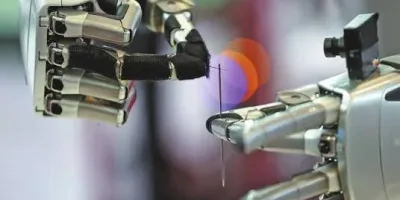
Recognising that future industries depend upon strong scientific foundations, Shenzhen continued investing heavily in universities, research institutions, laboratories and technology companies. In 2020, the city further strengthened its innovation ecosystem through the Shenzhen Special Economic Zone Science and Technology Innovation Regulations, creating stronger legal frameworks to commercialise scientific research and incentivise innovation.
Unsurprisingly, Shenzhen’s experience has become a global reference point.
Between 2017 and 2019, more than 1,000 Special Economic Zones were established around the world, drawing inspiration from the Shenzhen model. Today, there are over 4,000 SEZs globally, reflecting the growing recognition that well-designed industrial ecosystems remain among the most effective tools for accelerating economic transformation.
For Kenya, these lessons are particularly relevant.
The country has already invested significantly in Special Economic Zones, industrial parks and transport infrastructure. Kenya has also earned international recognition for its digital innovation through mobile financial services, a vibrant entrepreneurial ecosystem and an increasingly skilled youthful population.
Yet infrastructure alone will not deliver global competitiveness.
Kenya’s next frontier is not simply building more industrial parks or attracting more factories. It is creating complete innovation ecosystems where universities collaborate with industry, investors finance emerging technologies, manufacturers commercialise research, government enables enterprise and entrepreneurs are empowered to build globally competitive businesses.
As Kenya pursues the ambitions of Vision 2030 and the Bottom-Up Economic Transformation Agenda (BETA), Shenzhen’s experience reminds us that sustainable economic transformation demands more than physical infrastructure. It requires strong institutions, consistent policy, investment in research and development, access to patient capital, openness to global markets and a culture that rewards innovation.
Most importantly, it requires the courage to recognise when existing economic models have reached their limits.
Perhaps the most enduring lesson from Chen Lei’s lecture is that transformation is never a one-time event. It is a continuous process of learning, adapting and reinventing.
Kenya’s development journey will naturally differ from China’s. Our history, institutions and opportunities are unique. But the underlying principle remains universal.
The economies that remain globally competitive are those that continuously innovate, invest in human capital, strengthen institutions and embrace change before crisis makes it inevitable.
Kenya’s economic future will not be determined solely by the infrastructure it builds, the investments it attracts or the policies it enacts. It will be determined by how quickly it recognises the limits of today’s growth model and how boldly it embraces the next one.
That, perhaps, is Shenzhen’s greatest gift to the world.
Not simply that it became one of the world’s leading innovation hubs—but that it proved sustainable prosperity belongs to nations willing to reinvent themselves before necessity leaves them no choice.
Editor’s Note: This article is based on insights from a lecture delivered by Chen Lei, Associate Researcher at the Shenzhen Reform and Opening-up Executive Leadership Academy, as part of a study programme on Shenzhen’s economic transformation. The analysis, reflections and Kenyan perspectives presented are solely those of the author.