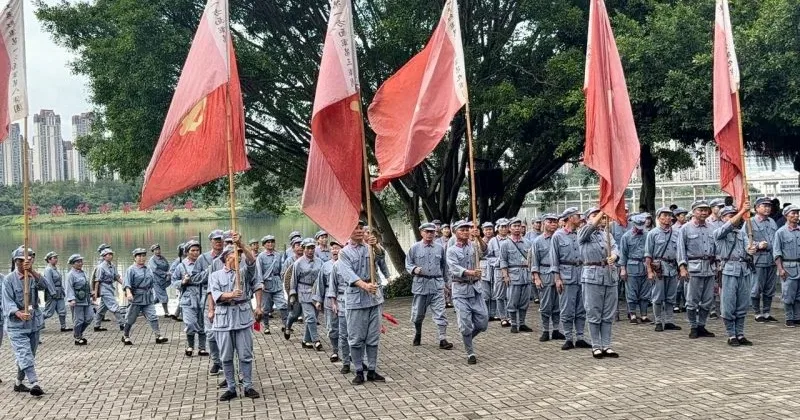
Standing atop the rugged slopes of Loushan Pass in southwest China, it is difficult to imagine the hardships faced by the Red Army soldiers who crossed these mountains more than 90 years ago.
The steep valleys, winding roads and imposing peaks of Guizhou Province offer a glimpse into the daunting journey undertaken during the Long March, one of the defining events in modern Chinese history.
Over the past week, I have been part of an international delegation attending a seminar on Media Cooperation among World Political Parties organised by the International Department of the Communist Party of China (CPC). The delegation brought together media practitioners and political representatives from countries across Asia, Africa, Europe, Australia and Latin America, including South Sudan, Angola, Brazil, Bahrain, Ecuador, Germany, Italy, Lebanon, Mongolia, Nepal and Serbia. Together, we traced key sites associated with China’s revolutionary struggle and the Long March.
The visit coincided with the 105th anniversary of the founding of the Communist Party of China, offering a unique opportunity to understand how a journey that began in the 1930s continues to influence China’s development path today.
Our first stop was Yeping in Ganzhou, Jiangxi Province, regarded as one of the birthplaces of the Chinese revolution. Among preserved revolutionary buildings and historical relics, visitors learn about the early years of the Communist movement and the immense sacrifices made during a period of war and political upheaval.
Nearby stands the famous Red Well, a symbol of the Party’s enduring emphasis on serving the people. Local guides recount how villagers struggled to access clean water until revolutionary leaders encouraged the construction of the well, an act that remains deeply embedded in local memory.
The story of the Long March became even more vivid in Yudu County.
It was from here, in October 1934, that the Central Red Army began its historic journey after gathering along the banks of the Yudu River. Facing encirclement and overwhelming military pressure, thousands of soldiers embarked on a trek that would stretch across some of China’s most difficult terrain.
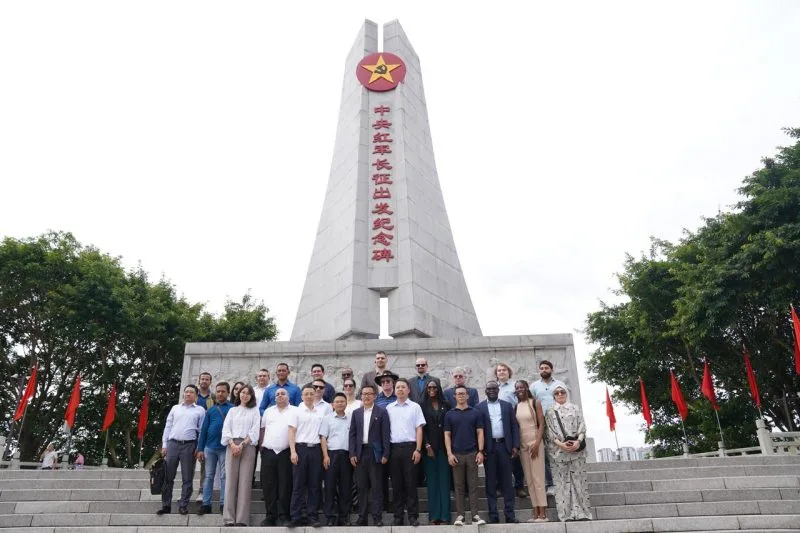
Today, the Memorial Park of the Gathering of the Central Red Army for the Long March commemorates that departure.
The experience was brought to life through the spectacular stage production, The First Crossing of the Long March, performed at the Long March Grand Theatre in Yudu. Combining music, storytelling and cutting-edge visual effects, the production captures the sacrifice, courage and determination that have come to define the Long March spirit.
From Jiangxi, our delegation travelled to Guizhou Province, where several pivotal moments of the Long March unfolded.
At the historic Zunyi Conference Site, we learned about the meeting held in January 1935 that changed the course of the Communist movement. Widely regarded as a turning point in the revolution, the conference helped redefine military strategy and laid the foundation for future success.
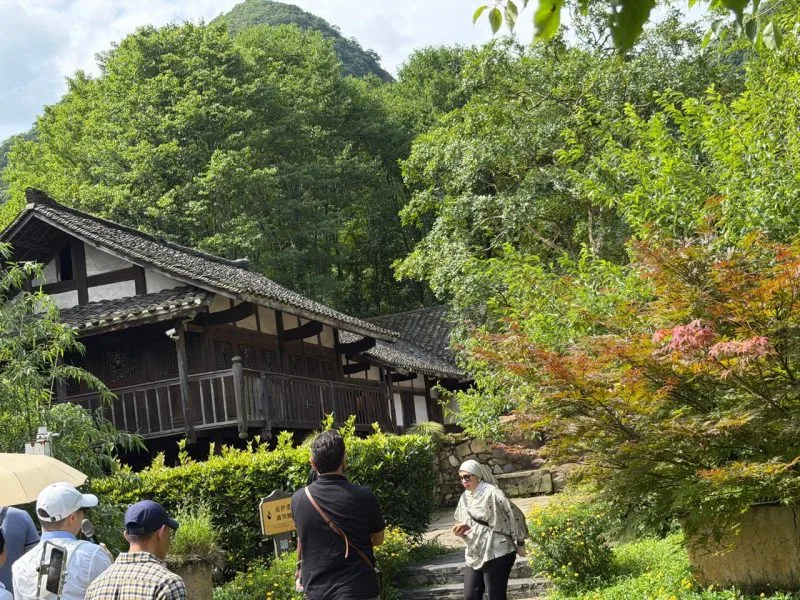
The journey then took us to Loushan Pass and later to Gouba Conference Site, where important decisions were made amid uncertainty and immense challenges.
One of the most memorable moments of the trip was tracing sections of the route through Guizhou’s mountains and valleys. Standing on narrow paths overlooking vast gorges and forest-covered hills, it became easier to appreciate the enormity of what the Red Army endured. Even with modern roads, comfortable transport and favourable weather, the terrain remains formidable. Looking across the landscape, one cannot help but wonder how thousands of soldiers, many carrying limited supplies and facing constant danger, managed to persevere.
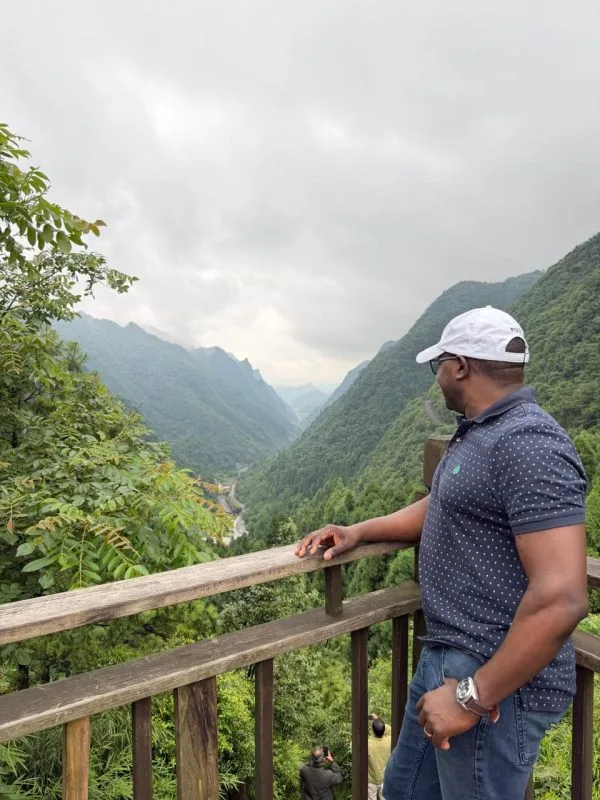
It is in these mountains that the Long March ceases to be an abstract historical event and becomes a deeply human story of sacrifice, resilience and belief in a cause greater than oneself.
Walking through these sites, one quickly understands why the Long March occupies such a prominent place in China’s national consciousness.
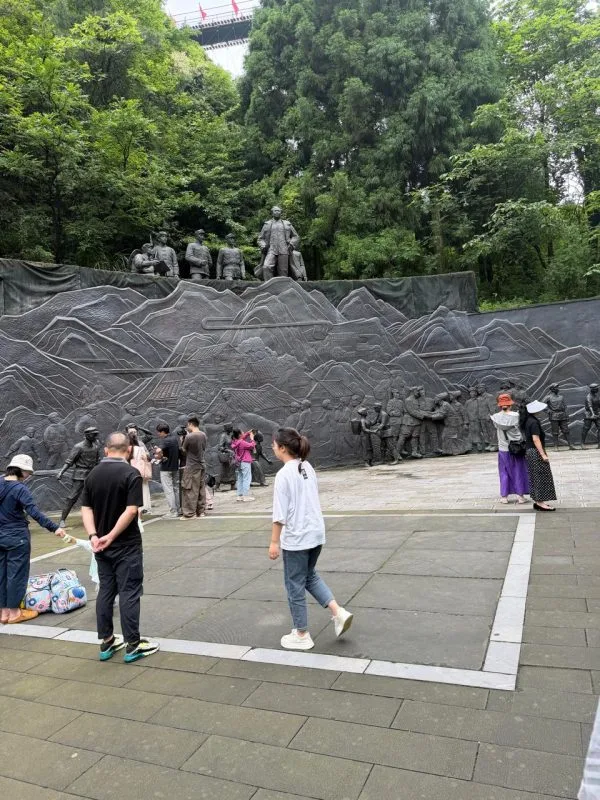
For the Communist Party, the Long March represents far more than a military retreat. It symbolises perseverance, resilience, sacrifice and an unwavering commitment to long-term goals despite enormous obstacles.
But for many of the visitors we encountered along the route, the Long March is not simply a chapter in China’s history. It is a living symbol of perseverance, sacrifice and national determination that continues to shape the country’s development journey.
At the Memorial Park of the Gathering of the Central Red Army for the Long March in Yudu, 78-year-old former factory worker Liu Jianhua had travelled with his grandchildren to learn more about the historic journey.
“I wanted them to see where part of our history happened,” he said. “Many young people today have grown up with good roads, good schools and opportunities. They should understand that these achievements did not come easily.”
At the Zunyi Conference site, 86-year-old retired teacher Zhang Guoqiang said he had waited decades to make the journey.
“When I was young, my parents would tell us stories about the Red Army and the Long March,” he said. “The Long March was not just about soldiers marching. It was about believing in a better future when China was poor and weak. Today’s China is proof that those sacrifices were worthwhile.”
Standing at Loushan Pass, overlooking the same mountains once traversed by the Red Army, 67-year-old retired engineer Wang Ming reflected on the challenges faced by those who undertook the journey.
“When you see these valleys and peaks, you begin to understand what the Red Army endured,” he said. “What inspires me is that they never gave up, even when success seemed impossible. That determination is still important for China today.”
The younger generation also sees relevance in the Long March story.
Chen Xia, a 26-year-old university graduate visiting Zunyi with friends, said the Long March remains a source of inspiration for young Chinese.
“My generation faces different challenges, but the lesson is the same,” she said. “The Long March teaches us perseverance, responsibility and the importance of working towards long-term goals.”
For 31-year-old technology entrepreneur Li Wei, the Long March spirit reflects China’s ambitions in innovation, science and development.
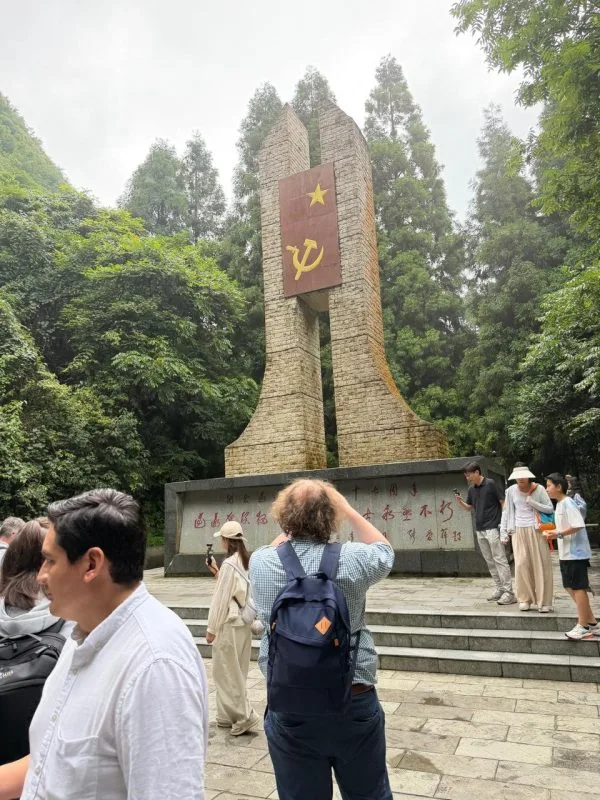
“People often think of the Long March as history, but for us it is also about the future,” he said. “China has achieved a lot, but there are still many goals ahead. The spirit of determination and resilience remains very relevant.”
The significance of the Long March extends far beyond China’s borders.
Among those reflecting on its relevance was Adeng Mayik, Press Secretary in the Office of the Secretary-General of the Sudan People’s Liberation Movement (SPLM) and a news anchor with the South Sudan Broadcasting Corporation (SSBC), who was part of the international delegation.
For Mayik, the story of the Long March resonates deeply with South Sudan’s own history of struggle and liberation.
“It is very relevant to us because of the liberation struggle and the long civil war we have had in our country before gaining independence,” she said.
“I like the way China has preserved this history many years later because the sacrifice of the Red Army reminds people of the struggle they went through. It continues to inspire them.”
She said one of the most striking lessons from the visit was how the Chinese people continue to honour those who participated in the Long March.
“Even if people do not remember the names of all the soldiers who took part, they remember their sacrifice and their struggle. That is very important because they continue to honour them to this day.”
The Long March also prompted reflection among members of the Kenyan delegation.
Paul Ilado, Editorial Director at Radio Africa Group, said tracing the route of the Red Army evoked memories of Kenya’s own struggle for independence and the sacrifices made during the Mau Mau uprising.
“Walking the Red Army’s Long March route stirs echoes of Kenya’s Mau Mau struggle. Our fighters too endured hunger, harsh terrain and superior colonial firepower,” he said. “Both movements fought for land and dignity against brutal oppression.”
What struck him most, however, was the extent to which China has preserved and institutionalised its revolutionary history.
“China has etched every detail into national memory. Museums, school textbooks and immersive tours ensure no generation forgets,” he said.
Ilado contrasted that with Kenya’s experience, where many liberation heroes remain little known to younger generations.
“In Kenya, our Mau Mau veterans were for many years branded terrorists, their sacrifices buried under colonial narratives. Many heroes died unnamed, their stories fading with time. Here, history breathes alive—a stark contrast that makes me question why some of our own liberation heroes remain strangers to our youth.”
He said one of the lessons Kenya could draw from China’s experience is the importance of preserving historical memory and passing it on to future generations.
“China’s preservation of history is deliberate and disciplined. Every soldier’s name is documented and every battle site preserved. Passing this legacy to children is a sacred duty, not an afterthought,” he said.
Together, the reflections from South Sudan and Kenya highlighted how the Long March continues to resonate beyond China’s borders, offering lessons on resilience, nation-building and the importance of preserving collective memory.
From the neighboring Mongolia, Nomuunaa Sumiyadorj, Political Officer, of the country’s People’s Party Foreign Relations Department, could not agree more.
“It’s impressive to see how China has preserved its history for generations. That heritage continues to inspire people to greatness,” said Nomuuna who is also the International Politics Editor of Mongolian Truth.
Those sentiments help explain why the Long March continues to occupy a central place in China’s national narrative.
During a reception for visiting journalists in Guizhou, Lu Yongzhen, a Member of the CPC Guizhou Provincial Standing Committee, drew a direct connection between the revolutionary journey and China’s modern transformation.

“Under the leadership of CPC General Secretary Xi Jinping, we have lifted millions of people out of poverty and continue improving the lives of many more,” he said.
“Today, we have constructed many roads and bridges that connect communities which were once difficult to access. The spirit of the Long March lives on.”
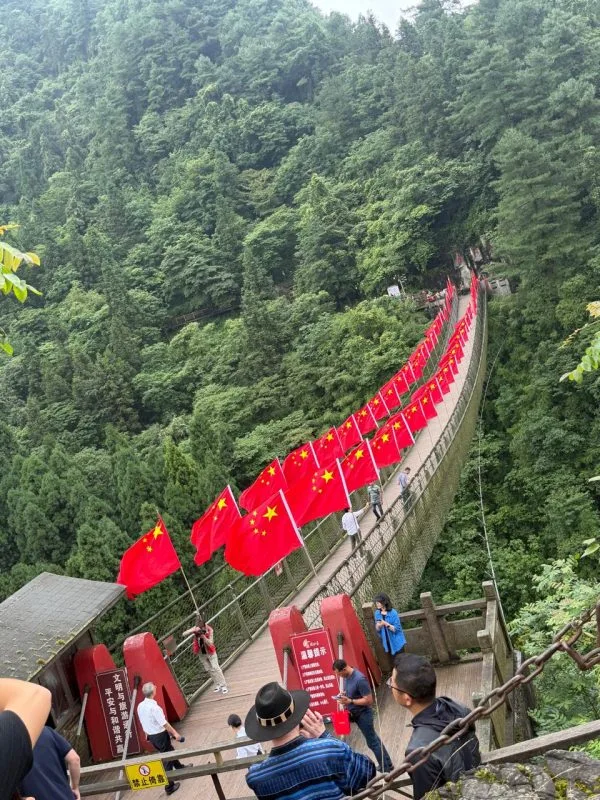
His remarks resonated throughout our journey across Guizhou, a mountainous province where engineering marvels now span deep valleys and modern transport networks connect once-isolated communities.
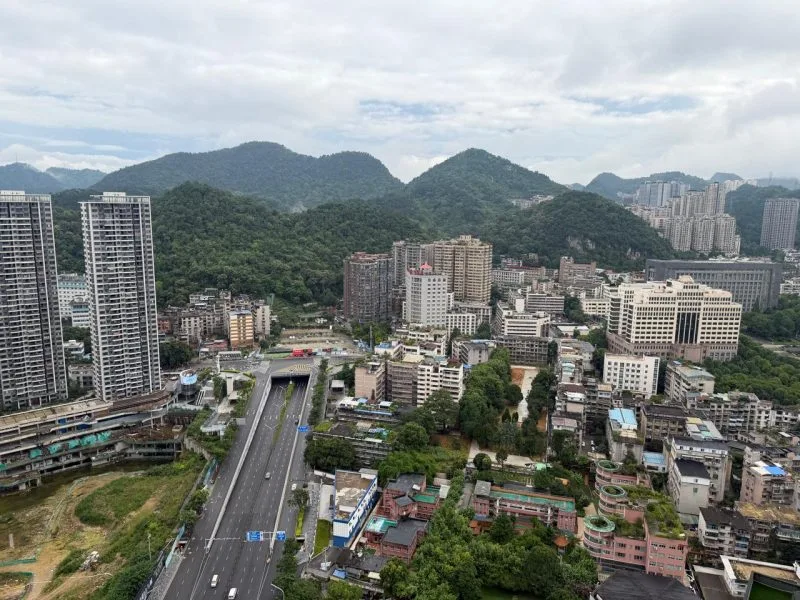
The transformation is particularly striking given that Guizhou was historically one of China’s less-developed regions. Today, the province is known not only for its revolutionary heritage but also for its modern infrastructure, expanding digital economy and ambitious development agenda.
As our delegation travelled between historic sites, evidence of that transformation was impossible to miss. Expressways carved through mountains, high-speed rail links connected distant cities, and some of the world’s tallest bridges stretched across valleys that once isolated communities for generations. What stood out was not merely the scale of the infrastructure but the speed with which development had reached areas that geography had long placed beyond easy reach.
Across China, similar stories can be found. Over the past several decades, the country has undergone one of the most remarkable economic transformations in human history. Hundreds of millions of people have been lifted out of poverty, while investments in infrastructure, education, technology and manufacturing have helped propel China into the ranks of the world’s leading economies.
Chinese officials often draw a direct line between these achievements and the determination embodied by the Long March.
That message was reinforced this week as President Xi Jinping addressed a gathering marking the 105th anniversary of the Communist Party of China.
Describing the Party’s history as “the most magnificent epic” of the Chinese nation, Xi called on Party members to remain steadfast in their convictions and continue advancing the goal of building China into a modern socialist country.
Founded in 1921 by just over 50 members, the CPC has grown into the world’s largest governing political party and today leads the world’s second-largest economy with increasing global influence.
Xi urged Party members to remain focused on long-term objectives despite challenges and uncertainties.
“Time stops for no one, and neither does history,” he said, calling for renewed commitment to the Party’s mission and continued efforts to improve people’s lives.
As our delegation followed the route of the Long March through Jiangxi and Guizhou, one theme emerged repeatedly from officials, historians and ordinary citizens alike: the belief that China’s transformation did not happen overnight.
The roads, bridges, high-speed railways and modern cities that define China today are, in the eyes of many Chinese, part of a much longer journey that began with the sacrifices of the Red Army nearly a century ago.
Standing on the mountain paths once crossed by exhausted soldiers carrying little more than hope, conviction and determination, it becomes easier to understand why the Long March remains such a powerful symbol in modern China.
For the Communist Party and many of the citizens who continue to retrace its route, the march was not simply a journey through history. It marked the beginning of a national journey that transformed China from a poor and largely agrarian nation into a global economic powerhouse, lifting hundreds of millions of people out of poverty along the way.
Ninety years later, the Long March may be over, but the spirit that inspired it continues to shape China’s future.