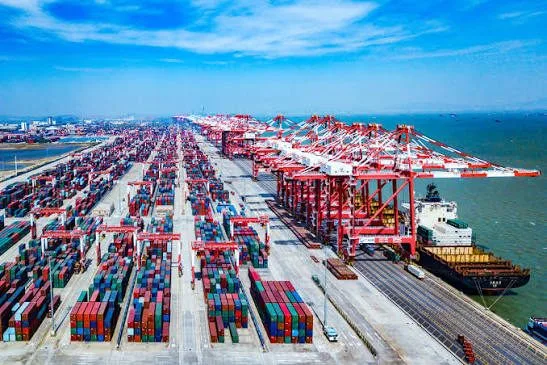
When conversations turn to China’s role in the global economy, attention often gravitates towards its manufacturing strength and export performance. While these are undoubtedly significant, they tell only part of the story. Equally important is China’s evolution into one of the world’s largest import markets—a transformation that is creating unprecedented opportunities for businesses, exporters and investors across the globe.
As the world’s second-largest importer of goods, China has steadily expanded its appetite for products, services and investment from overseas. This reflects not only the growth of its economy but also the increasing purchasing power of its consumers, the modernization of its industries and its commitment to deeper economic integration with the rest of the world. Far from being a one-way trading relationship, China’s development is increasingly opening new doors for countries seeking access to one of the largest consumer markets on earth.
Economic growth changes the nature of demand. As incomes rise, consumers look beyond basic necessities to higher-quality food, healthcare, education, tourism, financial services and advanced technologies. Businesses similarly require specialized machinery, professional services and innovative solutions to remain competitive. China’s continued economic transformation has generated demand across virtually every sector, creating opportunities for exporters from developed and developing countries alike.
The scale of this opportunity is remarkable. China has maintained its position as one of the world’s leading importers for many consecutive years, purchasing trillions of dollars’ worth of goods annually. Unlike smaller markets, its vast population means that even modest increases in consumer demand can translate into significant commercial opportunities for international suppliers. For exporters around the world, access to China’s market is no longer a luxury; it has become an important component of long-term growth strategies.
China’s openness extends beyond merchandise trade. The country’s growing imports of services illustrate another important dimension of its engagement with the global economy. Chinese consumers increasingly spend on international tourism, overseas education, intellectual property, finance, professional consulting and other modern services. This growing demand supports employment and business growth in many countries while strengthening commercial ties across different sectors of the global economy.
This evolution demonstrates that trade is far more balanced than headline export figures often suggest. Goods exports may attract the greatest attention, but services, investment income and international business cooperation all form part of a much broader economic relationship. As China’s middle class continues to expand, demand for high-quality international products and services is expected to grow alongside it, creating a stable source of opportunity for global businesses.
For Africa, this changing landscape presents exciting possibilities. For decades, many African economies have relied heavily on exporting raw commodities. Increasingly, however, governments are pursuing value addition, agro-processing and manufacturing as pathways to sustainable development. China’s expanding consumer market provides an opportunity for African producers to move beyond traditional exports by supplying processed agricultural products, specialty foods, textiles, leather goods, manufactured products and creative industries.
Kenya is particularly well positioned to benefit from this shift. The country’s internationally recognised tea and coffee industries already enjoy strong reputations, while horticultural products, flowers, fresh fruits and vegetables continue to find growing markets abroad. As Kenyan manufacturers invest in higher-quality processing and branding, China offers an increasingly attractive destination for products that meet the preferences of its expanding middle-income population.
Beyond agriculture, Kenya’s rapidly developing digital economy also presents opportunities. Financial technology, business services, tourism and educational partnerships represent sectors where stronger engagement with China’s market could create new avenues for cooperation. As both economies embrace digital transformation, innovation can become another pillar of bilateral economic relations.
China has also demonstrated its commitment to expanding imports through dedicated initiatives designed to connect international businesses with Chinese buyers. National import exhibitions and trade promotion programmes create platforms where companies from around the world can showcase their products, establish commercial partnerships and better understand consumer preferences within China’s dynamic marketplace. Such initiatives reinforce the message that economic openness is not simply a policy objective but an ongoing process supported by practical mechanisms that facilitate international trade.
For many developing countries, diversification remains one of the greatest economic challenges. Overdependence on a small number of export markets or a narrow range of commodities can leave economies vulnerable to external shocks. China’s expanding market offers an opportunity to broaden export destinations, reduce risk and encourage investment in higher-value industries. This diversification contributes not only to stronger trade performance but also to more resilient economic growth over the long term.
At the same time, expanding market access encourages producers to improve quality standards, invest in technology and enhance productivity. Meeting the expectations of one of the world’s most sophisticated consumer markets requires continuous innovation and higher competitiveness. These improvements ultimately strengthen industries at home, enabling businesses to compete more effectively in global markets beyond China.
The future of international trade will increasingly depend on markets that continue to grow while remaining open to global partnerships. China’s economic trajectory suggests that its role as a major importer will become even more significant as consumption expands and economic modernization continues. This creates opportunities that extend well beyond commerce, fostering stronger people-to-people exchanges, technology cooperation and investment partnerships.
Ultimately, the story of China’s engagement with the global economy is not solely about what it sells to the world. It is equally about what it buys, the markets it opens and the partnerships it encourages. For countries willing to invest in competitiveness, innovation and quality, China’s expanding market represents more than a destination for exports. It is an invitation to participate in a shared journey of economic growth, mutual prosperity and deeper international cooperation. In an era when the global economy requires renewed confidence and collaboration, that invitation carries considerable promise for both developed and developing nations alike.
The writer is a Journalist and Communication Consultant