NAIROBI, Kenya, Oct 23 — Chinese Ambassador to Kenya Guo Haiyan has reaffirmed Beijing’s determination to pursue national reunification with Taiwan, warning that attempts to challenge the one-China principle and reinterpret the island’s history would not alter what she described as an “inevitable” outcome.
Guo said Taiwan’s independence-leaning Democratic Progressive Party (DPP) authorities could not overturn what Beijing considers the historical outcome of World War II or prevent reunification.
“They can never change the fact that Taiwan is part of China, nor can they stop the historical trend of China’s eventual and inevitable national reunification,” she said.
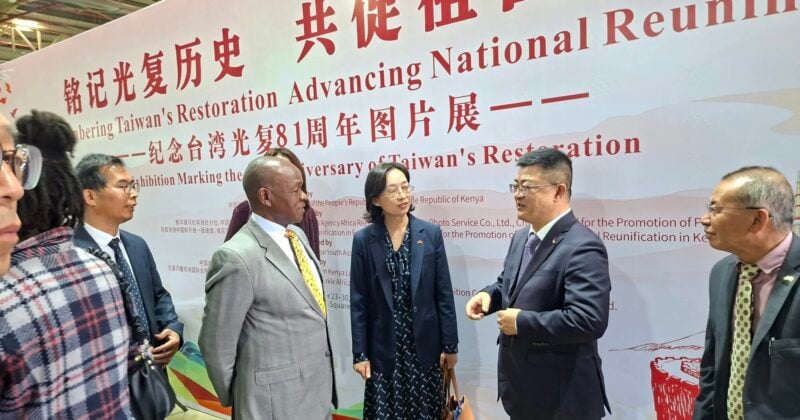
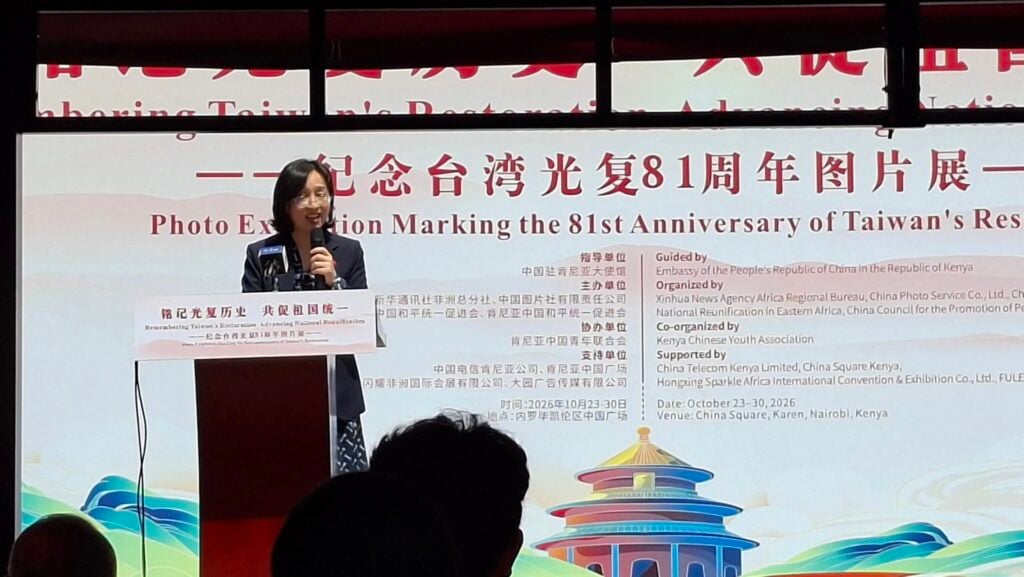
The ambassador was speaking at the opening of a photo exhibition in Nairobi marking the 81st anniversary of Taiwan’s restoration, where Chinese officials used the historical commemoration to reiterate Beijing’s position on sovereignty, territorial integrity and the post-war international order.
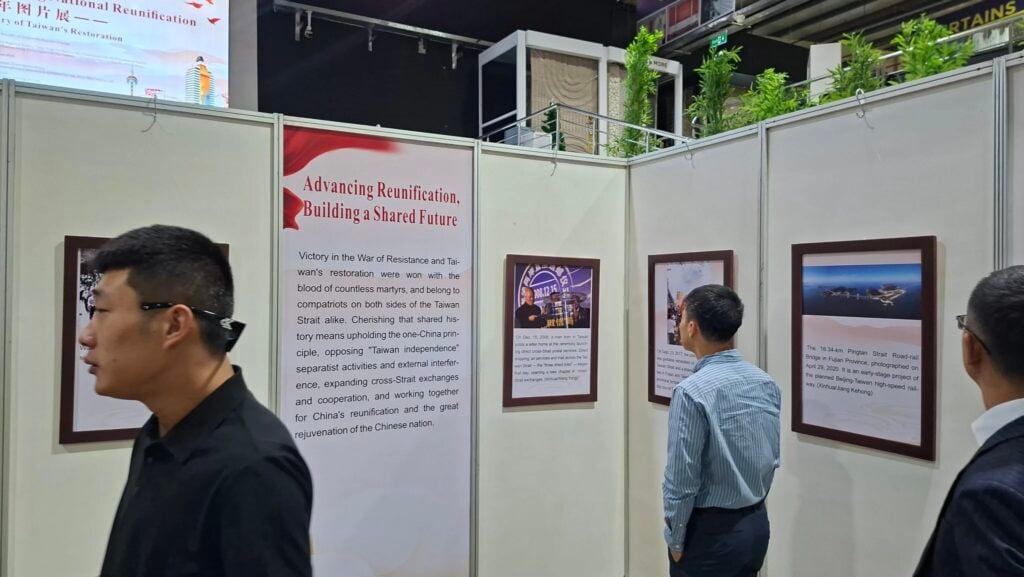
The exhibition, titled Remembering Taiwan’s Restoration, Advancing National Reunification, was held at China Square and brought together Chinese diplomatic representatives, overseas Chinese community leaders and Kenyan guests.
Guo said the exhibition was intended to preserve historical memory, honour the sacrifices made during China’s war against Japanese aggression and reinforce international understanding of the one-China principle.
She argued that the historical record, including the Cairo Declaration, the Potsdam Proclamation and Japan’s Instrument of Surrender, supported China’s position on Taiwan.
Guo also cited United Nations General Assembly Resolution 2758, adopted in 1971, as part of Beijing’s argument on the one-China principle, which she described as a fundamental norm of international relations.
“Taiwan’s restoration is an important component of the post-war international order,” she said, warning that attempts to question its historical significance risked challenging the outcomes of World War II.
Taiwan was ceded to Japan under the 1895 Treaty of Shimonoseki and remained under Japanese colonial rule until Japan’s defeat in World War II.
The Japanese surrender ceremony in Taiwan took place in Taipei on October 25, 1945.
China designated October 25 as the Commemoration Day of Taiwan’s Restoration in 2025, presenting the anniversary as a reminder of its historical claim to the island and its commitment to reunification.
Beijing regards Taiwan as part of its territory and has made reunification a national objective.
Taiwan, however, is self-governed, with its own elected leadership and institutions, and its political status remains a central point of contention across the Taiwan Strait.
She said China remained committed to improving the well-being of people on both sides of the Taiwan Strait through exchanges, cooperation and integrated development.
“We are convinced that compatriots on both sides of the Taiwan Strait share the same roots and origins and form a community with a shared future,” she said.
“The motherland must be reunified, and will surely be reunified.”
Guo welcomed Kenya’s continued adherence to the one-China principle, citing a joint statement issued during President William Ruto’s state visit to China in 2025.
Historical records
Leo Zhao, Executive Vice President of the China Council for the Promotion of Peaceful National Reunification in Kenya, called on overseas Chinese communities to preserve historical memory, strengthen ties with Taiwan compatriots living in Kenya and contribute to peaceful reunification.
Zhao said the exhibition was intended to communicate the importance of historical records and counter what Chinese officials regard as attempts to distort the history of Taiwan’s restoration.
“History must not be forgotten, and facts must not be distorted,” Zhao said.
Drawing on his more than 20 years of living and working in East Africa, Zhao said the strength of China remained an important source of confidence for Chinese citizens living abroad.
He described Chinese people on both sides of the Taiwan Strait as one family and urged overseas Chinese communities to play a greater role in promoting Beijing’s reunification agenda.
He reaffirmed his organisation’s commitment to uniting overseas Chinese communities and supporting peaceful cross-strait relations, while maintaining that Taiwan’s future lay in national reunification.
International solidarity
Former African Union Commission Deputy Chairperson Erastus Mwencha linked the exhibition to Africa’s history of colonialism and struggles for independence, saying the continent’s experience of foreign domination had reinforced the importance of sovereignty, national dignity and international solidarity.
“African freedom was not a gift; it was paid for in blood, from the Mau Mau struggle in Kenya to the liberation movements across Southern Africa,” Mwencha said.
He called for peaceful relations across the Taiwan Strait, emphasising the importance of dialogue and constructive engagement for regional and global security.
“We continue to hope that cross-Strait relations will remain characterised by peace, dialogue, and constructive engagement in the interest of regional and global security,” he said.
Exhibition extends to five African countries
Xinhua News Agency Africa Regional Bureau Director Ying Qiang said the exhibition was being held in five African countries: Kenya, Tanzania, South Africa, Nigeria and Mozambique.
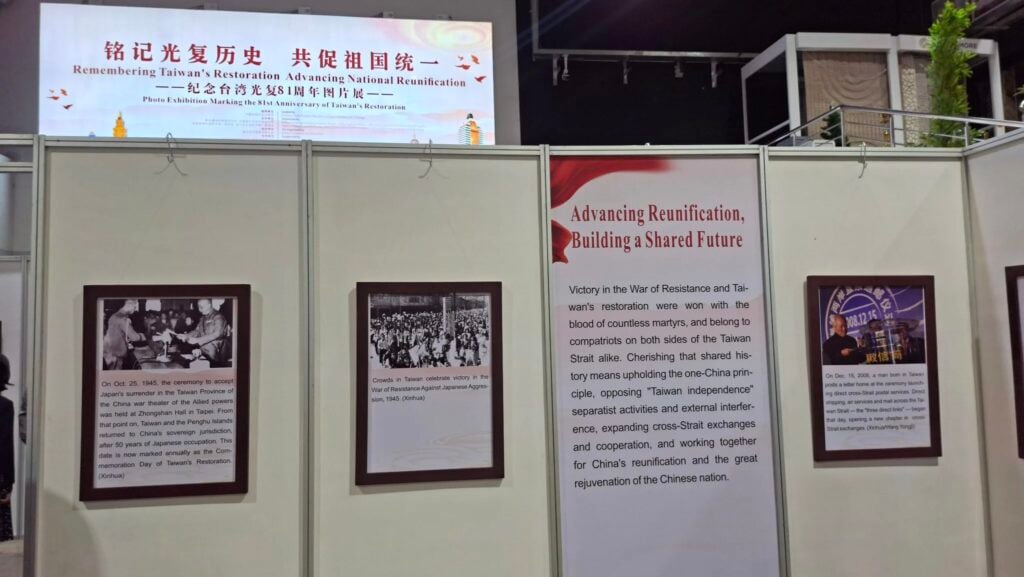
He said the photographs documented historical events surrounding Taiwan’s restoration and were intended to promote understanding of China’s position on national sovereignty and reunification.
Ying also linked the exhibition to the 2026 China-Africa Year of People-to-People Exchanges, which coincides with the 70th anniversary of the establishment of diplomatic relations between China and Africa.
He said historical exhibitions could strengthen cultural understanding and people-to-people connections between China and African countries.
“History is never a distant past,” Ying said, drawing parallels between China’s experience of foreign domination and Africa’s struggles for independence.
Qin Minxue, chairman of the China Council for the Promotion of Peaceful National Reunification in Eastern Africa, also called on overseas Chinese communities to preserve historical memory and pass their cultural heritage to younger generations.
“As overseas Chinese, we have a responsibility to preserve historical memory, pass on our cultural heritage, and help younger generations understand the lessons of history,” Qin said.
The exhibition comes amid continuing tensions across the Taiwan Strait over the island’s political status and future, with Beijing opposing moves it considers separatist while Taiwan maintains its own governing institutions.