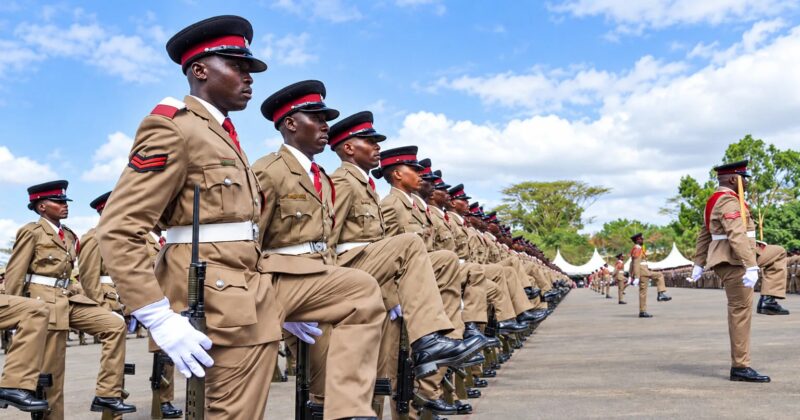
NAIROBI, Kenya, Oct 19- National Police Service takes the special Mashujaa Day occasion to honour Kenya’s brave men and women in uniform. Daily, police officers must sacrifice comfort to safeguard lives while securing critical infrastructure and maintaining law and order across our vast nation.
In line with this government’s commitment to decentralised security and responsive infrastructure, the National Police Service proudly highlights three newly established and modernised police stations across the three host counties.
These stations represent more than structures; they are meant to offer critical services and rapid emergency response to the public.
They showcase the gains of cooperative governance.
This special edition casts a bright spotlight on three vital counties—Uasin Gishu, Elgeyo/Marakwet, and Nandi—where structural transformation and unwavering police dedication are delivering safer communities and a more robust economy.
By merging the operational mandate of the NPS, National Government Policy, and the grassroots funding of the NG-CDF these facilities stand as a testament to what can be achieved when distinct arms of leadership unite for a single, common objective: the safety and dignity of the Kenyan citizen.
New police stations bring security closer communities
Moi’s Bridge Police Station (Uasin Gishu County)
The upgrade of Moi’s Bridge Police Station has successfully restored safety on the high-traffic Soy to Kitale Highway.
Featuring improved structures that motivate both officers and the public, the station has significantly increased its service delivery numbers and customer satisfaction rates.
Station Commander Nehemia Kemboi affirms that the station directly protects local farmers and traders as they transit and conduct business since it sits strategically at the intersection of trade routes.
The OCS expressed sincere appreciation to the National Police Service, the National Government Affirmative Action Fund, and the national government for their collaborative efforts in refurbishing this crucial facility.
The positive impacts of this upgrade are now clearly evident in the station’s daily operations and service delivery.

Himaki Police Station (Nandi County)
Located in Nandi County, within Himaki Centre in Nandi Hills, the newly operational Himaki Police Station aims to bolster the locals’ safety by suppressing local security challenges and curb the flow of illicit substances.
The station brings administrative justice closer to residents of Himaki and it is a testament to community partnership and enhanced visibility.
Himaki police station leader Robinson Naitipa notes that the station has brought security services closer to the local community.
While acknowledging that the station is still improving its personnel and equipment resources, he emphasises that officers are striving to ensure all residents remain safe.
The gradual reduction of criminal incidents in the region testifies it.
Embobut Police Station (Elgeyo/Marakwet County)
Upgraded from a minor post to a full-fledged, modern facility, the new Embobut Police Station has been pivotal in restoring lasting peace within the Kerio Valley belt.
Embobut has become central in the highly successful voluntary disarmament exercise.
The establishment has also had an immediate impact in an area long plagued by banditry.
While the station’s full modernization process remains ongoing, its operational presence has already delivered tangible security benefits and vital stability to the local community.
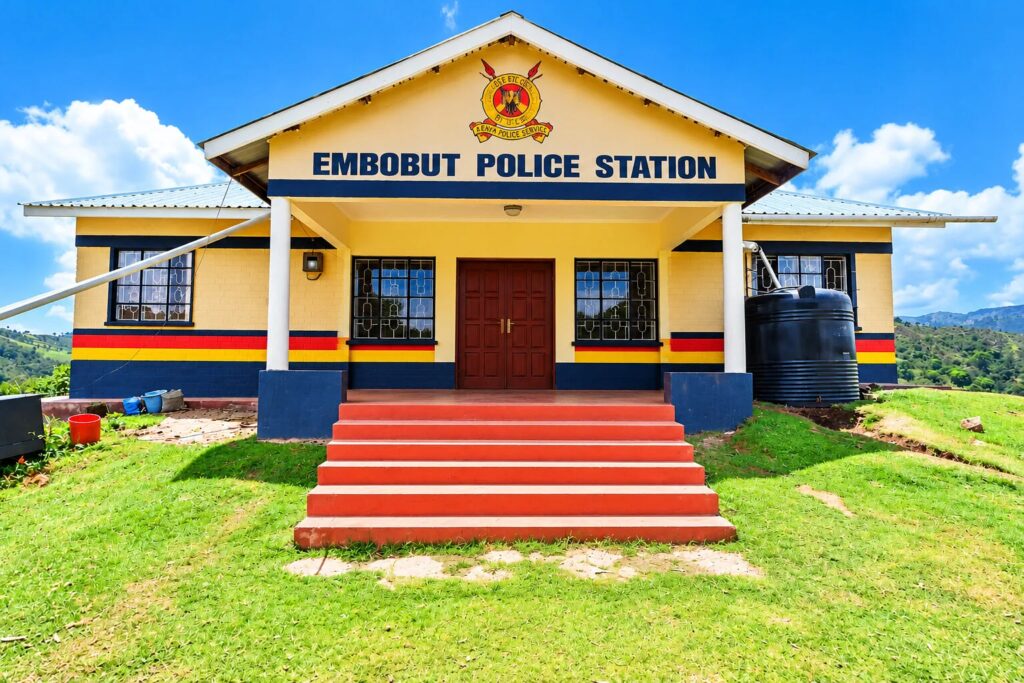
By bringing security closer to the grassroots, the station has empowered local communities to actively partner with law enforcement, as seen through voluntary-surrender initiatives and enhanced public safety.
Despite the operational challenges of a newly upgraded facility with construction still underway, the Officer in Charge of Station (OCS), Chief Inspector Caleb Kiptoo, has been instrumental in keeping the station fully functional.
His leadership has ensured the seamless coordination of daily activities and station operations during this transitional phase.
Indeed, these facilities have played a critical role in boosting grassroots security, enhancing community policing, and drastically cutting down response times for residents.
Crucially, the smooth running of these new stations relies entirely on the unwavering dedication and professionalism of the deployed police officers.
Working diligently to keep these stations operational, they deserve profound appreciation for their commitment to public safety and their tireless service in safeguarding these developing security hubs.
KAPU secures North Rift’s key aviation gateway
North Rift’s silent security hero guarding our skies, trade and progress
There are Kenya Airport Police Unit (KAPU) officers working relentlessly, in the shadows, at the Eldoret International Airport.
An average traveller will rarely notice this frontline unit securing that critical national infrastructure with sheer vigilance, routine checks, and strict enforcement of security protocols.
That invisibility is the ultimate sign of their success—a solid example of quiet heroism; silence can never be misquoted and it delivers.
As Kenyans and dignitaries from across the world land at EIA to celebrate Mashujaa Day in North Rift, we will see that KAPU does more than maintain stringent security within airport precincts. Because airport security is not just about boarding passes and baggagechecks.
Crucial transport facilities such as ports of entry can easily be misused to become conduits of terrorism, drug trafficking, and other transnational crimes.
Eldoret International Airport acts as a primary gateway of regional and domestic passenger links hence the need to ensure it runs seamlessly.
That requires a 24-hour security vigilance. No doubt, aviation safety standards at the airport would crumble were it not for the vigilance of KAPU personnel.
Their impact stretches far beyond the airport gates
While physically situated within Uasin Gishu County, the impact of the Eldoret Airport Police Unit ripples far beyond local borders.
As the headquarters of the wider Eldoret Airports Police Division, the airport serves as a regional buffer against the inflow of illegal weapons, counterfeit products, and narcotics from cross-border routes.
By keeping vigilance over this infrastructure, the KAPU team safeguards the entire East African trade corridor and protects neighbouring economies while reinforcing Kenya’s reputation as a safe international hub.
Within Uasin Gishu County, KAPU serves as a critical unit that protects the region’s economic lifeline, securing international trade, and maintaining the peace that allows the local community to thrive.
Beyond county borders, they act as a vital gateway for North Rift regional security, preventing illicit trafficking and ensuring that Kenya remains a safe hub for both domestic and international travel.
This Mashujaa Day salutes and honours KAPU’s men and women.
They will not remain unsung any longer. You are our heroes whose silent dedication keeps our skies and Eldoret International Airport safe for Kenya and the region to move forward.
North Rift police: Guardians of regional security
It is a long night shift
The work of police officers offers a compelling reflection on what the national theme of security means beyond ceremonial speeches and celebrations.
The diversity the three Mashujaa Day 2026 host counties provide tells us of the amazing sacrifice our police officers and other security apparatus in uniform make.
It means a child going to school without fear, a business opening its doors in the morning, infrastructure serving the public without disruption, and communities having confidence that help is within reach.
Importantly, it means police officers quietly standing between these everyday realities and the threats that could undermine them.
Different locations. Different operational environments. One national responsibility.
They are a familiar presence on roads, around critical installations and within communities by day. By night, they remain watchful while most of the country sleeps.
Their work rarely makes the headlines but it is among the foundations upon which everyday life, economic activity and national celebrations are built.
Security wears many faces on the North Rift landscape.
In Elgeyo/Marakwet East, an Administration Police Service officer begins a patrol against a backdrop of hills, valleys and rugged terrain.
The environment demands vigilance, mobility and an understanding of the communities being served.
Hundreds of kilometres away, in the Pipeline area of Eldoret, another APS officer stands guard over critical infrastructure—part of a specialised team whose responsibility is to ensure that facilities of strategic importance remain secure and operational.
Where security meets the community
In Elgeyo/Marakwet East, the work of the National Government Administration Police Unit (NGAPU) is closely connected to the communities it serves.
Here, security cannot be viewed solely through the lens of buildings, roads or installations. It is also about people.
Police officers interact with residents, respond to security concerns, patrol areas of responsibility and work to maintain an environment where communities can pursue their daily lives.
The landscape itself presents its own demands. The hills and valleys of the region can make movement and access challenging, requiring officers to remain adaptable and responsive to the circumstances of the communities they serve.
For the ordinary resident, however, the presence of a police officer is often much simpler in meaning.
It is reassurance, the knowledge that someone is watching over the community, the confidence that there is an institution mandated to respond when a security concern arises.
This is the quieter side of policing—one that may not always attract public attention but is fundamental to maintaining peace.
In Eldoret’s Pipeline area, the security challenge assumes another dimension.
Here, the Critical Infrastructure Protection Unit (CIPU) carries out a specialised protective role around critical government infrastructure and vital installations.
The principle is straightforward: infrastructure that is important to the functioning of the country must be protected.
But behind that simple responsibility lies a much bigger national story. Infrastructure represents public investment. It supports economic activity and essential services.
When critical facilities remain secure and operational, businesses can function, services can continue and communities can benefit from the investments made in their region.
The APS officers assigned to CIPU therefore protect more than physical structures. They help protect continuity. Their work is preventive as much as it is responsive.
Their visibility, vigilance and readiness form part of a security system designed to identify and address threats before they compromise vital installations.
For the people of Eldoret and the wider North Rift, that protective presence forms part of the security environment that allows the region’s economic and social life to flourish.
Two environments. One mission
The stories of NGAPU in Elgeyo/Marakwet East and CIPU in Pipeline illustrate an important reality about policing in modern Kenya.
There is no single security environment. Security requirements differ from one community to another, from rural and geographically challenging areas to major urban centres and strategic installations.
The Administration Police Service has a broad mandate that includes maintaining law and order, preserving peace, protecting life and property, safeguarding government property and vital installations, and supporting other government agencies in conflict management and peace building.
Specialised units such as NGAPU and CIPU enable the Service to respond to these responsibilities in ways suited to different operational environments.
Yet beneath the different uniforms, deployments and responsibilities is a shared purpose: service to the people.
The security behind Mashujaa Day
The irony of national celebrations is that their success depends partly on work that remains largely invisible.
When families travel to attend Mashujaa Day celebrations, they expect roads and public spaces to be secure.
When dignitaries arrive, they expect the venues and surrounding infrastructure to be protected. When businesses operate around the celebrations, they expect an environment in which people can trade and interact safely. Communities expect peace when they welcome visitors from across the country.
Behind that expectation are thousands of security officers performing duties before, during and after the cameras arrive. For the APS officers serving in the North Rift, Mashujaa Day is therefore more than a national ceremony.
It is an opportunity to reflect on the meaning of service.
The officers in Elgeyo/Marakwet East may not be standing on the main dais in Eldoret. Neither may the officers protecting critical installations in Pipeline. But their contribution to national security is part of the same story.
The unsung mashujaa are alright on the night shift
Every generation defines its heroes differently. Some are remembered for extraordinary acts performed in moments of national crisis.
Others serve quietly, day after day, without expectation of recognition. For police officers, heroism can sometimes be found in the routine—the patrol completed, the installation secured, the community reassured, the emergency answered and the duty post maintained long after others have gone home.
In Elgeyo/Marakwet East, NGAPU officers bring security closer to communities. In Pipeline, CIPU officers protect infrastructure whose importance extends far beyond the installations themselves. Their assignments may be different, but their calling is the same: To serve. To protect. To remain vigilant.
And as Kenya gathers in the North Rift to celebrate its Mashujaa, their work provides a powerful reminder that national security is not created only in moments of national celebration. It is built quietly, every day.
During a patrol, at a checkpoint, at a critical installation, and within a community. All this in the watchfulness of an officer who understands that the responsibility to protect remains awake while others sleep.
That is also the story of Kenya’s Mashujaa—the men and women who stand guard so that the rest of the nation can live, work, travel, invest and celebrate in peace.
Excerpt from the National Celebrations Handbook, Mashujaa Day 2026, North Rift Edition