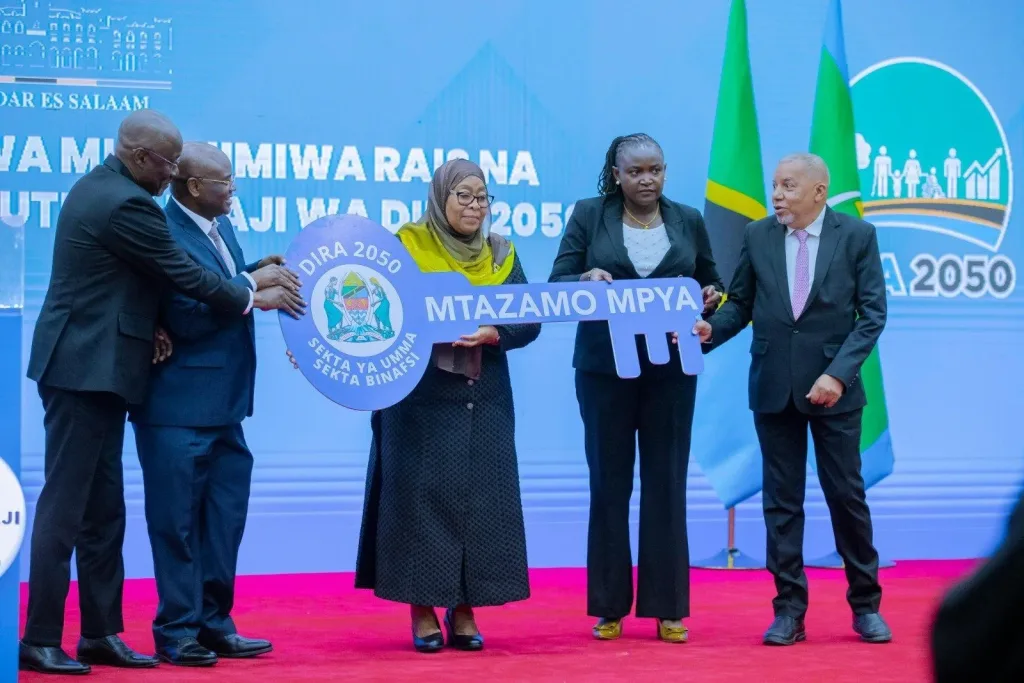
NAIROBI, Kenya, Aug 4 — Tanzanian President Samia Suluhu Hassan has launched an implementation framework for the country’s National Development Vision 2050, ushering in the execution phase of an ambitious blueprint that aims to transform Tanzania into a competitive, inclusive and resilient upper-middle-income economy with a US$1 trillion economy by 2050.
The launch at State House in Dar es Salaam comes as Kenya prepares to begin nationwide consultations on its post-Vision 2030 development blueprint, scheduled for official launch on August 12, signalling a new chapter in East Africa’s long-term economic planning.
Ruto announces dialogue to shape post-Vision 2030 Kenya
President Samia unveiled a package of implementation, coordination and monitoring tools to guide delivery of the Vision, which places the private sector at the centre of Tanzania’s development agenda through investment, industrialisation, job creation and sustained economic growth.
Government planning documents estimate that the private sector will provide about 70 per cent of the investment required to realise Vision 2050, highlighting the need for a more competitive business and investment environment.
The implementation framework follows the launch of Dira ya Taifa ya Maendeleo 2050 in July 2025 and coincides with the rollout of Tanzania’s Fourth Five-Year Development Plan, the first medium-term strategy aligned to the Vision.
Samia also presided over a high-level public-private dialogue that culminated in the signing of a Joint Declaration between the government and business leaders, aimed at strengthening collaboration in implementing the Vision.
She reaffirmed her administration’s commitment to improving the business climate, addressing investment bottlenecks and ensuring the Vision translates into tangible economic gains for Tanzanians.
The government has consistently identified the private sector as the principal engine of Vision 2050, with public investment focused on creating an enabling environment for enterprise and long-term growth.
Building on Vision 2025
Vision 2050 succeeds the Tanzania Development Vision 2025, under which the country achieved notable milestones, including attaining lower-middle-income status in 2020.
The new blueprint charts a more ambitious course centred on industrialisation, infrastructure expansion, innovation, productivity, competitiveness and deeper private-sector participation.
Major investments in energy, transport, logistics, manufacturing and other productive sectors have been identified as critical to achieving the Vision’s targets.
For the 2026/27 financial year alone, Tanzania estimates development financing needs of TZS 86.3 trillion, with the private sector expected to contribute TZS 60.1 trillion, or 69.6 per cent, underscoring the scale of private capital required.
President Samia also directed planning and investment agencies to intensify public awareness campaigns so citizens understand the Vision’s objectives and their role in its implementation.
She urged Tanzanians to safeguard peace, unity and stability, describing them as indispensable pillars for delivering the country’s long-term development ambitions.