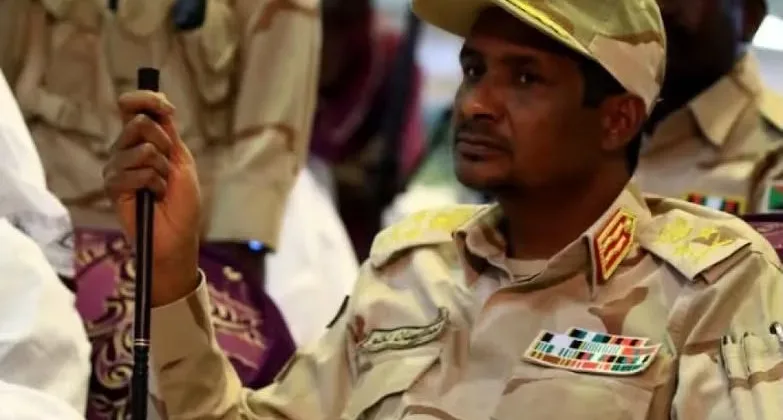
A court in the Sudanese army-controlled city of Port Sudan has sentenced Rapid Support Forces (RSF) leader Mohamed Hamdan Dagalo, popularly known as Hemedti, and 15 others to death in absentia over charges linked to the killing of a regional governor and atrocities committed in Darfur.
The ruling, delivered on Sunday by a judiciary operating under the Sudanese army administration, marks the first conviction targeting the RSF leadership since conflict erupted between the paramilitary group and the Sudanese Armed Forces in April 2023.
According to Sudan’s state news agency SUNA, the court convicted Dagalo and the other accused of war crimes, crimes against humanity, genocide and attacks against civilians and public facilities.
Those sentenced include Dagalo’s brother and deputy, Abdelrahim Hamdan Dagalo, alongside several RSF commanders and tribal leaders from Arab communities in West Darfur.
The case centres on the killing of West Darfur Governor Khamis Abbakar in June 2023, shortly after RSF forces seized El Geneina, the capital of West Darfur State.
Abbakar was killed hours after publicly accusing the RSF and allied militias of carrying out attacks against civilians in the region.
United Nations experts later estimated that between 10,000 and 15,000 people, most of them from the Massalit ethnic community, were killed during the violence in El Geneina.
The RSF has consistently denied allegations of genocide and other war crimes committed during the conflict.
The court said it would forward the case to the Supreme Court for review and pursue the arrest and extradition of those convicted through Interpol and other international mechanisms.
Sudanese army leader Abdel Fattah al-Burhan and Dagalo jointly led the 2021 military coup that derailed Sudan’s transition to civilian rule before disagreements over plans to integrate the RSF into the regular army triggered a fallout that eventually escalated into war.
Now in its fourth year, the conflict between the Sudanese army and the RSF has killed tens of thousands of people, displaced more than 11 million and fuelled what the United Nations describes as the world’s largest displacement and hunger crises.