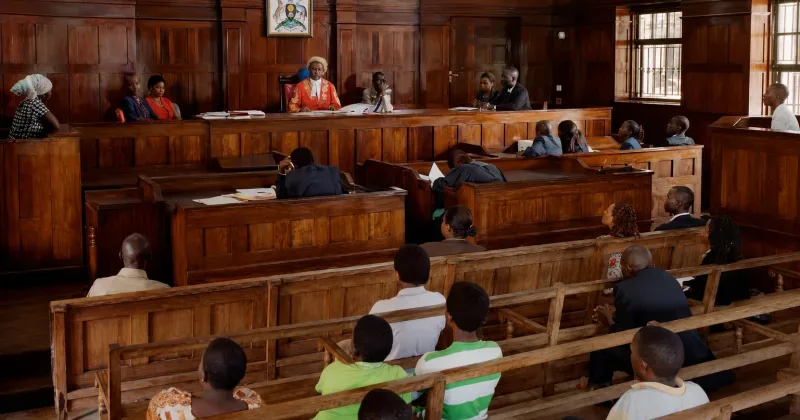
NAIROBI, Kenya, Jul 8 – The Uganda Law Society (ULS) has ordered its members to immediately abandon colonial-era courtroom traditions, including addressing judicial officers as “My Lord,” “Your Lordship,” “My Lady,” and “Your Worship,” as part of a sweeping drive to decolonise the country’s legal profession.
In an Executive Order issued Tuesday, ULS President and Head of the Bar Isaac Ssemakadde directed advocates to adopt plain, modern forms of address for judicial officers while also prohibiting the long-standing practice of bowing before judges.
The directive, titled “Abolition of Colonial Court Culture,” takes immediate effect, he told members.
“The practice of bowing or any other form of physical subservience before judicial officers is henceforth prohibited for all members of the Uganda Law Society,” the order states.
It directs advocates to instead to address judicial officers as “Mr. Justice,” “Madam Justice,” “Mr. Judge,” “Madam Judge,” “Mr. Magistrate,” or simply by their surnames where appropriate.
The Law Society said the reforms are intended to dismantle what it described as colonial practices that elevate judicial officers above the citizens they serve.
“All advocates and litigants appearing before any court or tribunal shall stand upright and speak as free citizens,” the order states.
According to the ULS, the changes seek to eliminate rituals that “force Ugandans into postures of humiliation as the powerful enjoy comfort and deference.”
Broader judicial reforms
Beyond courtroom etiquette, the Law Society announced a 90-day national consultation on court culture and the Judiciary’s Client Charter.
The consultations will bring together representatives of the Bench, the Bar and citizens’ associations to review the continued use of colonial wigs, gowns and foreign legal language, while proposing court procedures that better reflect Uganda’s history, culture and service standards.
The order says the Judiciary Client Charter will also be reviewed and rewritten in plain language to improve accessibility and strengthen citizens’ rights to timely and respectful service.
While the Executive Order takes immediate effect, its application is limited to members of the Uganda Law Society and does not automatically amend courtroom procedures or judicial practice across Uganda’s courts.
The document states that it “takes immediate effect across all members of the Uganda Law Society” and will be published on the society’s website and circulated to members.
The initiative nevertheless signals one of the most ambitious attempts yet by Uganda’s legal profession to challenge colonial traditions that have long defined courtroom decorum in many Commonwealth jurisdictions including Kenya.
The reforms are expected to reignite debate across East Africa on whether inherited colonial legal customs remain compatible with modern constitutional values and equal access to justice.