NINGXIA, China, Jul 12 – China’s successful campaign to eliminate extreme poverty offers valuable lessons for developing countries seeking to improve livelihoods and accelerate modernization, participants at an international seminar in northwest China’s Ningxia Hui Autonomous Region have said.
Speaking during the International Seminar on Xi Jinping Thought on Socialism with Chinese Characteristics for a New Era, Professor Peter Kagwanja, President and Chief Executive of the Africa Policy Institute (API), said China’s victory over absolute poverty demonstrated that poverty was not an inevitable destiny for countries in the Global South.
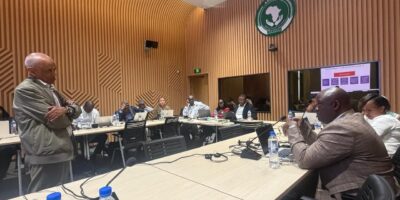
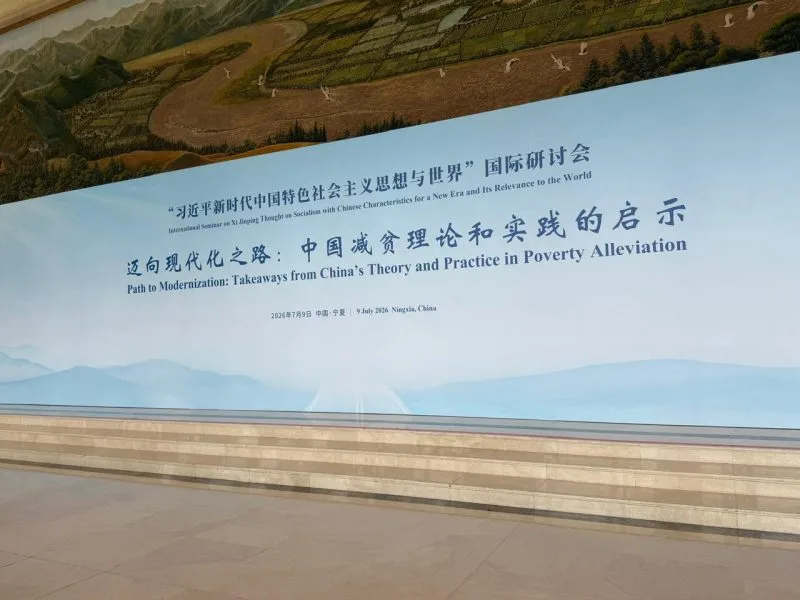
The seminar, themed “Path to Modernization: Takeaways from China’s Theory and Practice in Poverty Alleviation,” brought together political leaders, scholars and policymakers from Asia, Africa and Latin America.
Kagwanja noted that 2026 marks 105 years since the founding of the Communist Party of China (CPC) and five years since President Xi Jinping announced the country’s victory in eradicating extreme poverty.
“China’s story of victory over absolute poverty shows that other developing countries in the Global South can also eliminate poverty,” Kagwanja said.
According to the scholar, China has lifted more than 800 million people out of poverty over the past four decades, accounting for more than 70 percent of global poverty reduction and achieving the United Nations poverty eradication target a decade ahead of schedule.
Drawing from a week-long study tour of poverty alleviation projects in Gansu and Ningxia provinces, Kagwanja said delegates had witnessed first-hand how once-impoverished villages had been transformed into vibrant centres of agriculture, tourism and industry.
He said China’s final push against poverty under Xi Jinping’s leadership targeted 14 impoverished regions, 832 counties and 128,000 villages, helping nearly 99 million rural residents escape extreme poverty by the end of 2020.
“When Xi came to power in 2012, nearly 100 million people still lived under the heavy yoke of poverty. China needed to lift 10 million people out of poverty every year, or 20 people every minute, to achieve its goal,” Kagwanja said.
He attributed the achievement to strong political leadership, targeted poverty alleviation, massive infrastructure investments and a coordinated national effort that mobilized millions of officials and local communities.
Vice Minister of the International Department of the CPC Central Committee, Sun Haiyan, said poverty eradication remained one of the defining achievements of the CPC and reflected President Xi’s commitment to ensuring that no one was left behind in China’s modernization journey.
“This seminar is important because it demonstrates the CPC’s commitment to shared prosperity and to sharing China’s development experience with the rest of the world,” Sun said.
Participants repeatedly highlighted the importance of targeted poverty alleviation, a strategy that focused resources on the poorest regions, counties and households.
Gopal Khanal, a member of the Department of Foreign Affairs of the Communist Party of Nepal (Unified Marxist-Leninist), described China’s poverty reduction campaign as evidence of what determined political leadership could achieve.
“There is a lot countries can learn from China. The biggest lesson is targeted poverty alleviation and the importance of beginning with infrastructure development,” Khanal said.
He noted that roads, electricity, schools and healthcare facilities had created opportunities for communities previously isolated from economic growth.
Delegates also pointed to China’s rural revitalization programme as a model for sustaining development gains after poverty eradication.
Mabel Memory Chinomona, Political Bureau member and Secretary of the Women’s League of Zimbabwe African National Union-Patriotic Front (ZANU-PF) and President of the Senate of Zimbabwe, said she was particularly impressed by the holistic approach adopted in Ningxia.
“The transformation of once impoverished communities into thriving centres of economic activity stands as a testament to the Communist Party of China’s visionary leadership, sound policy implementation and unwavering commitment to improving people’s lives,” Chinomona said.
She praised President Xi Jinping’s leadership and the paired assistance programme, which linked more developed eastern regions with less-developed western provinces to accelerate development and reduce poverty.
Under the programme, wealthier provinces provided financial support, expertise and personnel to poorer regions, helping communities improve infrastructure, create jobs and expand economic opportunities.
Participants agreed that China’s experience demonstrated the importance of combining economic growth with targeted interventions to ensure vulnerable populations were not left behind.
Kagwanja called for stronger China-Africa cooperation in poverty alleviation through initiatives such as the Belt and Road Initiative, the Global Development Initiative and the implementation of the Beijing Action Plan (2025-2027) adopted during the Forum on China-Africa Cooperation Summit.
He also urged greater investment in infrastructure, clean energy, food production, digital education and tourism development as key drivers of poverty reduction across Africa.
“The full implementation of China’s zero-tariff policy for African exports will help African countries roll back poverty and create new opportunities for development,” Kagwanja said.
The seminar was jointly hosted by the International Department of the CPC Central Committee and the CPC Ningxia Hui Autonomous Regional Committee and forms part of ongoing efforts to share China’s development experience with countries across the Global South.