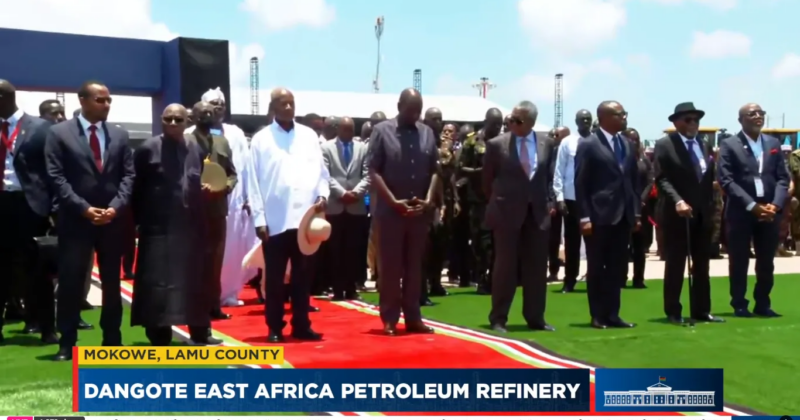
NAIROBI, Kenya, Sep 30 – President William Ruto and Nigerian industrialist Aliko Dangote have broken ground for the Sh2.2 trillion East Africa Oil Refinery in Lamu, marking the formal start of construction of the massive petroleum project.
The ceremony in Lamu has brought together several African leaders and senior government officials, including Ugandan President Yoweri Museveni, Ethiopian Prime Minister Abiy Ahmed and Benin’s President Romuald Wadagni.
Other regional leaders and senior officials are also attending the groundbreaking, which is expected to be one of the largest industrial investment events held in Kenya.
The refinery, being developed by Dangote Industries, is designed to process up to 700,000 barrels of crude oil per day, making it one of Africa’s largest planned refining facilities.
The project is expected to serve Kenya and the wider East African market, with refined petroleum products targeted for countries including Uganda, Tanzania, Ethiopia, South Sudan, Rwanda, Burundi and the Democratic Republic of Congo.
The groundbreaking comes after the first vessel carrying construction equipment for the project arrived at Lamu Port on September 26. The vessel, MV Da Yang Bai He, delivered about 2,930 metric tonnes of project cargo.
Dangote has said the refinery will be constructed over about three years, while Reuters reported that the project is targeting completion by 2030. The facility is expected to support petrochemical and other industrial activities and create tens of thousands of jobs.
The project, however, faces a legal challenge over land ownership and compensation. A Kenyan court has ordered preservation of parts of the site pending proceedings in a case brought by local residents, although Dangote Group has maintained that the groundbreaking ceremony would proceed.
The refinery is being positioned as a major regional energy investment at a time when East African countries remain heavily dependent on imported refined petroleum products.
The project will therefore be closely watched for its implications for regional fuel supply, petroleum processing, industrialisation and the development of Lamu as an energy and logistics hub.