Kenya has been warned. The anticipated October-November-December rains could bring significant relief to some parts of the country, replenishing water sources and supporting agriculture. But if forecasts of intense and prolonged rainfall materialise, the consequences could also be devastating.
Flooding, displacement, loss of lives, disease outbreaks, destruction of homes and infrastructure, and disruption of livelihoods are among the risks Kenya is being asked to prepare for. The question, therefore, is not whether we should be concerned. The question is: Are we truly ready?
The Government has unveiled a contingency plan aimed at strengthening the country’s preparedness for the expected El Niño rains. Vulnerable areas have been identified, including riverine and low-lying regions, urban centres prone to flooding, coastal areas, landslide-prone highlands, arid and semi-arid areas and communities living near major water bodies.
Hotspot mapping has been undertaken. Roads and other critical infrastructure likely to be affected have been identified. Drainage systems and culverts are being unclogged, emergency supplies are being pre-positioned and rapid response teams placed on standby.
These are important and necessary steps. But a contingency plan on paper will not, by itself, save lives.
Preparedness must now move from government offices to counties, from counties to communities and from communities to individual households. El Niño preparedness must become a national responsibility.
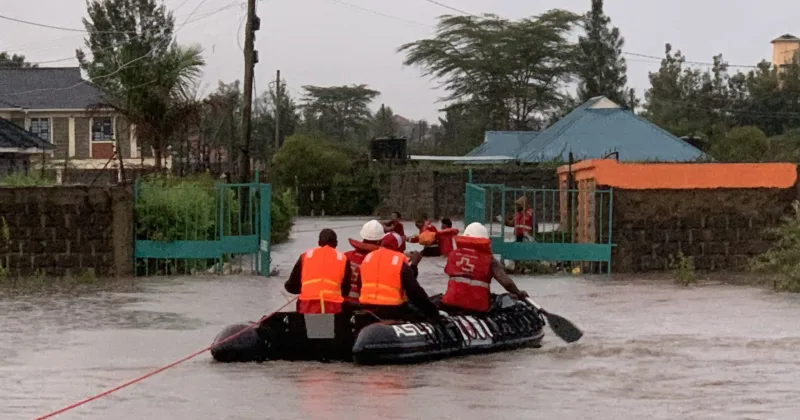
We have learnt painful lessons from previous heavy rainfall seasons. Every time floods strike, we see familiar images: families stranded, roads washed away, schools closed, businesses destroyed and communities cut off from essential services. We mourn lives lost and begin asking why more was not done before the disaster struck.
This time, we have an opportunity to prepare in advance.
National government agencies have an enormous responsibility. Coordination must be effective and not merely ceremonial. The agencies responsible for disaster management, roads, health, water and security must work from a common plan, working closely with the Kenya Red Cross and other humanitarian partners to strengthen preparedness, rescue, evacuation and emergency response.
County governments must equally rise to the occasion. Flood preparedness cannot be managed effectively from Nairobi alone. Counties understand their local terrain, vulnerable settlements, rivers, drainage systems and communities better than anyone else.
They must act now to clear drainage systems, identify evacuation routes and safe shelters, strengthen local emergency teams and communicate clearly with residents.
Urban centres deserve particular attention. Every heavy rainfall season exposes weaknesses in drainage and physical planning. Roads become rivers, estates are flooded and motorists are trapped for hours.
The work of clearing blocked drains and water channels should not begin when the rain has already started. It must be done now, thoroughly and consistently.
But government action alone will not be enough.
Every Kenyan has a role to play.
Residents must take early warning information seriously. Too often, warnings are dismissed until it is too late. People living along riverbanks, on riparian reserves and in areas known to experience flash floods must be prepared to move when advised to do so.
Evacuation directives should not become subjects of political debate when lives are at risk.
Communities must also stop contributing to the problem. Dumping waste in drainage channels may appear insignificant on an ordinary day, but when heavy rains come, blocked drains can turn a manageable downpour into a deadly flood.
Environmental responsibility is therefore part of disaster preparedness.
Chiefs, assistant chiefs, Nyumba Kumi leaders, religious institutions, schools, community organisations and the media must all become part of the preparedness effort. Information saves lives only when it reaches the people who need it in time and in a language they understand.
The media, in particular, has a critical responsibility. Coverage should not begin and end with dramatic images after disaster strikes. The media must help explain the risks, identify vulnerable areas, share official early warning information and hold authorities accountable for preparedness commitments.
There is also a health dimension that cannot be ignored.
Flooding can create conditions for outbreaks of waterborne and vector-borne diseases. Health facilities must therefore prepare for possible increases in cases of diseases associated with contaminated water and standing pools.
Medical supplies should be available where they will be needed most, while communities must be educated about water safety, sanitation and disease prevention.
The economic consequences could also be severe. Roads and bridges are critical to trade and movement. Flooded farms can destroy crops, while livestock keepers may lose animals. Small businesses, many of which operate with limited financial protection, can be wiped out within hours.
This is why preparedness should not be viewed simply as an emergency response issue. It is an economic, social and national development issue.
At the same time, Kenya should recognise that heavy rains can also present opportunities. Water reservoirs can be replenished, agricultural production can improve and drought-affected areas can recover. But these benefits will only be realised if the rains are managed rather than simply endured.
That requires planning.
The warnings being issued today should not create panic. They should create action.
Kenya cannot stop the rain, but it can reduce its vulnerability. We cannot prevent a natural climate event, but we can prepare communities, protect critical infrastructure and ensure that those in danger receive help before it is too late.
The true test of the government’s contingency plan will not be how impressive it looks on paper. It will be measured by whether drainage systems are cleared, vulnerable communities receive timely warnings, evacuation plans work and emergency teams can reach people when disaster strikes.
And the responsibility does not belong to government alone.
As the country braces for the possibility of intense rains, every institution and every Kenyan must ask: What have I done to prepare? What have we done to protect our families, our communities and those most vulnerable among us?
When disaster strikes, it is too late to begin preparing.
Kenya has been warned. Now, every institution, every community and every individual must play their part.
The author is the Editorial Director at Capital FM.