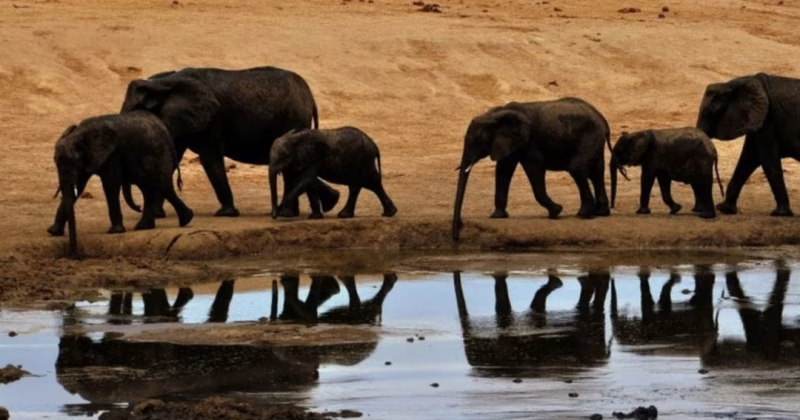
NAIROBI, Kenya, Aug 7 -The Kenya Wildlife Service (KWS) has launched an intensive investigation into the deaths of 16 elephants in the Amboseli-Kimana-Kitenden ecosystem, with preliminary laboratory findings pointing to cyanide poisoning as the most likely cause.
In a statement issued on Thursday, KWS said the elephant deaths were recorded between June 24 and July 31, 2026, across the wider Amboseli landscape, raising fresh concerns over the safety of one of Kenya’s most important wildlife conservation areas.
According to the agency, most of the dead animals were adult females and calves that exhibited signs of weakness and partial paralysis of their limbs before dying.
Following the first reported case, KWS deployed veterinary and scientific teams from Nairobi, Tsavo and Amboseli to examine affected animals, conduct post-mortem examinations, collect tissue samples and intensify surveillance across the ecosystem.
The wildlife agency said it is working with the Government Chemist and the University of Nairobi to conduct toxicological, microbiological and other laboratory analyses to establish the exact cause of the deaths. Investigators are also testing water sources and assessing possible environmental contaminants within the ecosystem.
Preliminary laboratory analysis conducted by the University of Nairobi has identified cyanide poisoning as the probable cause of death in the cases examined. However, KWS said confirmatory tests are still underway to verify the findings, determine how the elephants were exposed and identify the source of the toxic substance.
As part of the investigations, KWS has enlisted the Pest Control Products Board (PCPB) to lead a multi-agency technical team tasked with examining whether pesticides or other agricultural chemicals may have been improperly used, stored or disposed of in Kimana, Kuku, Kitenden and surrounding areas.
The probe will also assess whether water, soil or forage was contaminated, exposing wildlife to toxic substances.
Investigators are simultaneously exploring whether giant star grass (Cynodon plectostachyus), a grass species known to produce cyanogenic compounds under certain environmental conditions, may have contributed to the suspected poisoning.
KWS Director General Prof. Erustus Kanga said the agency remains committed to establishing the facts surrounding the incident and keeping the public informed as investigations continue.
The agency added that surveillance has been heightened across the Amboseli ecosystem, with increased ranger patrols, veterinary monitoring and collaboration with local communities and conservation partners aimed at preventing further losses.
KWS also sought to reassure the tourism sector and members of the public that investigations so far have found no evidence of an infectious or transmissible disease, adding that Amboseli National Park remains open and continues to operate normally despite the ongoing investigations.
The Amboseli ecosystem is one of Africa’s most significant elephant conservation landscapes, supporting hundreds of elephants that migrate between Kenya and Tanzania. The area is globally renowned for its large tuskers and serves as a critical wildlife corridor linking Amboseli National Park with surrounding community conservancies and cross-border habitats.