NAIROBI, Kenya, Aug 7-The government has announced sweeping reforms to tighten the management of its vehicle fleet, including the introduction of mandatory real-time tracking for all official vehicles, as part of a broader drive to curb misuse of public assets and enhance accountability.
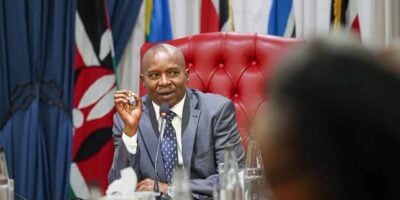
Head of Public Service Felix Koskei said the reforms are anchored on the Government Vehicle Management System (GVMS), a centralized digital platform that will provide real-time monitoring of every government vehicle, its authorized driver, fuel consumption, mileage and maintenance history.
The announcement follows a high-level consultative meeting bringing together representatives from the Executive, Parliament, the Judiciary and security agencies to review operational protocols governing government vehicles and align them with emerging technological and accountability requirements.
Koskei said the reforms were necessitated by persistent challenges, including the misuse of government registration plates, poor fuel and mileage records and the failure by some institutions to properly account for donor-funded vehicles after the completion of development projects.
“Every shilling spent on fuel, insurance, maintenance and vehicle replacement belongs to the taxpayer and must support the delivery of services to wananchi,” Koskei said.
He noted that the ongoing digitisation of government operations is being implemented with urgency to strengthen oversight of public assets while ensuring existing vehicle management protocols are effectively enforced.
As part of the reforms, the government is compiling a comprehensive and verified database of its entire vehicle fleet. Information from ministries, departments, agencies and county governments will be validated to establish a single authoritative record of all government-owned vehicles.
Koskei said the digital platform will be implemented with safeguards to protect data integrity, transparency and cybersecurity.
In addition, every government vehicle will be fitted with a tracking device in line with existing government protocols, enabling authorities to monitor vehicle movement, utilization and compliance in real time.
He, however, emphasized that technology alone would not eliminate misuse of public assets, calling on public officers entrusted with government vehicles to exercise responsibility and uphold discipline.
“Technology alone will not guarantee accountability. Public officers entrusted with Government vehicles must exercise responsibility, uphold discipline and ensure that these assets serve the public interest,” he said.
The Head of Public Service added that the government will continue leveraging technology to automate compliance monitoring, detect irregularities and improve accountability in the management of public resources.
He also disclosed that work is underway to finalize the National Transport Policy while coordinating with the National Treasury to strengthen the registration and accountability framework for donor-funded project vehicles.
The consultative meeting was attended by Deputy Head of Public Service Amos Gathecha, Defence Principal Secretary Dr. Patrick Mariru, Public Investments and Assets Management Principal Secretary Cyrell Odede, and Transport Principal Secretary Mohamed Dhagar.
Also present were Chief of Staff in the Office of the Prime Cabinet Secretary Joseph Busiega, Deputy Chief Registrar of the Judiciary Paul Ndemo, Solicitor-General Shadrack Mose, Deputy Clerk of the Senate Mohamed Ali Mohamed and Deputy Comptroller of State House Simon Mwangi.
Representatives from the Council of Governors, the National Police Service, the Directorate of Criminal Investigations, the National Transport and Safety Authority and the National Intelligence Service also participated in the discussions.