NAIROBI, Kenya, Jul 15— Kenya has called for a continent-wide shift towards evidence-based fisheries governance as African nations grapple with rising threats from climate change and illegal fishing, warning that fragmented policies could undermine the Blue Economy’s potential.
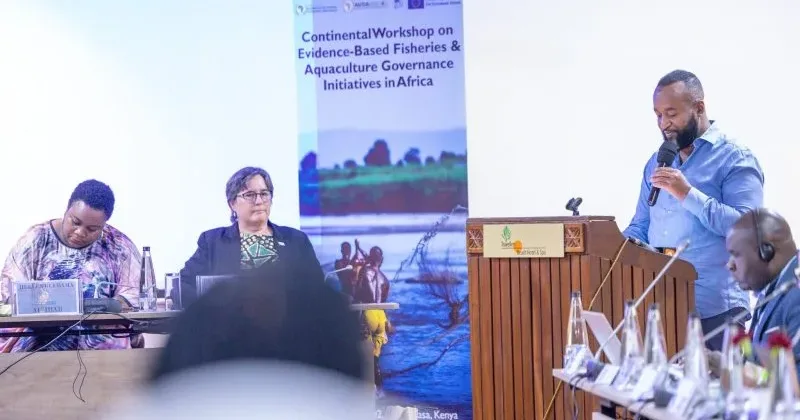
Speaking during the opening of the continental workshop on the Evidence-Based Fisheries and Aquaculture Governance Initiative in Africa in Mombasa, Cabinet Secretary for Mining, Blue Economy and Maritime Affairs Hassan Ali Joho urged African Union member states to strengthen cooperation and adopt science-driven policies to safeguard the continent’s aquatic resources.
Joho said Africa’s fisheries and aquaculture sectors face mounting pressure from climate change and Illegal, Unreported and Unregulated (IUU) fishing, making stronger governance and reliable data essential for sustainable management.
“As Africa seeks to navigate the challenges facing our Blue Economy, our success hinges on evidence-based decision-making and harmonized governance frameworks,” the Cabinet Secretary said.
The workshop, held at the Travellers Beach Hotel, was organized by the African Union Inter-African Bureau for Animal Resources (AU-IBAR) with support from the European Union and the African Union Development Agency-NEPAD.
He challenged delegates drawn from AU member states to use the forum to develop practical solutions that would strengthen fisheries governance across the continent.
“I urge delegates to deliberate with a sense of urgency and a spirit of Pan-African solidarity. We must collectively refine our strategies to ensure that our aquatic resources are managed sustainably for the benefit of both current and future generations,” Joho said.
The workshop seeks to promote the use of scientific evidence, improved data collection and coordinated policy-making to support sustainable fisheries and aquaculture development across Africa.
It also aims to strengthen regional cooperation in addressing transboundary challenges affecting marine and inland fisheries.
Illegal, Unreported and Unregulated fishing continues to cost African economies billions of dollars annually through lost revenues, depleted fish stocks and weakened food security, while climate change is altering marine ecosystems and threatening the livelihoods of millions who depend on fisheries.
Joho reaffirmed Kenya’s commitment to supporting the African Union’s efforts to build resilient fisheries and aquaculture systems, saying the country would continue working with regional and international partners to advance sustainable Blue Economy initiatives.
“Kenya remains a steadfast partner to the African Union in this vital journey,” he said.
The Mombasa meeting brings together policymakers, fisheries experts and development partners to develop common strategies aimed at strengthening governance, improving compliance and ensuring Africa’s aquatic resources continue to contribute to economic growth, food security and environmental sustainability.