NAIROBI, Kenya Sep 8 – Kenya and Uganda are pushing for increased agricultural trade under the African Continental Free Trade Area (AfCFTA), with maize emerging as a key commodity in efforts to deepen cross-border commerce.
Agriculture and Livestock Development Cabinet Secretary Mutahi Kagwe said Kenya is ready to increase maize imports from Uganda but insisted that expanded trade must be accompanied by strict food safety standards.
Kagwe said Uganda is well positioned to supply part of Kenya’s maize requirements but urged the country to strengthen post-harvest handling, particularly the drying of maize, to address concerns over moisture and aflatoxin contamination.
“We need a system in Uganda where maize is dried before it crosses the border. We can buy, but we need aflatoxin-free maize,” Kagwe said.
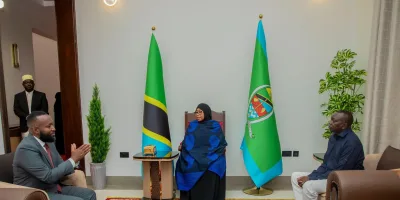
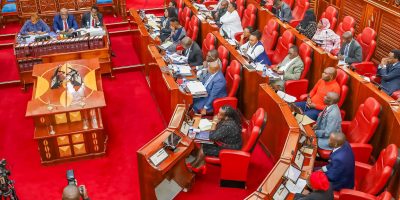
He spoke during a luncheon meeting with the Ugandan Parliamentary Committee on Agriculture, where legislators from the two countries discussed ways of strengthening agricultural trade and cooperation.
Kagwe said improved post-harvest handling in Uganda would benefit farmers in both countries by opening up a larger market for Ugandan maize while ensuring Kenyan consumers receive safe and quality food.
He noted that concerns over moisture content and aflatoxin levels have made some Kenyan millers reluctant to purchase maize from Uganda.
Addressing the problem before the grain leaves Uganda, he said, would help remove one of the key obstacles to increased maize trade between the neighbouring countries.
Kenya, Kagwe said, would continue enforcing food safety and quality standards for agricultural products entering the country.
The CS maintained that consumer protection should remain a priority even as Kenya works with neighbouring countries to facilitate regional trade.
Kagwe placed the maize trade discussions within the broader AfCFTA agenda, arguing that African countries need to eliminate practical barriers that prevent farmers from accessing markets across the continent.
“We have to ease off these small tariff and non-tariff barriers. We have to look for ways in agriculture where it is a win-win situation,” he said.
He said African countries have different agricultural strengths and should take advantage of these differences to complement one another.
According to Kagwe, countries with the capacity to produce commodities needed elsewhere on the continent should be able to access those markets, provided the relevant safety and quality requirements are met.
The approach, he said, would help create larger markets for farmers while strengthening food security and regional economic integration.
Members of the Ugandan Parliamentary Committee on Agriculture also called for increased intra-African trade, noting that African countries have yet to fully exploit the opportunities presented by AfCFTA.
The delegation called for the harmonisation of agricultural and trade protocols, including within the East African Community (EAC), to facilitate the movement of agricultural produce between member states.
However, the legislators stressed that harmonisation should not come at the expense of food safety and quality standards.
They argued that predictable and harmonised regulations would make it easier for farmers and traders to access regional markets while reducing unnecessary barriers to trade.
The Ugandan delegation identified several challenges requiring increased investment and regional cooperation.
These include climate change, water for agricultural production, pest and disease control, energy, cold storage, agricultural extension services, weak markets, value addition and agribusiness.
The challenges affect farmers’ productivity and their ability to compete in domestic and regional markets.
The legislators said greater cooperation between Kenya and Uganda could help address some of these constraints while promoting agricultural transformation.
Agricultural financing also emerged as a major concern during the discussions.
Legislators from both countries warned that agriculture remains underfunded despite its critical role in food security, employment and rural livelihoods.
The Ugandan delegation said agriculture accounts for approximately 2.2 per cent of Uganda’s national budget, which it described as inadequate given the sector’s contribution to the economy.
National Assembly Agriculture and Livestock Committee Chairperson John Mutunga said Kenya also needs to increase investment in agriculture if the sector is to fulfil its potential as a major source of employment.
“If we fund education at 24.7%, we are putting more resources to create demand for jobs. If we fund agriculture at less than 5%, we are constraining the sector that would create those jobs,” Mutunga said.
He argued that countries that successfully transformed their economies deliberately invested in agriculture before moving into agro-processing, value addition and industrialisation.
According to Mutunga, strengthening agriculture would not only improve food security but also create opportunities for employment and enterprise along the agricultural value chain.
The discussions highlight the growing importance of agriculture in Kenya-Uganda economic relations, particularly as both countries seek to expand regional trade under AfCFTA and the EAC framework.
Maize remains a strategically important commodity for Kenya, while Uganda has significant agricultural production capacity and regularly supplies regional markets.
The push for greater maize trade is therefore expected to remain closely linked to discussions on food safety, quality standards, market access and agricultural financing.
For Kenya, ensuring that imported maize meets safety requirements will remain critical, particularly because of the health risks associated with aflatoxin contamination.
For Uganda, improving drying, storage and post-harvest handling could help farmers access the Kenyan market more consistently and reduce rejection of grain.
The two countries are now seeking to strike a balance between facilitating agricultural trade and protecting consumers, as they pursue the broader goal of strengthening intra-African commerce.