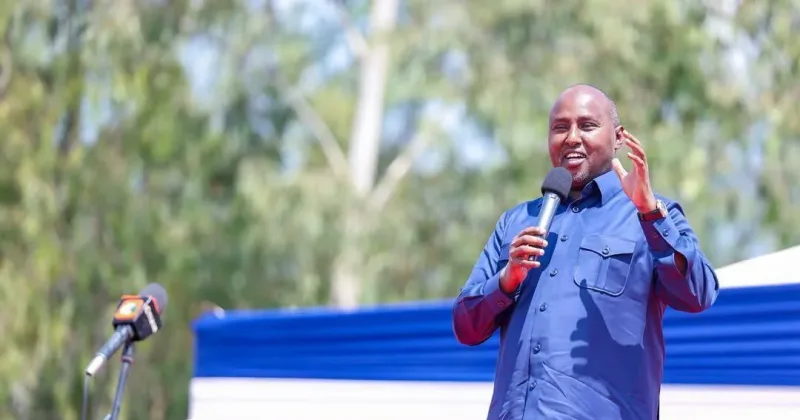
NAIROBI, Kenya, Sep 6 — National Assembly Minority Leader Junet Mohamed has mocked opposition leaders for holding meetings and retreats in search of a common political path ahead of the 2027 elections.
Junet said Oburu-led ODM has learnt from its past electoral defeats and already has “clarity” on its preferred presidential candidate.
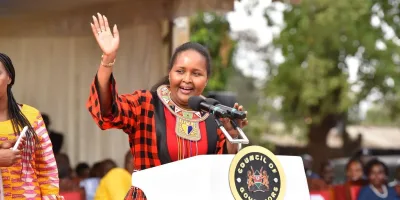
Speaking during Devolution Principal Secretary Michael Lenasalon’s thanksgiving ceremony in South Horr, Samburu County, Junet said ODM would not return to what he described as a cycle of political negotiations in hotels while searching for a presidential candidate.
“Now we have clarity. We have an early candidate named William Ruto. As ODM, we have him early,” he said.
Junet’s remarks came against the backdrop of renewed opposition efforts to forge a united front ahead of the 2027 General Election.
On August 24, Kalonzo Musyoka led opposition party signed a personal unity pledge and coalition agreement in Kiambu, committing themselves to remain united, participate in a joint process to select a single presidential candidate, and support whoever emerges as the coalition’s nominee.
Among those present were former Cabinet Secretary Fred Matiang’i, former National Assembly Speaker Justin Muturi, Martha Karua(PLP), Eugene Wamalwa(DAP-Kenya), Peter Munya(PNU), Lenny Kivuti and Omingo Magara.
The leaders said the agreement followed “extensive and candid consultations” and was intended to put national interests above individual ambitions and party considerations.
It is this broader process of opposition consultations and coalition-building that Junet appeared to target in his remarks, drawing comparisons with ODM’s own experience ahead of previous elections.
‘We have grown wiser’
Junet accused the opposition of repeating mistakes he said ODM made before the 2013 and 2017 elections, when the party held meetings in different locations while trying to settle on a presidential candidate.
“They took Baba in circles like that in 2017 and 2013,” he said, referring to former Prime Minister Raila Odinga.
“We used to go to Naivasha, to a hotel, saying we were looking for a presidential candidate. Now we know why we were losing.”
Junet said ODM subsequently moved its consultations to Mombasa, Samburu and Zanzibar.
“We would leave Naivasha and go to a Mombasa hotel. We even came here to Samburu Lodge, saying we were looking for a candidate. Another time, we went all the way to Zanzibar to look for a candidate,” he said.
He argued that prolonged consultations risked consuming political parties until election day, leaving them to blame their losses afterwards.
“We cannot enter into such things anymore. We have grown wiser.”
Junet said political parties should instead engage voters directly rather than spend too much time in closed-door meetings negotiating over candidates.
Junet also mounted a strong defence of ODM’s continued cooperation with President William Ruto, questioning why the party should abandon government positions to join an opposition coalition whose eventual political outcome remains uncertain.
“Those who refused to vote for Baba, those who made sure Raila failed to become the President of Kenya, are the ones telling me, Junet Mohammed, to unite with them to remove William Ruto and create another government,” he said.
“Why should I leave the government to go and create a government whose existence is uncertain, while I am already in government?”
The Suna East MP said ODM supporters had endured years of political struggle and should not be expected to return to opposition.
He cited the appointment of ODM nominees to senior government positions as evidence that the party was now part of government.
“To those who say that the ODM party is not in government, I ask: if we can appoint a PS, what kind of government do you want us to write?” he said.
“If my party nominates people and sends their names to the President for appointment as PSs, Cabinet Secretaries and others, do you still want us to be called an opposition party? No. We are now the government.”
Junet said ODM and Ruto’s United Democratic Alliance (UDA) should therefore be regarded as the two parties in government.
“Let no one say that UDA is the sole government. ODM is also in government,” he said.
Junet said ODM supporters who backed Raila Odinga in previous elections would now transfer their support to Ruto in the 2027 presidential race.
“All our supporters here in Samburu who voted for us—they voted for Baba—we are now together in this broad-based government. And in 2027, we will vote for President William Samoei Ruto to secure his second term,” he said.
He said the presidential votes ODM previously delivered to Odinga would now go to Ruto.
“Now, all those votes we used to get in the name of ODM, we are going to deliver them to President William Samoei Ruto,” Junet said.
He predicted an easy victory for Ruto if the ODM-UDA partnership remains intact.
“I don’t see any real election happening if UDA and ODM have united, even if we add all other Kenyans,” he said.
“This election, you will win. If we combine Baba’s seven million votes and your seven million votes, what is left?”
Junet also urged pastoralist communities to register as voters in large numbers, arguing that they would play a decisive role in determining the outcome of the 2027 election.
“I urge pastoralists to register and get their votes in large numbers. Please register to vote because, in 2027, our ‘freedom is coming’,” he said.
He said pastoralist and fishing communities had historically been marginalised and would be critical in deciding who becomes Kenya’s next president.
Junet used the event to reinforce the emerging political symbolism of an ODM-UDA alliance, calling for the parties’ Orange and Yellow colours to be brought together in Samburu.
He credited Ruto with opening up government opportunities to communities he said had previously been excluded, citing Lenasalon’s appointment as Principal Secretary.
Junet said ODM had been required to ensure that its nominees to government positions reflected Kenya’s regional diversity.
Junet described the arrangement as evidence of the kind of Kenya he said Ruto was seeking to build.
“That is the country the President wants: a country where every community gets its rights fully, without discriminating against others,” he said.