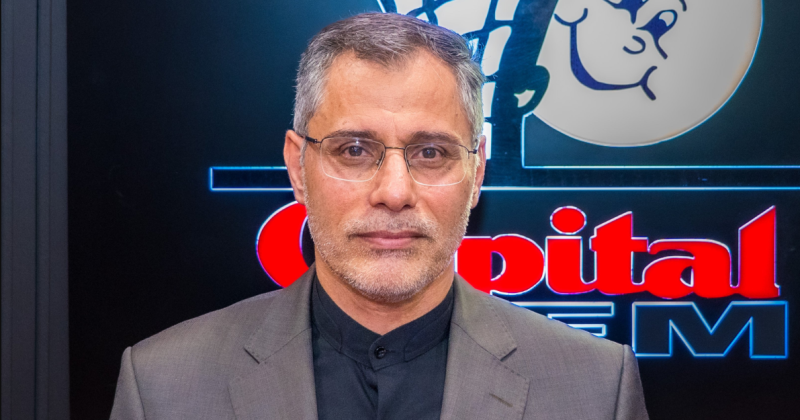
NAIROBI, Kenya, Mar 13 — Iran’s Ambassador to Kenya Ali Gholampour has urged the African Union to take a more active role in mediating the escalating tensions in the Middle East, calling on African leaders to push for urgent negotiations to prevent a wider regional war.
Speaking Thursday during the Capital in the Morning show in Nairobi, Gholampour said African governments should collectively press for dialogue between parties involved in the confrontation between Iran, Israel, and the United States.
The ambassador revealed that he had earlier raised the issue with William Ruto, urging greater international engagement to prevent further escalation.
“I had a chance to talk with President Ruto here in Kenya, and I told him personally that it is high time for intervention by responsible countries and heads of government to bring the two sides to a peaceful solution and prevent a war that nobody will benefit from,” Gholampour said.
He warned that continued hostilities risk expanding into a broader regional conflict if diplomatic efforts fail.
While stressing that Iran would respond to attacks, the ambassador said Tehran still preferred negotiations over military confrontation.
“This is the responsibility of all countries and heads of state to come together, create a mechanism, and find a way out of this war,” he said.
“Through that process, they can uphold the Charter of the United Nations and international law.”
Collective voice
Gholampour said the African Union could use its collective voice to pressure the parties involved in the conflict to halt attacks and return to the negotiating table.
He argued that African countries were already feeling the economic consequences of instability in the Middle East, including disruptions to energy markets and global trade.
“The African Union can take collective action and have a very strong voice in this regard and tell those who have attacked Iran that we are under pressure and heavily impacted by this war. It is time to stop and return to negotiations.”
The ambassador also accused the United States and Israel of initiating attacks against Iran and pursuing what he described as a long-term strategy aimed at weakening the Islamic Republic.
“They argue that they are attacking Iran for liberal democracy or bringing liberty to the people. It is absolutely wrong. It is a pretext,” he said.
“Even when they claim they are attacking Iran to save the world from nuclear bombs, that is a false narrative. The United States and the Israeli regime themselves possess nuclear warheads, yet they are attacking a non-nuclear country.”
According to Gholampour, tensions between Tehran and Washington date back to the Iranian Revolution in 1979, when U.S. influence in Iran ended following the fall of the Western-backed monarchy.
He said Iran had responded militarily only after what it considers acts of aggression, including strikes launched from military bases used by U.S. forces in the Gulf region.
The envoy defended Iranian strikes targeting facilities linked to U.S. military operations in neighboring countries, arguing that international law allows a state to respond to attacks originating from foreign bases.
“When you are attacked from a military base located in another country, it is considered territory of the country using it,” he said.
“You cannot remain silent when bombs are coming and destroying your country.”
The conflict has already disrupted global oil markets and aviation routes across the Middle East, raising concerns about wider economic fallout.
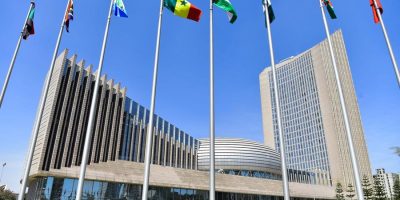
Earlier, the chairperson of the African Union Commission, Mahmoud Ali Youssouf, expressed concern over military strikes involving US and Israeli forces inside Iran.
In a statement issued on February 28, Youssouf called for restraint and urgent de-escalation, warning that further escalation could deepen global instability and harm energy markets, food security, and economic resilience — particularly in Africa.
He urged all parties to prioritize diplomacy and respect international law, including ongoing mediation efforts facilitated by Oman.
“Sustainable peace can only be achieved through diplomacy, not through force,” Youssouf said.